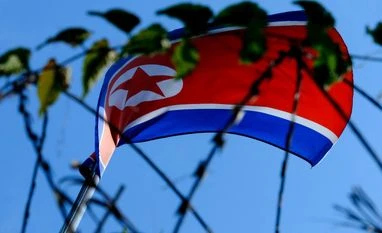
US mulling options 'both inside and outside the UN' to monitor N Korea
The Security Council established a committee to monitor sanctions, and the mandate for its panel of experts to investigate violations had been renewed for 14 years until last month
AP Seoul The United States and its allies are discussing options both inside and outside the UN system to create a new mechanism for monitoring North Korea over its nuclear weapons programme, the American ambassador to the United Nations said on Wednesday.
Russia last month vetoed a UN resolution in a move that effectively abolished monitoring by UN experts of Security Council sanctions against North Korea, which prompted Western accusations that Moscow was acting to shield its arms purchases from North Korea to fuel its war in Ukraine.
I look forward to engaging with both the Republic of Korea and Japan, but like-minded (countries) as well, on trying to develop options both inside the UN as well as outside the UN. The point here is that we cannot allow the work that the panel of experts were doing to lapse, US Ambassador Linda Thomas-Greenfield told a news conference in Seoul, using the formal name for South Korea.
Thomas-Greenfield didn't provide specific details about US discussions with allies and other partners, including whether an alternative monitoring regime would more likely be established through the UN General Assembly or with an independent entity outside of the UN.
Thomas-Greenfield met with South Korean Foreign Minister Cho Tae-yul on Monday and they discussed unspecified next steps to ensure a continuation of independent and accurate reporting of North Korea's illicit weapons development activities, according to her office.
Thomas-Greenfield said it was clear that Russia and China, which abstained from voting on the UN resolution vetoed by Moscow, will continue to try to block international efforts to maintain monitoring of UN sanctions against North Korea.
She criticised Russia for violating those sanctions with its alleged arms purchases from North Korea, and China for protecting the North from being held accountable.
Moscow and Beijing have thwarted US-led efforts to tighten UN sanctions on North Korea over its ramped-up ballistic missile testing since 2022, underscoring a divide between permanent Security Council members that deepened over Russia's war on Ukraine.
I don't expect that they will cooperate or agree with any efforts that we make to find another path, but that is not going to stop us from finding that path moving forward, Thomas-Greenfield said.
Thomas-Greenfield also briefly addressed questions about tensions in the Middle East. When asked about the Palestinian Authority's request to have full UN membership, she said a UN resolution in support of that request would not contribute to finding a two-state solution to the Israeli-Palestinian conflict.
President Biden has said categorically that we support a two-state solution for addressing the situation in the Middle East, where Palestinians will have a state of their own and Israel is secure in their state, and we are working on the ground to get to that place as quickly as possible, she said.
We do not see that doing a resolution in the Security Council will necessarily get us to a place where we can find a ... two-state solution moving forward," she added.
The Security Council imposed sanctions after North Korea's first nuclear test explosion in 2006 and tightened them over the years in a total of 10 resolutions seeking so far unsuccessfully to cut funds and curb its nuclear and missile programmes. The last sanctions resolution was adopted by the council in December 2017.
The Security Council established a committee to monitor sanctions, and the mandate for its panel of experts to investigate violations had been renewed for 14 years until last month.
Russia's UN Ambassador Vassily Nebenzia told the Security Council before last month's vote that Western nations are trying to strangle North Korea and that sanctions are losing their relevance in preventing the proliferation of nuclear weapons in the North.
In its most recent report circulated last month, the panel of experts said it is investigating 58 suspected North Korean cyberattacks between 2017 and 2023 valued at approximately $3 billion, with the money reportedly being used to help fund its weapons development.
(Only the headline and picture of this report may have been reworked by the Business Standard staff; the rest of the content is auto-generated from a syndicated feed.)


 "US mulling options 'both inside and outside the UN' to monitor N Korea")

