Home / World News / Vietnam appoints Army General Cuong as new President after long turmoil
Vietnam appoints Army General Cuong as new President after long turmoil
Cuong, 67, was elected by the National Assembly to replace To Lam, who remained president even after he was formally appointed as the general secretary of the ruling Communist Party
Vietnam's leaders are next due to convene a Communist Party Congress in early 2026. | Photo: Bloomberg
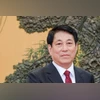
Vietnam elected Luong Cuong, a military general, as its new president on Monday, the fourth official to fill the role in 18 months.
Cuong, 67, was elected by the National Assembly to replace To Lam, who remained president even after he was formally appointed as the general secretary of the ruling Communist Party in August.
The role of the general secretary is the most powerful position in Vietnam while the presidency is largely ceremonial.
Cuong, who has served in the Vietnamese army for over four decades, has been a Politburo member since 2021.
His appointment took place after months of uncharacteristic tumult in Vietnam's politics and the death of former party general secretary Nguyen Phu Trong, who had dominated the country's leadership since 2011.
Trong was an ideologue who viewed corruption as the single gravest threat in maintaining the party's legitimacy and launched a sweeping anti-graft campaign known as the blazing furnace. It singled both business and political elites, including former presidents Nguyen Xuan Phuc and Vo Van Thuong and the former head of parliament, Vuong Dinh Hue.
As Vietnam's top security official at the time, Lam had led the campaign until May. When he became the new general secretary, he promised to maintain the anti-corruption fight.
The campaign, albeit popular with many Vietnamese citizens, had spooked investors and made the bureaucracy more cautious, slowing down decision-making in the country.
The appointment of Cuong as the new president was a move to stabilize the system after the period of turbulence, said Nguyen Khac Giang, a visiting fellow in the Vietnam Studies Programme at Singapore's ISEASYusof Ishak Institute.
Luong Cuong's appointment represents a deliberate attempt to restore balance between Vietnam's military and security factions, particularly ahead of the 2026 Party Congress, he said.
By ceding the presidency, To Lam shows his commitment to the collective leadership principle, while still retaining the decisive power in the system, he said.
Vietnam's leaders are next due to convene a Communist Party Congress in early 2026.
(Only the headline and picture of this report may have been reworked by the Business Standard staff; the rest of the content is auto-generated from a syndicated feed.)


 "Vietnam appoints Army General Cuong as new President after long turmoil")


