Home / World News / Why did tiles come crashing down from China's 600-year-old Fengyang Tower?
Why did tiles come crashing down from China's 600-year-old Fengyang Tower?
The culture and tourism bureau in Anhui province launched an investigation into the tower collapse incident, acknowledging growing scrutiny over the integrity of the repair work in China
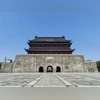
Hundreds of roof tiles tumbled off the historic Fengyang Drum Tower in China's Anhui province on Monday evening, less than a year after a major renovation project was completed at the tourist site. (Photo: Wikipedia)
3 min read Last Updated : May 23 2025 | 6:04 PM IST
Hundreds of roof tiles tumbled off the historic Fengyang Drum Tower in China's Anhui province recently, in an incident that was captured on video and rapidly circulated on social media platforms. While no injuries were reported, the spectacle of the collapse has raised alarm over the quality of recent restoration work at the 14th-century structure.
What was the reason behind China’s Fengyang tower collapse?
The collapse comes less than a year after a major renovation project was completed at the tourist site, located in Fengyang county, the birthplace of Hongwu, the founding emperor of the Ming dynasty (1368-1644). According to a report by the South China Morning Post (SCMP), the tower had undergone a roof restoration in 2023, part of a broader conservation effort reportedly costing 2.9 million yuan (US$402,600).
The local culture and tourism bureau has launched a formal investigation into the incident, acknowledging growing scrutiny over the integrity of the repair work.
Who carried out the renovation and were they qualified?
The report alleged that the contractor hired for the 2023 restoration had a history of illegally subcontracting projects to unqualified personnel, enabling them to operate under the contractor’s license. The same firm was previously responsible for repairs at a Ming dynasty ancestral hall in 2015 that was severely damaged in a fire during renovation.
Adding to concerns, China National Radio revealed that a drone inspection in December 2024 had detected cracks in the newly renovated roof, just months before the collapse.
How has China responded to the Ming dynasty-era building collapse?
In response to the incident, Xinhua, China’s state news agency, called for a comprehensive probe into the bidding process, financial arrangements, and construction quality linked to the project. State broadcaster CCTV further complicated the matter by reporting that the tower’s earlier renovation in 1995 had been conducted illegally, though local officials told Thepaper.cn that the 1995 work had received formal approval.
These conflicting narratives have reignited long-standing public concerns about lax oversight in heritage conservation projects across China.
What are 'tofu buildings' and how do they relate to this collapse?
The term “tofu buildings” has resurfaced in China’s national discourse following the incident, a widely used slang term in China describing shoddily built structures that crumble under pressure. While the Fengyang Drum Tower incident caused no casualties, it drew comparisons to deadlier disasters in recent memory.
In 2023, a school gymnasium roof collapsed in Qiqihar, Heilongjiang province, killing 11 people. Investigators blamed the accident on the improper stacking of perlite, a highly absorbent material that became dangerously heavy during rainfall.
In 2022, an eight-storey building in Changsha, Hunan province, caved in, leaving 54 dead. The probe revealed that the structure had been designed and constructed by individuals lacking the necessary qualifications, with fatal consequences.
What’s next for the Fengyang Drum Tower and China’s heritage safety protocols?
With state media and public sentiment pressing for accountability, authorities are under pressure to tighten supervision over historical restoration projects. The Fengyang Drum Tower, constructed in 1375, stands as both a tourist magnet and a symbol of Ming-era architectural heritage. But the incident has cast a shadow over conservation standards, particularly in provinces rich in ancient structures but plagued by inconsistent oversight.


 "Why did tiles come crashing down from China's 600-year-old Fengyang Tower?")

