World's first dual-frequency radar satellite Launch: In a landmark collaboration, NASA and ISRO are gearing up to launch the NISAR satellite. It is an ambitious $1.5 billion Earth-observation mission that could redefine how we track changes on our planet.
The satellite is scheduled to launch this July from India’s Satish Dhawan Space Centre. NISAR (NASA-ISRO Synthetic Aperture Radar) is designed to monitor Earth’s surface with unprecedented centimetre-level precision, day or night, rain or shine.
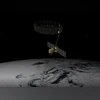
Equipped with a massive 12-meter radar antenna and weighing nearly three tonnes, NISAR is built to deliver near-real-time data on critical challenges like agricultural trends, climate shifts, natural disasters, and environmental changes. Its insights are expected to benefit scientists, farmers, and disaster-response teams globally, making it one of the most anticipated Earth science missions in recent memory.
Why Nasa and Isro teamed up for NISAR?
Most Earth-observing satellites rely on sunlight to capture surface images, limiting their use to daylight hours and clear skies. This makes them less effective in cloudy regions, like the tropics, or during nighttime events. The NASA-ISRO partnership aims to bridge this gap. With NISAR’s advanced radar system, the mission will provide continuous, all-weather imaging, delivering more accurate and timely insights into environmental conditions, natural calamities, and agricultural developments.
At the core of NISAR is Synthetic Aperture Radar (SAR)—a technology originally developed for military reconnaissance in the 1950s. Unlike traditional optical sensors, SAR actively sends radar signals to the Earth’s surface and captures the reflections. It functions like a camera flash in the dark, allowing it to “see” through clouds, smoke, and dense vegetation, regardless of the time of day or weather conditions.
Real-time tracking of natural disasters
SAR has already shown its potential in monitoring floods, earthquakes, and landslides. NISAR will push this further by using dual-frequency radar and offering high-resolution images. It can detect even slight shifts in the Earth’s crust, enabling emergency services to assess damage more quickly and respond more effectively during disasters.
One of NISAR’s unique strengths is its ability to penetrate thick vegetation. This allows researchers to study forest structures and wetlands in greater detail than ever before. It will help measure forest biomass and carbon content, as well as detect flooded vegetation, providing critical insights into ecosystems that store vast amounts of carbon and support biodiversity.
Global impact of NISAR
NISAR’s high-resolution data will be freely available to researchers and institutions worldwide. It will revisit almost all land and ice surfaces every 12 days, offering more consistent and detailed observations than older missions like Sentinel-1. For the agricultural sector, this means better tracking of soil moisture, crop growth, and land-use patterns, helping farmers make smarter decisions about irrigation and resource use.
NISAR’s groundbreaking ability
NISAR is the first satellite to carry dual-frequency radars and marks NASA and ISRO’s first joint hardware venture for Earth observation.
What makes it even more impactful is its open data policy, offering free access to high-resolution images and insights to scientists and agencies worldwide.
With the ability to detect ground shifts of just a few millimetres, NISAR will aid in monitoring earthquakes, coastal erosion, groundwater changes, forest biomass, and dam safety, benefiting both climate research and disaster management.
The satellite will also play a vital role in monitoring glacier movements and melting ice sheets, key indicators of rising sea levels. In coastal areas, NISAR can track shoreline erosion and even detect oil spills, providing valuable tools for environmental protection and emergency response.
New era in Earth science
NISAR took nearly ten years to develop, and now it is set to launch and add a new chapter in global earth observation. The merger of cutting-edge radar technology with global accessibility promises to equip scientists, policymakers, and communities with the data they need to better understand our planet. From climate resilience and food security to disaster preparedness, NISAR is poised to become a cornerstone of Earth science for years to come.

 "World's first dual-frequency radar satellite NISAR to launch from India")

