Home / World News / Zimbabwe, Namibia to kill scores of elephants to feed people facing drought
Zimbabwe, Namibia to kill scores of elephants to feed people facing drought
Zimbabwe would allow killing of 200 elephants so that their meat can be distributed among needy communities, while in Namibia more than 700 wild animals including 83 elephants would be killed
Zimbabwe and Namibia have announced plans to slaughter hundreds of wild elephants and other animals to feed hunger-stricken residents amid severe drought conditions in the southern African countries.
Zimbabwe said Monday it would allow the killing of 200 elephants so that their meat can be distributed among needy communities, while in Namibia the killing of more than 700 wild animals including 83 elephants is under way as part of a plan announced three weeks ago.
Tinashe Farawo, a spokesman for the Zimbabwe National Parks and Wildlife Management Authority, said permits would be issued in needy communities to hunt elephants and that the agency also would kill some of the overall allotment of 200 animals.
We will start culling as soon as we have finished issuing out permits, Farawo said.
The elephants will be taken from an area where the population has become unsustainable, Farawo said. The hunting will take place in areas such as Hwange National Park in the country's arid west where there has been increasing competition between humans and wildlife for food and water as rising temperatures make the resources more scarce.
Hwange has more than 45,000 elephants, but now has the capacity to sustain only 15,000, Farawo said. The country's overall population of about 100,000 elephants is double what the country's national parks can sustain, park officials say.
The El Nino weather phenomenon has worsened the situation, with the parks agency in December saying that more than 100 elephants died due to drought. More animals could die of thirst and hunger in the coming weeks as the country enters the hottest period of the year, Farawo said.
Zimbabwe's Environment Minister Sithembiso Nyoni told Parliament last week that she had given the go-ahead for the culling program.
Indeed Zimbabwe has more elephants than we need, more elephants than our forestry can accommodate," Nyoni said.
She said the government was preparing to do like what Namibia has done so that we can cull the elephants and mobilize the women to dry the meat, package it and ensure that it gets to some communities that need the protein.
The Namibian government last month approved the culling of 723 animals, including 83 elephants, 30 hippos, 60 buffalos, 50 impalas, 300 zebras and 100 elands, among others.
The animals will be sourced from five of Namibia's national parks, where it is also looking to reduce its elephant numbers amid conflicts between people and wildlife.
This is necessary and is in line with our constitutional mandate where our natural resources are used for the benefit of Namibian citizens," environment department spokesman Romeo Muyunda said. "This is also a prime example that conservation of game is really beneficial.
Botswana, which is between Zimbabwe and Namibia, has the world's largest elephant population at 130,000, but unlike its two neighboring countries, it has not talked about slaughtering its elephants to feed its people.
Guyo Roba, a food security and agricultural expert with the Kenya-based environmental think tank Jameel Observatory, said government measures in Zimbabwe and Namibia were understandable given the extent of the drought and the state of their animal populations.
They are working against a wildlife population that is above their carrying capacity," Roba said.
So it may seem controversial initially, but the governments are torn between remaining faithful to some of their obligations at an international level in terms of conservation and supporting the population," Roba said.
(Only the headline and picture of this report may have been reworked by the Business Standard staff; the rest of the content is auto-generated from a syndicated feed.)

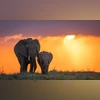 "Zimbabwe, Namibia to kill scores of elephants to feed people facing drought")


