


Comrades and Comebacks: Why the Left still matters in India today
India needs Left ideas of equality and humanism now more than ever, argues Saira Shah Halim in her book
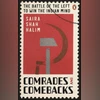 "Comrades and Comebacks: The Battle of the Left to Win the Indian Mind")
premium
Comrades and Comebacks: The Battle of the Left to Win the Indian Mind
5 min read Last Updated : Jan 27 2026 | 11:47 PM IST
Listen to This Article
Comrades and Comebacks: The Battle of the Left to Win the Indian Mind
By Saira Shah Halim
Published by Penguin
302 pages ₹699
If you’re looking for a sophisticated treatise on Marxism and the nature of the state for example, or Eurocommunism, or Marxism and phenomenology, you won’t find it here. This is a book by an activist, one who moved from holding a corporate job to realpolitik. Saira Shah Halim made her political debut in March 2022, contesting on a Communist Party of India (Marxist) ticket in the Ballygunge Assembly by-poll in West Bengal. Though she lost the election, she managed to increase the Communist Party of India (Marxist)’s vote share from five per cent to 30 per cent — an unexpected outcome. In this book, she offers a potted history of the Left in India, its high and low points, and suggests to all readers but especially those from GenZ, that Communism is cool, Kerala rocks, and revolution, like good biryani, can’t be rushed.
Writing as a member of the CPI (M), she analyses events and history from a certain vantage point. The United States is bad, exploitative, and the fount of all evil in the world. Lenin was good, Stalin was bad (there is no real exposition of Mikhail Gorbachev’s role in trying to modernise Soviet socialism). The most important Marxian idea is self-governance by the working class, a “government truly for and by the people”. Except that neither Marx nor Engels nor Lenin or Stalin said that. It was actually the central idea on which the US was envisaged by Abraham Lincoln in his Gettysburg address. She goes on to add: “It [self-governance] is not about torching all hierarchies but making sure operational hierarchies don’t morph into oppressive ideologies”. Right.
The book’s strongest point is the honest recounting of the Indian Left movement, its divisions and schisms, the rift between the CPI, the CPI (M) and the various groups in the radical Left. We know that till between 1939 and 1941, for the undivided CPI, World War II was an imperialist war. When Germany attacked the USSR in 1941, it suddenly became a people’s war. This led to great confusion among the cadres. Were they fighting imperialism? Or fascism? Were the otherwise imperialist Allied powers the primary enemy? Or was it Hitler who had led an attack on The People? This confusion remained even after the split in the CPI and the formation of the CPI (M), when E M S Namboodiripad enunciated the line that “if Congress is cholera, BJP is plague, you end up dead with both”. The CPI had already compromised itself beyond redemption by supporting the Emergency while CPI (M) colleagues were arrested and many tortured. EMS’s line led to the “historic blunder” when West Bengal chief minister Jyoti Basu was not permitted by his party to make a claim to prime ministership. But later, the Left Front did support a Congress-led government to keep the BJP out. So did contradictions turn into compromises? And was this the reason for the gradual marginalisation of the Left in Indian power politics? The book seeks to explain this in context. It also describes in detail what Kerala did right in creating a strong foundation for Left thinking and praxis. The section of the Left government in Tripura is masterful and shines a light on the politics of a state the rest of India knows little about.
There is hardly any doubt that India needs Left ideas of equality and humanism now more than ever. It has to be a New Left. This book is also about a sort of manifesto for the New Left, detailing the ideas and people you should follow. Oppression, Ms Halim says, is like a web. Race, gender, class, sexuality and disability all intersect. Climate justice is non-negotiable. And global solidarity is the future. Ms Halim’s heroes are Mayor of New York Zohran Mamdani, Arundhati Roy and Angela Davis, among others. But she adds: “The Left hasn’t just been outplayed electorally; it’s also been outmanoeuvred on the narrative front’. If Mamata Banerjee could position herself as ‘more Left than the Left’ it’s a wake-up call,” she says. Her solution to the crisis? “If the Left can embrace introspection and innovation, it can inspire a new generation to fight for equity, justice and democracy’, she says, adding, “but sticking to outdated ideas could weaken it”. Unexceptionable. But in India, she suggests the Left parties should “fully engage in national politics and be ready to form coalitions with other political parties which are ideologically close”. Been there. Done that.
This book is a strong testament of faith in Left ideas and reminds us that many of the ideas and heroes that the current dispensation has appropriated actually belonged to the broader Left movement. It asks everyone, especially young people to stand up and be counted. Written in an easy, storytelling style, this book could be read by all those who are interested in India’s future as a democracy.