


Letter from Japan: A gentle, well-sourced plea for global domestic life
Yet Ms Kondo's book arrives into a different conversation than the one she helped start a decade ago
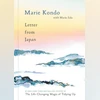 "Letter from Japan")
premium
Letter from Japan
5 min read Last Updated : Dec 11 2025 | 10:51 PM IST
Listen to This Article
Letter from Japan
by Marie Kondo with Marie Iida
Published by Leap
306 pages ₹699
Marie Kondo’s Letter from Japan is at once an intimate postcard and a manifesto: Part memoir, part cultural primer, and part practical theology of household life. In this quietly persuasive book, she returns not to reinvent the KonMari method (her tidy commandments are already part of the global domestic lexicon), but to locate that method within a longer Japanese conversation about beauty, ritual, and the ethics of things. The result is less a “how-to” than a set of invitations: To notice, to honour, and to empty space in order to feel something more fully.
Elegantly produced with Japanese typeface serving as ornamental letters and watercolour brush strokes for breaking chapters, the book is organised around discrete practices and ideas like the tea ceremony’s attention to gesture, the garden’s seasonal patience, the domestic reverence behind age-old household traditions, that Ms Kondo traces back to childhood memory and communal life. She writes with the modest authority of someone who has lived these customs and then translated them, gently, for a readership hungry for concrete spiritual practice inside the home. These chapters do the work of contextualising KonMari: Tidying is not austerity but a cultural habit of offering respect to objects and relationships, and of cultivating “ma” or the meaningful negative space in life.
Written with her television co-star Marie Iida, the prose is conversational: The everyday, like folding a futon, cleaning a schoolroom, repairing a bowl, becomes an ethical act. This is why Letter from Japan feels authentic rather than programmatic. She is careful to connect technique to temperament: The KonMari question —“Does this spark joy?”— is less about mood and more about alignment, a way to discern what truly matters so that a small life may be devoted to it. That framing is persuasive precisely because it is cultural history and lived experience, not marketing copy.
Yet Ms Kondo’s book arrives into a different conversation than the one she helped start a decade ago. A lively counter current in the West where a celebration of “artful clutter,” maximalism, and collected homes that read as repositories of character, has reframed the tidy impulse as an aesthetic threat to personality. Writers and stylists celebrate the person who surrounds herself with objects and layered histories, arguing that a curated mess signals curiosity and a life lived. The Guardian has even argued that Japan itself has a tradition of “joyful clutter” that complicates the minimalist stereotype Ms Kondo is often asked to represent.
Ms Kondo is not blind to this pushback; Letter from Japan reads like an answer rather than a rebuttal. Her retort is rhetorical and cultural rather than combative: The point, she suggests, is not to erase accumulation but to make accumulation meaningful. Practices like kintsugi (mending broken pottery with gold) or mottainai (an ethic of not wasting) reframe care as attachment, and attachment as responsibility. In other words, one can relish collections without letting them tyrannize everyday life. The crucial difference is whether objects are tended to, given a place, and treated as worthy. Homes that celebrate clutter do so honestly; Ms Kondo’s method asks only that those objects be loved on purpose.
This positioning is where Letter from Japan feels most useful: It is not a prescription for a single style but a meditation on domestic values. Ms Kondo’s strongest chapters are those that connect ceremony and maintenance (school cleaning rituals, bathing practices, seasonal observances) to mental habits: Gratitude, repetition, and a humility about consumption. Her reportage like small interviews, the pausing of a ritual, the explanation of how a family sets the table reads like ethnography written for bedside reading.
The book’s limits are also instructive. Readers who expect fresh, radical organising tactics will find the book elliptical; those who want a rigorous critique of consumer capitalism won’t find one either. Ms Kondo is conservative in the anthropological sense: She preserves and explains rather than agitates. Critics who argue that KonMari’s global uptake sometimes ignores local labour realities or domestic inequalities will not find satisfying concessions here. But as an accessible primer on why certain Japanese customs value care over accumulation, the book succeeds.
Letter from Japan is a gentle, well-sourced plea for intentional domestic life. Faced with today’s maximalist reactions, Ms Kondo offers a middle way — a cultural vocabulary for saying that both space and objects matter, and that the difference between clutter and collection is the presence of attention. Read this book as an ambassadorial piece: It will not convert maximalists or purists wholesale, but it will remind readers on either side that the ethics of a home are made in small, repeated acts of care. It makes for a gentle read in the holiday season or as a mindful gift.
The reviewer is the author of Temple Tales and translator of Hungry Humans. She worked with a well-being platform
Topics : Book Reviews books BOOK REVIEW