


The Land and the Shadows: Perumal Murugan's theatre of life explored
Throughout the book, and particularly in the first half, Mr Murugan talks about how cinema is tied in the fabric of Tamil society through anecdotes and his own analysis of certain phenomena
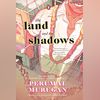 "The Land and the Shadows")
premium
The Land and the Shadows
5 min read Last Updated : Feb 17 2026 | 11:01 PM IST
Listen to This Article
The Land and the Shadows
by Perumal Murugan (translated from
Tamil by Gita Subramanian)
Published by Penguin Random House India
395 pages ₹799
Perumal Murugan’s The Land and the Shadows, in which he describes his boyhood spent working in his father’s soda shop in a small-town theatre in Tamil Nadu’s Namakkal district, is no ordinary memoir steeped in nostalgia — it is an incisive study of the land the author comes from, its people, and their love for cinema.
Inspired by the same setting and characters as his second novel Current Show (1993), the book might come across as a companion piece of sorts to long-time readers of Mr Murugan. Read together, they present an invaluable insight into the blurred lines between fiction and non-fiction, how memory shapes us, and the life and experiences of a man whose works have generated as much controversy as acclaim.
Throughout the book, and particularly in the first half, Mr Murugan talks about how cinema is tied in the fabric of Tamil society through anecdotes and his own analysis of certain phenomena. For example, he often returns to the question of why the late actor-politician MGR is still a powerful presence in certain parts of the state; as another Tamil superstar, Vijay, attempts to follow in the former chief minister’s footsteps it is worth reading how MGR affected ordinary lives in Tamil Nadu in the 1970s and 1980s.
Mr Murugan then shines a light on the other aspects that rule his social milieu, particularly in the Kongunadu region (roughly comprising western and north-western Tamil Nadu) — caste, land, and patriarchy.
However, a major chunk of Mr Murugan’s memoir is spent dissecting the lives and livelihoods that make up the entertainment industry. From tea shop assistants to the audiences who kept theatres running to Tamil cinema stalwarts such as Sivakumar and K Bhagyaraj, Mr Murugan treats everyone with dignity. Even while discussing public sanitation and a lack of civic sense, he never casts a judgemental eye. Like a true chronicler of the times, his narrative does not ostracise anyone but at the same time acknowledges how “beauty was lost” due to carelessness, ignorance and lack of crowd management.
The other aspect on which Mr Murugan devotes considerable time is the emergence (and gradual decline) of the cinema hall as a space for cultural and social exchange. He describes the atmosphere of his small-town theatres as full of community, belonging and a much-needed breather from the everyday working-class toil. “I genuinely feel that floor tickets were a liberating experience… The sights and sounds from this area before the show and during intermissions were joyful, arising from a love of the soil,” he writes.
Through this, the book also presents an economic history of Tamil Nadu, especially the diversification of caste-based occupations — Mr Murugan comes from a farming caste, but his father starts a soda business and he himself becomes an academic and a writer. Technological advancements and capital accumulation made people less averse to taking risks, resulting in small-scale capitalism in the state’s small towns.
In this way, Mr Murugan also stops himself from immersing too deeply in nostalgia. He tempers the impulse to see the past through a rose-tinted lens by an acknowledgment that Tamil society and economy have progressed by leaps and bounds, and how grateful he is that the stark poverty of his growing-up years has vanished.
The second part of the book is a collection of essays Mr Murugan has written over the years on various films, personalities, and trends. One of the most interesting is “Should a Reformed Villain Be Allowed to Live?”, in which he probes Kai Kodukkum Kai (“Helping Hand”; 1984), a “flop” Rajinikanth movie directed by J Mahendran. In contemporary online discourse, the film is often cited as an example of an “underrated” Rajinikanth film that showed him as an “actor” rather than the “Superstar”. Mr Murugan, on the other hand, insists that it was a typical 1980s masala film, and attributes its box-office performance to its failure to deliver within the framework of mass entertainment.
A perplexing part of the second part, though, is his lengthy ruminations on Rosappu Ravikkaikari (“The Girl with the Rose-coloured Blouse”; 1979). The book utilises three chapters (and then some) to fully illustrate the importance of the film in his life, and the execution comes across as a little anticlimactic. Mr Murugan presents an exhaustive and interesting study of how the movie deals with the battle between modernity and tradition, and how despite villainising the “modern woman” it still shows that modernity is inevitable. But did he really needed to devote so much time to it? One can’t help but feel that he described his experiences with other significant films (Kadhalikka Neramillai and Aval Appadithan, to name a few) much more crisply and effectively.
Mr Murugan’s minute detailing of his environment makes one wonder just how much of the world we miss out on. As he paints his childhood and adolescence on an anthropological canvas, he leaves his readers with an unusual and deeply affecting memoir that is more about how art shapes both the individual and the society.
Topics : BOOK REVIEW Cinema theatre books