


Whither Human Rights in India: A layered account of liberty's erosion
At a moment when the so-called fringe has become the mainstream, this book offers a layered account of the erosion of liberty and the severity of our times
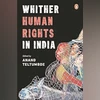 "Whither Human Rights in India")
premium
Whither Human Rights in India
5 min read Last Updated : Feb 09 2026 | 9:56 PM IST
Listen to This Article
Whither Human Rights in India
by Anand Teltumbde (editor)
Published by Penguin India
400 pages ₹1,299
The journey of human rights has been a long one. While religions always come with a set of dos and don’ts, they do not necessarily result in equitable practices, nor do they recognise human liberty and rights that lie at the core of modern human existence. It was the 20th century that proved the turning point for the cause of human rights, especially with the creation of the United Nations after World War II. Even so, the world has struggled to follow the principles of this basic value. In Whither Human Rights in India, several prominent human rights activists have come together to discuss the layered erosion of liberty in contemporary times.
The book is edited by academic and social activist Anand Teltumbde and has two sections. The first part covers varied perspectives on the subversion of human rights. Advocate Mihir Desai’s essay deals with the Supreme Court and how it has fared when it comes to upholding human rights. Mr Desai’s essay is, in effect, a reality check. Well before the last decade, he writes, the court’s record in upholding human rights has scarcely been exemplary. While the Supreme Court struck down the proposed National Judicial Appointments Commission amendment, which was basically aimed at attacking the autonomy of judiciary, it didn’t really manage to stem the continuous onslaught on the liberty and rights of the citizens by the state. Though there have been some landmark judgments in this period — the right to privacy, the decriminalisation of homosexuality and so on — the question is whether these were sufficient to balance the relentless attacks on dissenters and activists by the state.
Human rights activist and journalist Gautam Navlakha talks about how the judicial process often becomes the punishment itself and points to the ever-rising crisis of under-trials in Indian prisons. We all know about the prison-industrial complex in the United States, which has led to forced incarceration especially of the black community. In India, the rising numbers of under-trials and the fact that most of them come from disadvantaged backgrounds points to the same social undercurrent. Fundamental legal principles such as “bail is the rule, jail is the exception” are applied selectively. You are at the mercy of the judge and have a better chance if you have access to resources. Mr Navlakha uses official data to underline the dire situation inside the jails and goes on to mention his own experience of being in the jail during Covid-19 when he was quarantined at the Gokhale school where each classroom had more than 30 inmates crammed together, defeating the purpose of medical isolation. He emphasises the need for making the prison system reformative rather than punitive.
The second part of the book focuses on the experience of communities living on the edges of society. Academic Virginius Xaxa’s essay is a testament to how the colonial era marginalisation of Adivasis continues even today. The displacement and dispossession of the tribal people due to so-called developmental projects in modern India has been overwhelming, begging the question: Whose development is it, anyway? Mr Xaxa also points to a vital institutional infirmity that contributes to the rising atrocities against tribal people — the constitutional safeguards that have been put in place to protect remain toothless because the National Commission for Scheduled Tribes is still understaffed and hence, cannot respond efficiently. Irfan Engineer, meanwhile, has highlighted how hatred against the Muslim community has been institutionalised, especially in the police force. He goes to list the different laws that have been misused to target them.
When rationalists such as Govind Pansare or others like him were murdered, many spoke up against these crimes. Gradually, however, the voices of the opposition have dwindled; today, one of the accused is a corporator in Maharashtra. In the initial few years of the last decade, the responsibility for most of the hate crimes against the minority communities, especially Muslims, were blamed on “fringe elements”, enabling society at large to abdicate its responsibility. Today, we are at a juncture where it is safe to assume that the so-called fringe is the mainstream. That is why books like these become an important addition to the literature on human rights. They force us to face reality and maybe even inspire us to choose a better route.
Whither Human Rights in India covers a diverse range of issues that will help the reader grasp the contexts under which these conversations can be taken forward. In fact, the layered and nuanced analysis of these essays make it difficult not to grasp the severity of the times in which we live.
The reviewer is an independent journalist, writer and translator based in Allahabad.chittajit.mitra@gmail.com
Topics : Book BOOK REVIEW BS Reads Book reading