Multiple amendments to Goods and Services Tax (GST) provisions will also be introduced under the broader agenda of improving business. In the Cabinet meeting chaired by Chief Minister Vishnu Deo Sai, the drafts of the Chhattisgarh Goods and Services Tax (Amendment) Bill 2025 and the Chhattisgarh Settlement of Outstanding Tax, Interest and Penalty (Amendment) Bill 2025 were approved. Both legislations will be tabled in the upcoming monsoon session of the Chhattisgarh Legislative Assembly starting Monday.
The move to write off old VAT dues is expected to benefit over 40,000 traders across the state and will help reduce litigation in more than 62,000 cases, easing the compliance burden, a senior officer in the state’s commercial tax department said.
The approved GST amendment draft incorporates key changes aligned with the decisions taken in the 55th meeting of the GST Council. One of the significant provisions allows input service distributors (ISDs) to distribute Integrated Goods and Services Tax (IGST) received under Reverse Charge Mechanism (RCM) to their branch offices. This will address existing discrepancies in the GST Act and improve ease of business operations.
Another relief proposed pertains to penalty cases, where no tax demand is involved. In such cases, the mandatory pre-deposit for filing an appeal before the appellate authority has been reduced from 20 per cent to 10 per cent, providing much-needed relief to the business community, the officer said.
In an effort to bring uniformity, the provision related to ‘time of supply’ has been deleted with respect to taxability on vouchers, as there were conflicting views among various advance ruling authorities on the matter. The amendment aims to bring clarity and consistency, the officer said.
Further, based on the recommendations of the group of ministers constituted on capacity-based taxation and special composition levy, a trace and track mechanism has been introduced for demerit goods like tobacco products. This will ensure real-time monitoring of the entire supply chain — from production to final sale — enabling tighter compliance.
Additionally, a key amendment has been proposed to exclude Special Economic Zone (SEZ) warehousing transactions from the GST ambit. These involve goods kept in SEZ warehouses, which may be traded multiple times without any physical movement. The officer said the change was aimed at boosting trade activities in SEZs.


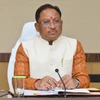 "Vishnu Deo Sai, Chief Minister of Chhattisgarh")

