


Caught in Trump's tariff net: Andhra's shrimp farmers face global blowback
Trump's tariff shock hits Andhra's ₹35,000-crore shrimp industry, leaving farmers battling price crashes, export uncertainty, and long-term market disruption
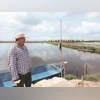 "Viswanatha Raju at his Gutlapadu shrimp farm in West Godavari district. The farm spans over 60 acres")
premium
Viswanatha Raju at his Gutlapadu shrimp farm in West Godavari district. The farm spans over 60 acres | photo: SHINE JACOB
6 min read Last Updated : Apr 19 2025 | 10:14 AM IST
Listen to This Article
In the US, shrimp is often considered a “national obsession”, enjoyed in various forms — battered, fried, steamed, boiled, or served with cocktail sauce. So when the Donald Trump administration imposed reciprocal tariffs on April 2, shrimp lovers and importers across the country were among the most concerned.
At the same time, more than 13,000 kilometres (km) away, in the lush green landscapes of the Laxmipuram-Pallipalem region in Krishna district, Andhra Pradesh, shrimp farmer K B Gangadhara Rao, now in his 60s, had never heard of a “reciprocal tariff”. But in a mix of Telugu, broken English, and Hindi, he managed to convey the impact: “Trump is denting my shrimp business.”
After being hit by viruses in recent years, farmers like Rao are now feeling the pinch of a 10–15 per cent drop in shrimp prices due to higher tariffs in the US — the Indian shrimp industry’s main revenue stay. A move that may wipe out their entire earnings.
This isn’t just Rao’s story.
More than 140,000 farmers and nearly 2 million people in Andhra Pradesh are directly or indirectly tied to the aquaculture sector, which spans 212,000 hectares and includes both fish and shrimp cultivation. Though only shrimp under the 50-count threshold are typically exported to the US, prices for other varieties — 100, 90, 80, 70, and 60 count — primarily shipped to China, the European Union, Southeast Asia, Japan, and other Asian markets, have also seen a steep fall.
“After the pandemic, we are struggling. Diseases are a huge concern, while prices of equipment, medicines, and even power rates have increased in the past five years. A 60-count shrimp for which I used to get around ₹400 a few years ago now fetches barely ₹300,” Rao told Business Standard.
Shrimp size is measured by count per kilogram (kg) —fewer shrimp per kg means a larger individual size. Speaking to a reporter, Rao hoped his concerns might reach the state or central government.
After the Trump announcement, prices dipped by an average of ₹40–50 per kg across categories — mainly 30–50 counts exported to the US — and now range between ₹300 and ₹415 (between $3.5 and $4.85) per kg.
According to online reports, shrimp prices in New York City range from $6.99 to $39 per pound (almost half a kg). This indicates that farmers are not getting the fair value they deserve. One of the workers on the farms,M Ram, hesitantly revealed his salary: ₹13,000 per month ($152) — likely an indicator of how the fair value of a sought-after product is lost in transit.
About 10 km from Pallipalem is Gutlapadu, a village in Bhimavaram mandal in West Godavari district. The drive to Gutlapadu gives outsiders a glimpse of what shrimp farming means to coastal Andhra Pradesh. There is brackish water everywhere — from fields converted into shrimp farms to canals and ponds — capturing the beauty of coastal Andhra at its best. It seems the region’s entire economy depends on the shrimp business.
Hari Hara Varma, a young farmer in his early 30s, explained the ups and downs of the business. “This is an unpredictable business. Sometimes our entire output gets affected by a virus, and we lose all the money and effort,” he said, while showing the shrimp farms along Gutlapadu’s narrow, bumpy roads, surrounded by water, on his Royal Enfield, which bore a sticker of Prime Minister Narendra Modi.
Varma also shared his political views. “During the Yuvajana Sramika Rythu Congress Party government, all our concessions were taken away. We weren’t supported through power subsidies either during their regime,” he added.
At Gutlapadu’s Kotha Pusalamarru region, Viswanatha Raju recounted the history of shrimp farming in Andhra Pradesh. It was his father who forayed into shrimp farming back in 1986, when the state saw a surge in global demand in the late 1980s. “It was the Chandrababu Naidu government that promoted the shrimp business in the late 1990s, which transformed our lives. Now, I have around 60 acres of shrimp farm,” he said.
When his father started the business, black tiger shrimp (Penaeus monodon) and, to a lesser extent, Indian white shrimp (Penaeus indicus) dominated the market. Later, the sector was severely hit by the White Spot Syndrome Virus. Following pleas from environmental activists, the Supreme Court restricted shrimp farming in coastal waters. It was then an Act of Parliament that helped farmers restart shrimp aquaculture.
However, Indian varieties continued to suffer from disease, slowed growth, and size variability. To address these issues, India introduced specific pathogen-free Pacific white shrimp (Litopenaeus vannamei) in 2008 — a move that became a game changer for Andhra’s farmers. “Now, we all go for vannamei only,” said Venugopal Raju, another farmer from the region, who cultivates about 30 acres.
Vannamei accounts for 87 per cent of India’s total shrimp exports, valued at $4.25 billion. The US alone absorbs 54 per cent of that, followed by China at 16 per cent and the European Union at 9 per cent.
“The concerns being raised in some quarters about the dip in prices are not accurate. Due to panic, prices initially dropped by ₹40 per kg across varieties. Now, we’re seeing a gradual rebound. Moreover, buyers in the US are ready to absorb the additional tariff impact, and the burden may not be passed on to farmers,” said Jagadish Thota, a national committee member of the Seafood Exporters Association of India. He added that India still has an edge over rivals like Ecuador because it supplies peeled shrimp.
Amid arguments and counterarguments, farmers remain stuck between the unpredictability of shrimp farming and the policies of Trump.
Hooked on exports: India’s shrimp casts a global net
> 716,004 tonnes: Total frozen shrimp exports from India
> 297,571 tonnes: Share of US market out of total exports
> 625,475 tonnes, or 87%: Share of vannamei in total shrimp exports
> $4.25 billion: Value of vannamei exports
> 54%: Share of the US in total vannamei exports
Topics : Donald Trump Andhra Pradesh Shrimp