


F-1 visa delays leave thousands of Indian students in N Carolina in limbo
With the US fall semester days away, Indian students are struggling to get visa slots, prompting 15 US lawmakers to urge action amid growing concern
 "Donald Trump, Trump")
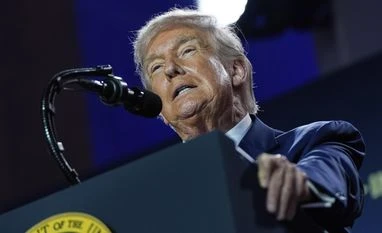
US President Donald Trump speaks during an AI summit at the Andrew W. Mellon Auditorium, Wednesday, July 23, 2025, in Washington. (Photo: PTI)
Listen to This Article
With the fall semester around the corner, Indian students bound for the United States are facing delays in securing study visas — a situation now drawing attention from US lawmakers and Indian authorities alike.
In a letter to Secretary of State Marco Rubio on July 24, 15 US lawmakers — 14 Democrats and one Republican — expressed concern about delays affecting Indian students. “As Members of Congress who represent research universities, we are concerned by reports from our constituent universities about Indian students who have been unable to obtain visas to continue their education in the United States,” the letter, accessed by Business Standard, said.
“Indian students form the largest group of international students in the United States and contribute $9 billion annually to the US economy,” they wrote. “We are dismayed at the possibility that many of these bright young individuals may be blocked—due to limited appointment availability and scheduling delays at the US embassies in India—from continuing their education and research in the United States.”
Among the signatories was Deborah Ross, Democrat from North Carolina, where Indian students make up a substantial portion of international enrolments. In 2024, over 7,000 Indian students studied at North Carolina universities, accounting for 29 per cent of the state’s international student population — surpassing Chinese students as the largest cohort.
ALSO READ: Birthright citizenship: Travelling to give birth in US? Visa may be denied
Scrambling for slots as semester nears
Also Read

 "Donald Trump, Trump")
 "US visa, H4, H1B")
 "Donald Trump, Trump, JD Vance, Vance")
 "Donald Trump, Trump")
With time running out before the semester begins in August, students and admissions experts say the current backlog could derail academic plans.
“Many late admit students are struggling, and the demand for slots is far outpacing supply,” Mary Gogoi, head of admissions at eduVelocity Global told Business Standard. “Check the portal multiple times daily, join Telegram alerts, and apply for an emergency slot if eligible. Notify your university—they may support with letters or deadline extensions. If possible, explore visa appointments in nearby countries,” she advised Indian students.
Gogoi added that visa slots are being released inconsistently. “If no appointment is secured soon, students may need to request a deferral, delayed start, or prepare for a Spring 2026 intake,” she said.
She also warned against relying on unverified sources. “Stay proactive and calm. Track appointment openings, keep your documents ready, and stay in touch with your university’s DSO. Have a backup plan, and don’t rely on rumours—only use official updates,” she said.
India raises issue in Parliament
Back home, questions have been raised in the ongoing monsoon session of Parliament over what the Indian government is doing to support affected students.
In its response, the government said it has been regularly raising concerns with US authorities and remains engaged in talks to build frameworks that support legal student mobility and short-term business and tourist travel. It reiterated that visa policy remains the sovereign prerogative of the host country but added that discussions are ongoing to address obstacles faced by Indian students.
According to the Ministry of External Affairs, the US Embassy is working to open a limited number of additional student visa appointments through the end of August.
Visa trends and numbers
The US has been a key destination for Indian students, with roughly 400,000 currently studying in the country. About 100,000 F-1 study visas are issued to Indian nationals each year.
US Department of State data shows how student visa numbers have shifted over the past five academic years:
2019–20: 20,628
2020–21: 85,385
2021–22: 126,431
2022–23: 143,811
2023–24: 99,169
India overtook China in 2023 as the largest source of international students at US colleges, with over 331,000 Indian students enrolled.
Political decisions affect campus plans
In May, the Trump administration temporarily paused student visa interviews while reviewing vetting procedures for applicants’ social media accounts.
“There is no urgent justification to halt visa appointments while internal policy updates are considered,” said Fanta Aw, CEO of NAFSA, a nonprofit advocating for global academic exchange, in a statement issued on May 27. “This only adds unnecessary delays, fuels uncertainty, and damages our reputation as a welcoming destination for global talent.”
International students also bring in financial benefits. A 2023 NAFSA report estimated that foreign students added $816 million to North Carolina’s economy that year. They’re also more likely to pay full tuition, offering a revenue stream at a time when many universities are under financial pressure.
Duke University President Vincent Price, announcing voluntary faculty buyouts in June, listed “restrictions on international education” among five Trump-era moves that could harm the university. Despite nearly 600 employees opting for the buyout, the school informed staff last week that further layoffs would follow next month, according to The News & Observer (Raleigh).
Rep. Don Bacon, the only Republican to sign the letter to Secretary Rubio, represents a district that includes the University of Nebraska Medical Center.
More From This Section
 "Europe, Venice, ITALY")
 "Dubai")
 "health, digital, data, medical, healthcare, public health, frontline workers, doctors, nurses, researchers")
 "visa fraud")
 "Keir Starmer")
Don't miss the most important news and views of the day. Get them on our Telegram channel
First Published: Jul 30 2025 | 2:21 PM IST