


UK adds India to 'deport now, appeal later' criminal list: What it means
UK's "Deport Now, Appeal Later" scheme allows foreign criminals to be removed before appeals, with hearings held remotely from their home country
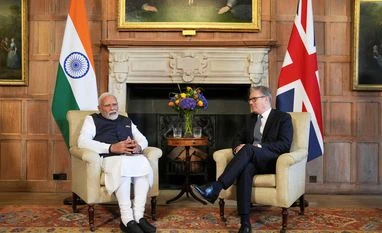 "Britain's Prime Minister Keir Starmer and Prime Minister Narendra Modi")
Britain's Prime Minister Keir Starmer welcomes Indian Prime Minister Narendra Modi at Chequers near Aylesbury, England, Thursday, July 24, 2025. | Photo: Reuters
Listen to This Article
India is set to join a wider list of countries whose nationals can be deported from the United Kingdom before they have the chance to appeal in person, according to the Financial Times.
The UK Home Office confirmed on Sunday that its “Deport Now Appeal Later” scheme will grow from eight countries to 23. Under the policy, foreign nationals from these countries who have had their human rights claim refused will be sent home before their appeal is heard. They will be able to take part in hearings remotely via video link.
“For far too long, foreign criminals have been exploiting our immigration system, remaining in the UK for months or even years while their appeals drag on. That has to end,” said Home Secretary Yvette Cooper. “Those who commit crimes in our country cannot be allowed to manipulate the system, which is why we are restoring control and sending a clear message that our laws must be respected and will be enforced.”
The official press release does not specify which countries have been added to the list.
Also Read

 "UK Universal Credit")
 "Keir Starmer")
 "Narendra Modi, Keir Starmer")
 "UberEats, Food delivery")
 "Asylum UK, UK")
What is UK's “Deport Now, Appeal Later” scheme?
The UK’s “Deport Now, Appeal Later” scheme is a Home Office policy that allows certain foreign nationals to be deported before their appeal against removal is heard, instead of remaining in the UK while the process is ongoing.
How it works
• Normally, a person who is refused leave to remain in the UK can stay in the country while appealing the decision.
• Under this scheme, eligible individuals are removed to their home country first, and then take part in their UK appeal hearing remotely — usually via video link.
• If the appeal succeeds, they can return to the UK.
Who it applies to
• Initially introduced in 2014 under the Immigration Act, it was aimed at foreign criminals given a prison sentence of at least 12 months.
• The policy has been revived and expanded — as of August 2025, the Home Office plans to almost triple the list of countries covered, from 8 to 23, including India.
• It applies where the Home Office believes removal before the appeal would not cause “serious irreversible harm” or breach human rights obligations.
The Home Office says the measure prevents people from using the appeals process to delay deportation for months or years, and ensures quicker enforcement against those convicted of crimes.
List of countries in the scheme
The list originally covered Finland, Nigeria, Estonia, Albania, Belize, Mauritius, Tanzania and Kosovo when revived in 2023 by then Conservative home secretary Suella Braverman.
According to Financial Times, the expanded list will now include:
• India
• Angola
• Australia
• Botswana
• Brunei
• Bulgaria
• Canada
• Guyana
• Indonesia
• Kenya
• Latvia
• Lebanon
• Malaysia
• Uganda
• Zambia
The Home Office has not published the full list in its official press release but said discussions are ongoing with other countries about joining the scheme.
“We are leading diplomatic efforts to increase the number of countries where foreign criminals can be swiftly returned, and if they want to appeal, they can do so safely from their home country,” said Foreign Secretary David Lammy. “Under this scheme, we're investing in international partnerships that uphold our security and make our streets safer.”
Earlier release from prison
The scheme comes alongside legislation passed in June, which from September will allow the government to deport prisoners after they have served 30 per cent of their sentence, instead of the current 50 per cent.
The Ministry of Justice (MoJ) said the powers will apply to foreign national offenders already in custody and those newly sentenced. Discretion will be retained on a case-by-case basis.
“Deportations are up under this government, and with this new law they will happen earlier than ever before,” said Justice Secretary Shabana Mahmood. “Our message is clear: if you abuse our hospitality and break our laws, we will send you packing.”
Offenders serving life sentences, including terrorists and murderers, will still have to complete their prison terms before deportation.
Impact and figures
• Around 5,200 foreign nationals have been deported since July 2024, a 14 per cent rise over the previous year.
• Foreign offenders make up about 12 per cent of the total prison population.
• The average annual cost of a prison place is £54,000.
The government has also committed £5 million to deploy specialist staff across nearly 80 prisons in England and Wales to speed up removals.
Other immigration measures
The Border Security, Asylum and Immigration Bill will allow the removal of asylum seekers convicted of certain sex offences from refugee protection.
Plans in the Immigration White Paper published in May will also tighten how Article 8 of the Human Rights Act – the ‘right to a family life’ – can be used in deportation and asylum appeals.
Since July 2024, the Labour government says it has returned 35,000 people with no right to remain, increased illegal working raids and arrests by 50 per cent, and boosted asylum decision-making by more than 116 per cent.
More From This Section
 "American green card")
 "Luxembourg")
 "US green card, US Passport, US immigration")
 "immigration, visa, travel")
 "Canada")
Topics : UK Immigration UK Visa BS Web Reports immigration
Don't miss the most important news and views of the day. Get them on our Telegram channel
First Published: Aug 11 2025 | 3:37 PM IST