


Home / India News / More trains, cheaper flights: Govt rushes to evacuate tourists from valley
More trains, cheaper flights: Govt rushes to evacuate tourists from valley
Despite the chaos, regular services continue to run on schedule. Officials confirmed that additional stranded passengers are being accommodated on outgoing trains from Srinagar
 "airport, kashmir airport")
premium
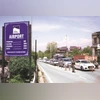
A long queue of vehicles carrying tourists outside the Srinagar airport (Photo: REUTERS)
5 min read Last Updated : Apr 23 2025 | 11:43 PM IST


Listen to This Article
Srimanta Dey sat quietly, listening to the hush that now hangs over the Kashmir Valley — a silence so complete it feels deliberate. An ex-government official, Dey had arrived with a group of 30, seeking relief from the sweltering plains back
home. But what was meant to be a peaceful escape to the cool meadows of Pahalgam has now turned into a tense wait to leave.
“We had just left the meadows a few hours back and returned to the city centre when we learnt about the terrorist attack in Pahalgam,” Dey recounted over the phone from the town. The streets, he said, are now deserted. Hotels in and around the town's central market are packed with anxious tourists, all desperate for a way out.
On Tuesday afternoon, gunmen opened fire in Pahalgam. Twenty-six people were killed — most of them tourists — in what has become the deadliest attack in the region’s tourism hotspot. Shock has settled over the Valley, and with it, the instinct to flee.
“Someone in the security establishment informed us that proper conveyance and escort will be provided in a day or two for us to return home,” Dey added, hinting that their itinerary — including a planned visit to Vaishno Devi in the Jammu region — might be cut short.
As tourists scramble to find a way out of Jammu & Kashmir, especially from Pahalgam, the government has begun coordinating a multi-pronged evacuation effort, moving swiftly to provide passage by train, by road, and by air.
More trains, diverted roads
In the wake of the attack, Indian Railways announced a special reserved train for tourists. The train departed from Katra on Wednesday night and is scheduled to reach Delhi by Thursday morning.
“If needed, more rakes are available with Northern Railway and more special trains will be announced going forward,” said Himanshu Upadhyay, Chief Public Relations Officer of Northern Railway.
Despite the chaos, regular services continue to run on schedule. Officials confirmed that additional stranded passengers are being accommodated on outgoing trains from Srinagar.
MEMU services across the Valley remain fully operational, a Ministry of Railways spokesperson said. “So far, nothing has been communicated for train cancellations or any major changes,” he told Business Standard.
Security has also been tightened at several railway stations, with special focus on the recently completed Sangaldan-Reasi section of the Udhampur-Srinagar-Baramulla Rail Link (USBRL). The section had been slated for inauguration by Prime Minister Narendra Modi on April 19 but the event was cancelled due to adverse weather.
“There’s been no change in the plan for direct trains to Kashmir,” said a Railway Board spokesperson. “The Prime Minister’s visit earlier this month was postponed, and the status remains the same. At present, the railway’s focus is entirely on passenger evacuation.”
For those who must travel by road, however, the situation remains far more challenging. A cloudburst in Ramban district earlier this week tore through five sections of the Jammu-Srinagar National Highway (NH-44), washing away large chunks of asphalt and leaving travelers stranded. Authorities have since managed to restore partial connectivity, but the situation remains tricky though.
“I’ve directed the administration to facilitate traffic between Srinagar & Jammu allowing tourist vehicles to leave,” said Jammu & Kashmir Chief Minister Omar Abdullah on Wednesday. “This will have to be done in a controlled and organised way because the road is still unstable in places. We are working hard to clear all the stranded vehicles. We will not be able to permit completely free movement of vehicles now, and we hope that everyone will cooperate with us.”
Regular fare flights, preparedness at airports
In the skies, relief operations are also underway. Aviation Minister Ram Mohan Naidu issued an advisory on Wednesday, asking airlines to maintain “regular” fare levels and to resist any temptation to implement surge pricing. “As part of immediate relief measures, four special flights from Srinagar – two to Delhi and two to Mumbai – have been arranged, with additional flights kept on standby to cater to further evacuation needs,” said a statement from the Ministry of Civil Aviation.
Naidu directed all carriers to fully cooperate in repatriating the remains of the deceased, and to work in close coordination with state governments and local authorities. The emphasis was clear: No one should be left behind, and no bereaved family should be kept waiting.
The Directorate General of Civil Aviation (DGCA) has asked the airlines to “take swift action” to increase flights on routes from Srinagar, citing a surge in demand from stranded tourists looking to return home. The regulator called for “uninterrupted” connectivity to key destinations across India to facilitate their evacuation.
The DGCA has also asked airlines to waive cancellation and rescheduling charges, and to extend all possible assistance to affected passengers.
Airlines have responded quickly. Akasa Air has started offering full refunds and one free rescheduling – with fare difference waivers — for flights to and from Srinagar between April 23 and 29. IndiGo has extended similar waivers through April 30 for tickets booked on or before April 22. The airline also operated additional flights from Delhi and Mumbai to Srinagar Wednesday.
Air India added two special flights from Srinagar to Delhi and Mumbai for the day (11.30 am and 12 noon, respectively). All other flights remain on schedule. The airline is offering complimentary rescheduling and full refunds for confirmed bookings on these routes through April 30.
The Ministry of Civil Aviation has established a dedicated control room at Srinagar airport to oversee operations and assist passengers in real time.
Meanwhile, airports in Kolkata, Chennai, Pune, Raipur, Indore, Visakhapa–tnam, and Bhubaneswar have confirmed — via state governments — that they are fully prepared to receive the mortal remains of victims, ensuring dignified handovers to grieving families.