


Home / Industry / Agriculture / 'Certain pulses' could be new flashpoint for India under trade deal with US
'Certain pulses' could be new flashpoint for India under trade deal with US
Pulses were not part of the items mentioned in the joint statement for the interim framework, and the fact-sheet too does not clarify which pulses are being included
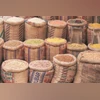 "pulses")
premium
In the US, pulses production is largely concentrated in the states of North Dakota, Montana, Washington and Idaho, with exports playing a critical role in farm incomes
5 min read Last Updated : Feb 10 2026 | 11:33 PM IST
Listen to This Article
The inclusion of ‘certain pulses’ in the US-Indo trade deal fact-sheet released late last night could create heartburn among the agricultural community in India, amid fears among the farmers that their interests will be compromised post the trade agreement between the two countries.
Pulses were not part of the items mentioned in the joint statement for the interim framework, and the fact-sheet too does not clarify which pulses are being included. However, sources said the US has been pressing for inclusion of exports of lentils and yellow peas at zero duty to India. India now imposed 10 per cent duty on lentils that might go for the US.
The US mostly produces dried green lentils, which are priced higher than other variants of lentils that India imports annually from different countries.
India has traditionally accounted for 8-12 percent of the total pulses exported from the US, depending on the policy conditions.
In 2024, around $74 million - $76 million of pulses were sold to India, making it the fourth largest buyer of US pulses in the world, after Mexico, Canada and the European Union (EU).
Few weeks back, two prominent US Republican Senators Steve Daines from Montana and Kevin Cramer from North Dakota sent a letter to President Trump, urging favourable pulse crop provisions in any future trade agreements between the US and India. “In your first term, we wrote to you on this issue, and you hand-delivered our letter to Prime Minister (Narendra) Modi during the 2020 trade negotiations with India, which helped bring our producers to the table…engaging Prime Minister Modi on pulse crop tariffs to enhance the economic cooperation between our countries would be mutually beneficial to both American producers and Indian customer,” the senators wrote in the letter to President Trump.
Their main point of contention was the 30 per cent import tariff announced by India in December 30, 2025 on yellow peas effective from November 1, which according to the senators was unfair to the US pulse crop producers, exposing them to significant competitive disadvantage when exporting their high-quality product to India. But, the letter is also a pointer that India was not always a marginal player in the whole US pulses matrix.
Data shows that in 2015, India imported close to $136.19 million worth of pulses from the US, making it the number one buyer of US pulses, a position it retained in 2016 as well with $142.16 million worth of imports.
However, over the years, this position has been taken up by countries and blocks such as Canada, Mexico and the EU due to a combination of factors that included high prices, easier availability from other sources and increase in domestic production of varieties such as kabuli chana (peas).
Also, some traders said most pulses are now imported into India in containers, while in some countries it is still sold in bulk vessels. In fact, USDA data showed that between 2021 to 2023, India slipped to ninth position in the list of countries which bought pulses from the US.
During 2023-24, India imported close to 1.67 million tonnes of lentils of which Australia and Canada accounted for around 1.58 million tonnes (around 95 per cent).
In 2024-25, this number dropped to 1.21 million tonnes of which Australia and Canada accounted for almost 90 per cent.
Yellow peas have been the dominant segment of India’s overall pulses imports since the last two financial years. India imported close to 1.16 million tonnes of yellow peas in 2023-24 of which Canada and Russia accounted for around 83 per cent of the same. In 2024-25, India imported yellow peas at an all-time high of around 2.16 million tonnes in which shipments from Canada and Russia accounted for nearly 82 per cent.
Clearly, when it comes to pulses, India has been sourcing largely from Canada, Russia, Myanmar, Australia and even Mozambique, while imports from the US have risen, but are still small as compared to other countries.
According to the data from the United States Department of Agriculture’s (USDA) National Agricultural Statistics Service and the US Dry Pea and Lentil Council, the total pulses harvested area and estimated total production in 2024 (calendar year) were 2.4 million acres and approximately 1.6 million metric tonnes, respectively.
The data showed that pulses harvested area was higher in 2024 compared to 2020-2023, while pulse production was higher in 2024 compared to 2020-2023. The exception was the higher production of peas in 2020.
In the US, pulses production is largely concentrated in and around the states of North Dakota, Montana, Washington, and Idaho, with exports playing a critical role in their farm incomes.
According to reports, Montana and North Dakota alone account for over 80 per cent of all dry pea and lentil production for the entire US, which also includes chickpeas apart from the other two.
These states border Canada, which itself is one of the world’s main pulses growing nations and a major exporter of pulses to India.
Trade data shows that between December 2023 and October 2025 (the period when India allowed duty free imports of yellow peas), the country imported close to 4.06 million tonnes of yellow peas of which Canada alone accounted for 2.21 million tonnes (close to 48 per cent), followed by Russia at 1.19 million tonnes.
The US was behind by a long distance at just 22,275 tonnes.
In 2024, according to the USDA data, out of the total around 1.6 million tonnes of pulses produced in the US, around 1.22 million tonnes or almost 76 per cent was exported. This was valued at around $1.12 billion, making the US as one of the big exporters of pulses in the world.