Security agencies offer both manual and electronic services.
Manual services account for 75-80 per cent of the market and involve providing security personnel to man public spaces, housing societies, commercial complexes and banks, among others.
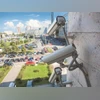
Electronic security services require a wide range of devices, such as closed-circuit television cameras, metal detectors, and burglar and fire alarms. The micro, small and medium enterprises (MSMEs) in this segment face tighter profit margins because of lower working capital efficiency, limited scalability and vulnerability to labour wage inflation. That makes it challenging for them to compete with the larger players in securing contracts for high-demand sites, such as shopping malls, special economic zones, townships and information technology parks.
As is wont in such a milieu, the industry has witnessed rapid acquisitions in recent years and the share of MSMEs has fallen to 40-45 per cent from 50-55 per cent in pre-pandemic years.
The new labour codes are expected to have a divergent impact on individual players in the industry, depending on their level of organisation and scale. While smaller, unorganised players may face challenges in adapting to the new regulatory environment, organised players are likely to benefit from their existing capabilities.
Organised players are typically able to pass on increased costs to clients through contract pricing. This will help them mitigate the impact of any statutory wage hikes resulting from skill reclassification and the introduction of a national floor wage in future.


 "smart city, urban, security, Surveillance, cctv cameras, population")