


US stocks tumble as Jerome Powell flags risks from Trump's tariff policies
Fed Chair Jerome Powell warns Trump's tariffs could fuel inflation and slow growth, adding uncertainty to markets as Wall Street reels from sharp declines in major indexes
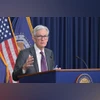 "Jerome Powell")
Jerome Powell (Photo: US Federal Reserve)
Listen to This Article
US stock markets took a major hit on Wednesday following remarks from Federal Reserve Chair Jerome Powell, who expressed serious concerns over President Donald Trump’s tariff measures. Powell described the tariffs as unprecedented in recent history, warning that their full impact remains unpredictable.
The Dow Jones Industrial Average dropped by 700 points, or 1.73 per cent, while the S&P 500 declined by 2.24 per cent. The tech-focused Nasdaq Composite experienced the sharpest fall, plunging 3.07 per cent.
“These are very fundamental policy changes,” Powell said during an event hosted by the Economic Club of Chicago, as reported by CNN. “There isn’t a modern experience of how to think about this.”
Fed chief warns of inflation and slower growth
Powell emphasised the magnitude of the trade measures, noting, “The level of the tariff increases announced so far is significantly larger than anticipated. The same is likely to be true of the economic effects, which will include higher inflation and slower growth.” He said, “We may find ourselves in the challenging scenario in which our dual-mandate goals are in tension.”
These remarks add to growing concerns among investors, who have been navigating increased volatility as the Trump administration oscillates on trade policy direction.
Also Read

 "Giorgia Meloni, Meloni")
 "Xi Jinping, Donald Trump")
 "Donald Trump, Trump")
 "Mark Carney")
 "Donald Trump, Trump")
Data from the Commerce Department revealed that retail sales in March surged at their fastest monthly pace in over two years. Analysts suggest the increase may reflect consumer attempts to make purchases before Trump’s tariffs fully take effect.
Nvidia hit by export restrictions amid US-China AI battle
Meanwhile, Nvidia (NVDA) shares dropped 6.87 per cent after the company disclosed a $5.5 billion expected loss tied to new US government restrictions on exporting its AI chips to China.
The move is part of a broader geopolitical rivalry over artificial intelligence leadership. Tensions have intensified since January, following the emergence of Chinese AI firm DeepSeek, which launched a lower-cost alternative to ChatGPT and ignited rapid AI development in China.
Fed holds steady amid policy uncertainty
Although Powell acknowledged the economic headwinds created by trade policy, he indicated the Federal Reserve will maintain its current course until clearer economic signals emerge.
The US economy remains stable for now, according to recent indicators, but the Fed remains vigilant as it evaluates the potential consequences of ongoing trade disruptions.
Tariffs imposed by Trump administration
To date, the Trump administration has implemented sweeping tariffs, including 25 per cent duties on steel and aluminium, similar levies on non-compliant goods from Mexico and Canada, a 145 per cent tariff on Chinese imports, and a 25 per cent tariff on automobiles — with additional charges on auto parts pending. A general 10 per cent tariff has also been applied across all US imports.
Temporary exemptions have been granted for select electronics, but additional tariffs on semiconductors, pharmaceuticals, copper, and timber are anticipated.
Public to shoulder tariff burden, Powell says
Despite President Trump’s repeated assertion that tariffs are paid by foreign countries, Powell clarified that the financial burden will fall, at least in part, on American consumers and businesses.
“With likely more to come,” Powell said, “unemployment is likely to go up as the economy slows.”
He added, “In all likelihood,” inflation will also rise. He explained that some portion of the cost of tariffs is inevitably “paid by the public.”
While Powell acknowledged that prices will almost certainly increase, the broader inflationary impact and its extent remain uncertain.
More From This Section
 "Hero MotoCorp")
 "Market, BSE, NSE, NIfty, Stock Market, investment")
 "BSE, NSE, Stock Market, Market")
 "gsk pharma")
 "Wipro")
Don't miss the most important news and views of the day. Get them on our Telegram channel
First Published: Apr 17 2025 | 11:27 AM IST