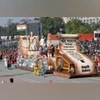
Tableaux were not always a part of the parade. After the Constitution came into force in 1950, the pageantry of Republic Day constituted only a military spectacle showcasing the strength of the newborn nation. Cultural tableaux were introduced only in 1952, supposedly to add a pedagogical dimension of pride and pluralism to the parade. For the country’s new leadership, the parade became a tool to propagate the meaning of the Indian nation to its own people — a curated cultural demonstration of “unity in diversity”. A Madhya Pradesh float back in the 1950s displayed Gond and Baiga tribal artisans at work; a Punjab tableau a decade later celebrated the Green Revolution with wheat fields and mechanised ploughs; and the Tamil Nadu tableau for years showcased Bharatanatyam dancers and temple gopurams to represent Dravidian culture.
Themes got more progressive as the republic matured. Gujarat’s 2001 tableau showcased the state’s industrial growth and its new ports; Maharashtra’s 2010 float depicted the transformation of Mumbai into a “global city” with the Bandra-Worli Sea Link as its focus. Goa’s “Save the Frog” float was an environmental first while Odisha’s post-cyclone reconstruction float was a tribute to national resilience. The 2024 Uttar Pradesh tableau centred on the Ram Lalla consecration at Ayodhya and the pran pratishtha ceremony of January 2024, with an artistic model depicting Lord Ram in a young avatar holding a bow and arrow. The themes have, however, largely remained staid and predictable.
If one were to re-imagine the Republic Day parade somewhat, and inject some new thinking, one could draw inspiration from the Jidai Matsuri — the Festival of Ages — held on October 22 every year in Kyoto, Japan. The parade is like a moving history book before your eyes.
The Jidai Matsuri Festival procession depicts historical periods, eras and major events in reverse chronological order, spanning from the Meiji Restoration in the early 19th century to the Heian period in the 8th century. The spirits of Emperor Kanmu, who transferred the capital to Kyoto, and Emperor Komei, the last emperor to rule from Kyoto, are transported in sacred carriages called gohoren as a form of ritual meant to help Kyoto remain secure, developed, and prosperous. The historical processions from each era accompany them during their journey from Kyoto Imperial Park back to the Heian Jingu Shrine. The procession encompasses eight historical periods beginning with the Meiji Restoration (1868) and ending at the Enryaku era (782 - 806).
Around 20 groups with approximately 2,000 participants and 70 horses and oxen join it, forming a two-km-long parade; 12,000 costumes and ceremonial items are used in the festival to showcase the vibrant colours and the pinnacle of Kyoto craftsmanship. Through meticulous research, artisans have recreated these pieces using authentic ancient materials and techniques, ensuring historical accuracy down to every thread. Most depictions exceed museum quality in replication of details and historical exactness. It is the most artistic replay of national history anywhere on Planet Earth.
The Kyoto festival could certainly be an inspiration for future Republic Day parades. The accent at Jidai Matsuri is on history — and India too has loads of it to celebrate and remember.
The parade in 2030, the Oak Anniversary of the Republic — and oak being a symbol of strength, stability, and longevity — can start with the Maratha Empire (1674-1818), move on to the Mughals (1526-1857), the Vijayanagara Empire (1336 -1646) and then to the Delhi Sultanate (1206 -1526) covering the Mamluk, Khalji, Tughlaq, Sayyid and Lodhi dynasties.
There could then be tableaus on the Chola Dynasty (300s BC – 1279 CE) known for their naval power, maritime trade, and empire-building; the Pala Empire (c. 750 – 1174 CE) that ruled Bengal and Bihar; the Rashtrakuta Dynasty (c. 735 – 982 CE) a major power that competed for Kannauj at one time; the Chalukya Dynasty (543 – 753 CE) that dominated the Deccan, based in Badami; and the Pallava Dynasty (275 – 897 CE) renowned for Dravidian architecture. They would make for a spectacular parade. A further rewind could take us back to the Guptas, the Kushans, the Satavahana, the Mauryan, the Nanda and the Haryanka eras.
Eight decades into the parade, it is time to re-imagine and refresh.
The author is chairman of Rediffusion


 "Republic Day tableaux")