


Home / World News / Facing democracy test, Bangladesh at a crossroads ahead of elections
Facing democracy test, Bangladesh at a crossroads ahead of elections
India will closely watch the first post-Hasina parliamentary polls, amid concerns over minority safety, regional alignments and a tight BNP-Islamist contest
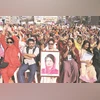 "A BNP supporter holds a photo of former PM Khaleda Zia at an election campaign rally in Dhaka | Photo: Reuters")
premium
A BNP supporter holds a photo of former PM Khaleda Zia at an election campaign rally in Dhaka | Photo: Reuters
4 min read Last Updated : Feb 08 2026 | 11:27 PM IST


Listen to This Article
In the first national election since then Prime Minister Sheikh Hasina was ousted in August 2024, around 127 million voters will head to the polls to elect 350 members of the Jatiya Sangsad, Bangladesh’s parliament, on Thursday, February 12.
Alongside the parliamentary vote, the country will hold a referendum on the July National Charter 2025, drafted in the aftermath of the student-led protests that forced Hasina to flee Dhaka. She was later sentenced to death by a special tribunal and is currently living in exile in New Delhi. Her party, the Awami League, has been banned and barred from contesting the elections.
The outcome of the vote, particularly its implications for the restoration of democracy, will be closely watched in India. Relations between New Delhi and the caretaker government in Dhaka, led since August 2024 by Nobel laureate Muhammad Yunus, have been strained. Indian officials have expressed concern over Yunus’s recalibration of ties with Pakistan and his support for radical Islamist and anti-India elements.
India’s Ministry of External Affairs has repeatedly flagged attacks on religious minorities in Bangladesh (Hindus, Christians and Buddhists), including on their homes, businesses, properties and places of worship. New Delhi has raised the issue of minority safety with Bangladeshi authorities at both political and diplomatic levels on multiple occasions. Prime Minister Narendra Modi discussed the matter during his meeting with Chief Adviser Yunus on April 4, 2025, while External Affairs Minister S Jaishankar raised it with Foreign Adviser Touhid Hossain on February 16, 2025.
Jaishankar visited Dhaka on December 30-31 last year to attend the funeral of former Bangladeshi prime minister and Bangladesh Nationalist Party (BNP) chairperson Khaleda Zia. During the visit, he handed over a personal letter from Modi to her son, Tarique Rahman.
In his condolence message, Modi said he was confident that Zia’s “ideals” of strengthening India-Bangladesh relations “will be carried forward under your able leadership of the BNP and will continue to serve as a guiding light to ensure a new beginning and the enrichment of the deep and historic partnership between India and Bangladesh.”
Rahman, now at the helm of the BNP, leads one of the two main coalitions contesting the election. The BNP heads a 10-party alliance, while Jamaat-e-Islami leads an 11-party bloc. Among the constituents of the Jamaat-led alliance is the National Citizen Party, formed by students who spearheaded the anti-Hasina movement in 2024. Other notable contenders include Islami Andolan Bangladesh, which broke away from the Jamaat alliance, and the Jatiya Party, a former ally of the Awami League.
Observers of Bangladeshi politics believe the Rahman-led BNP alliance has a slight edge and that Rahman -- citing his “inclusive vision” and commitment to a secular constitution -- could emerge as a unifying figure, potentially improving ties between Dhaka and New Delhi. In its manifesto, Shobar Aage Bangladesh (Bangladesh First), the BNP has pledged that it will not act as a proxy for any country and will seek to end border killings, push-ins and smuggling, longstanding sources of friction with India. The Awami League government under Hasina had been accused by the Opposition of acting as an Indian proxy.
The BNP manifesto also states that Bangladesh will neither interfere in the internal affairs of other countries nor accept external interference in its own. Last year, Yunus alluded to India’s “chicken’s neck” — the narrow Siliguri Corridor linking mainland India to its north-east — during a visit to China. Rahman, however, has insisted that Bangladesh would align with neither India nor Pakistan. “Neither Dilli, nor Pindi, Bangladesh before everything,” he has said.
In its manifesto, Jamaat-e-Islami has called for “friendly and cooperative” relations with India. While it does not mention Pakistan, it places emphasis on prioritising ties with Muslim-majority countries. The document is silent on the safety and security of religious minorities, including Hindus. By contrast, the BNP manifesto promises legal protections to ensure the safety of life, property and places of worship for minorities, along with government stipends and welfare programmes for leaders of all faiths. It states that religion is a matter of individual choice, but that the state represents all citizens and will guarantee the right to practise religion and celebrate festivals without hindrance. According to the 2022 census, Hindus make up around 8 per cent of Bangladesh’s population.
Opinion polls suggest a closely fought contest between the two alliances, with the BNP holding a narrow lead.
Topics : Bangladesh Bangladesh election Elections