


Asteroid threat grows: 300-foot rock has higher chance of impact in 2032
The risk assessment of the newly discovered asteroid 2024 YR4 has increased from a chance of 1.2% impact over the last week to 2.1% due to new observations
 "asteroid")
Listen to This Article
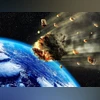
Astronomers are closely observing a football field-sized asteroid, 2024 YR4, that they say is likely to strike Earth in 2032. The chances of the asteroid hitting Earth have shot up to 2.1% which is about 1 in 43 with new observations.
The asteroid, which tops the Center for Near Earth Object Studies Sentry asteroid risk list, has been estimated to impact our planet on December 22, 2032, according to the European Space Agency. However, the astronomers expect the impact probability to fall dramatically in the near future when new observations are made about its orbit.
The asteroid YR4 was first 'precovered' (short for pre-discovery recovery) by Asteroid hunter David Rankin from the Catalina Sky Survey. The space rock is estimated to be 131 to 295 feet wide.
Space.com first reported about the 2024 YR4 when chances of the space rock hitting our planet were just 1 in 83. Those odds have now doubled to 2.3 per cent, representing a greater chance of strike.
Rankin has been tracking the asteroid, 2024 YR4, since its discovery in December 2024. He isn’t surprised that the asteroid’s chances of hitting Earth have gone up.
Also Read

 "Asteroid Bennu")
 "asteroid")
 "spacecraft, asteroid 16 Psyche")
The asteroid has a “size range comparable to that of a large building,” said CNN quoted Dr. Paul Chodas, manager for the Center for Near Earth Object Studies (CNEOS) at NASA’s Jet Propulsion Laboratory in Pasadena, California, as saying. Chodas added that the size of the asteroid, which astronomers are trying to determine with follow-up observations using multiple telescopes, is currently highly uncertain.
“If the asteroid turns out to be on the large end of its estimated size range, the impact could produce blast damage as far as 50 kilometers (31 miles) from the impact site,” he was quoted as saying by the channel.
“But that’s in the unlikely event that it might impact at all. The potential for damage arises because of the incredibly high speed (about 17 kilometers per second, or 38,028 miles per hour) at which the asteroid would enter the atmosphere.”
How do scientists track if an asteroid could impact the Earth?
When an object is photographed, it goes through the database to check if it's already known to astronomers, which takes around 10 minutes.
In case the object is new, follow-up observers report it up the chain and place it in a list to re-observe the object in an hour or two when it's moved a bit, as a second check, he says.
If it's confirmed as a new discovery, the object is reported to the Minor Planet Center run by the International Astronomical Union.
The major challenge for astronomers is to deal with a serious blind spot, i.e., a sun behind the object. In such cases, it becomes impossible for optical telescopes to separate the light reflected off a tiny asteroid from the intense glare of the sun.
Can anything be done to prevent an impact?
NASA's DART mission ("Double Asteroid Redirection Test") successfully crashed into the asteroid Dimorphos about 7 million miles away from Earth in 2022 that shifted the orbit of the rock with a small margin.
Dimorphos was not a threat to Earth, but the purpose of the project was designed to prove the possibility of redirecting an asteroid which is on a collision course with Earth. When it succeeded in diverting the position of the asteroid, the mission was declared successful.
NASA reported in 2023 that the very biggest asteroids that killed the dinosaurs are few and far between, and the space agency believes that all these asteroids are already identified and tracked, according to Npr.org.
Another 95% of those a size smaller asteroids that Nasa describes that can "cause global devastation [and] the possible collapse of civilization'' have already been discovered.
2024 YR4 is currently outbound, heading away from Earth, meaning it is difficult to observe. Rankin and colleagues will continue to track this space rock throughout February 2025 with 8-meter telescopes at the Catalina Sky Survey, Space.com reported.
More From This Section
 "Israel, Hamas, Israel Hamas flag, Israel Hamas")
 "JP Morgan")
 "Munich car accident")
 "oil")
 "Musk")
Don't miss the most important news and views of the day. Get them on our Telegram channel
First Published: Feb 13 2025 | 6:00 PM IST