


EU eyes local-only food sourcing for schools in 2028 farm reforms
Draft EU proposal mandates sourcing fruit, vegetables, and milk from within Europe for school food, under the 2028 CAP overhaul focused on domestic production
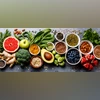 "vegetable, Vegetables, Fruits, Fruit")
The EU plans to require schools to serve only EU-sourced fruit, vegetables and milk, as part of its 2028 CAP reforms aimed at boosting local agriculture. | Photo: Shutterstock
Listen to This Article
The European Commission is preparing to unveil a proposal that will require all fruit, vegetables and milk supplied through the European Union’s school food scheme to be sourced entirely from within the bloc. The initiative forms part of a broader push to boost domestic production across sectors, from agriculture to defence.
According to a draft regulation seen by the Financial Times, the proposal is expected to be presented this week and will serve as a central plank in the Common Agricultural Policy (CAP) for the EU’s next long-term budget cycle, which begins in 2028.
Under the new rules, only products bearing the ‘Made in Europe’ label will be eligible for the school food programme, which currently provides fresh food to millions of children across the bloc.
EU seeks to revamp CAP
The changes are part of broader CAP reforms aimed at addressing growing political, environmental, and social pressures. The €369 billion policy remains one of the EU’s most significant and politically sensitive budgets.
Direct income support, currently totalling around €291 billion, will remain in place but will be more tightly targeted. Payments will still be based on land size, but will operate on a sliding scale, giving smaller farms a larger share. Annual payments will be capped at €100,000 per recipient in a bid to promote fairer distribution.
Also Read

 "Meta")
 "Ursula von der Leyen, president of the European Commission")
 "Ursula von der Leyen, Ursula, von der Leyen, Leyen")
 "UK INDIA, INDIA UK TRADE, TRADE INDIA UK")
 "Shein, Temu")
EU’s farm roadmap to 2040
This comes after the European Commission released its ‘A Vision for Agriculture and Food’ document, released in February. That paper laid out a strategy to transform the EU’s agri-food systems by 2040, with input from farmers, scientists, civil society groups and policymakers.
Priorities of the EU agri-food systems roadmap include:
- Strengthening local food systems
- Increasing support for sustainable and small-scale farming
- Streamlining administrative processes for farmers
- Expanding incentives for young and first-generation farmers
- Introducing benchmarks for environmental performance
- Safeguards against unfair foreign competition
However, the document has received criticism for “ignoring” climate change and vital green proposals.
The Commission also pledged to make greater use of public procurement to prioritise regional and seasonal produce, adding momentum to the local sourcing agenda. The CAP reform proposals are expected to shape legislative changes over the next two years, with full implementation targeted for 2028.
Wider EU local production reforms
The agriculture sector now joins defence and green energy as areas where the EU is shifting procurement policies in favour of European suppliers. France has been especially active in pushing this agenda forward.
Although the EU is a net exporter of dairy, it remains dependent on fruit and vegetable imports, importing nearly twice the volume it exports. Key non-EU suppliers include the US, Morocco and Turkey. Nonetheless, 17 EU member states already favour local sourcing within the existing school food scheme, indicating strong support for the Commission’s new direction.
The proposal will be formally presented to member states and the European Parliament later this week, with negotiations set to begin in the autumn.
More From This Section

 "Donald Trump, Trump")
 "Tomorrowland fire")
 "investment")
 "Donald Trump, Trump, JD Vance, Vance, Marco Rubio")
Don't miss the most important news and views of the day. Get them on our Telegram channel
First Published: Jul 17 2025 | 1:15 PM IST