


US court blocks Trump's order to bar foreign students at Harvard University
A US federal judge blocked the Trump administration's move to bar international students at Harvard, following a swift lawsuit by the university claiming the order would cause 'serious & lasting harm'
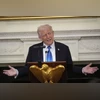 "Donald Trump,Trump")
The Trump administration has defended its actions against Harvard as part of a broader campaign to tackle antisemitism and counter what it sees as left-leaning ideologies in elite universities. (Photo:PTI)
Listen to This Article
A federal judge in Boston blocked Donald Trump's administration order that would have stopped international students from attending Harvard University. Judge Allison D Burroughs issued a temporary restraining order on Friday (May 23), saying the move would cause “immediate and irreparable injury” to the university.
The ruling came just hours after Harvard filed a lawsuit against the administration. The legal action followed the Department of Homeland Security’s announcement a day earlier that it would revoke the university’s ability to enrol international students — prompting a swift response from Harvard, one of the United States’ oldest and most prestigious universities.
Notably, Harvard depends heavily on students from around the world, many of whom are top scholars. Blocking their entry, the university suggested, could threaten Harvard’s future.
Strong words from Harvard's leadership
Alan M Garber, Harvard’s president, addressed the university community in a letter on Friday (May 23) morning. He wrote, “We condemn this unlawful and unwarranted action,” and added that it “imperils the futures of thousands of students and scholars across Harvard and serves as a warning to countless others at colleges and universities throughout the country who have come to America to pursue their education and fulfill their dreams.”
Also Read

 "Donald Trump, Trump")
 "Harvard University")
 "Flight, plane, Airplane")
 "trade, import, export, container, shipping")
Harvard’s lawsuit accused the Trump administration of launching a “campaign of retribution” against the university. This came after the administration announced on Thursday that it had withdrawn Harvard’s Student and Exchange Visitor Program certification. Without this certification, the university cannot accept international students.
Harvard's previous lawsuit
The lawsuit was the second time in a matter of weeks the university had sued the federal government. Earlier, Harvard officials filed a lawsuit against the Trump administration, accusing it of retaliating against the university for expressing its constitutional rights. The lawsuit concerned Harvard's autonomy over its governance, curriculum, and the views of its staff and students.
The lawsuit stated that the administration’s actions were “clear retaliation for Harvard exercising its First Amendment rights to control Harvard’s governance, curriculum and the ‘ideology’ of its faculty and students.” It added: “With the stroke of a pen, the government has sought to erase a quarter of Harvard’s student body, international students who contribute significantly to the university and its mission. Without its international students, Harvard is not Harvard.”
White House response
On the other hand, the Trump administration has claimed that Harvard failed to meet several demands outlined in a letter sent on April 16. These included records of protests going back five years, video footage of alleged misconduct, and details of disciplinary actions involving international students.
Later, on May 22, the Department of Homeland Security reportedly declared Harvard’s response “insufficient,” without offering any clear reason or referencing a specific regulation. The lawsuit pointed to statements made by President Trump on his social media platform, Truth Social, as further evidence of a personal vendetta against Harvard.
White House spokeswoman Abigail Jackson responded to the lawsuit with a sharply worded statement. She said: “If only Harvard cared this much about ending the scourge of anti-American, antisemitic, pro-terrorist agitators on their campus they wouldn’t be in this situation to begin with. Harvard should spend their time and resources on creating a safe campus environment instead of filing frivolous lawsuits.”
Tricia McLaughlin, assistant secretary for homeland security, also criticised the legal challenge. She said the lawsuit “seeks to kneecap the president’s constitutionally vested powers,” and added, “The Trump administration is committed to restoring common sense to our student visa system; no lawsuit, this or any other, is going to change that. We have the law, the facts, and common sense on our side.”
Significantly, the Trump administration has defended its actions as part of a broader campaign to tackle antisemitism and counter what it sees as left-leaning ideologies in elite universities. During his presidential campaign, Donald Trump referred to Ivy League institutions, including Harvard, as being controlled by “Marxist maniacs”.
More From This Section
 "Muhammad Yunus, Yunus")
 "Fengyang drum tower, China, tower collapse, Ming dynasty")
 "Donald Trump, Trump")
 "Dragonfly")
 "Massachusetts Institute of Technology")
Don't miss the most important news and views of the day. Get them on our Telegram channel
First Published: May 23 2025 | 10:21 PM IST