


Trump signals cutting China tariffs 'substantially' if trade deal reached
China hasn't officially responded to Trump's pledge to play "nice" but the media outlet Cailian called it "a sign that Trump is already softening stance on his signature tariff policies"
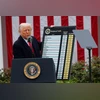 "Donald Trump")
Trump’s comments come as US stocks and Treasuries have been battered since he rolled out sweeping tariffs on April 2 (Photo: Reuters)
Listen to This Article
President Donald Trump said he plans to be “very nice” to China in any trade talks and that tariffs will drop if the two countries can reach a deal, a sign he may be backing down from his tough stance on Beijing amid market volatility.
“It will come down substantially but it won’t be zero,” Trump said Tuesday in Washington, following earlier comments from Treasury Secretary Scott Bessent that the standoff was unsustainable. Trump added that “we’re going to be very nice and they’re going to be very nice, and we’ll see what happens.”
Trump also said he didn’t see the need to say he’d “play hardball” with Chinese leader Xi Jinping and that during discussions he wouldn’t raise Covid-19 — an issue that is very politically sensitive in Beijing. The White House recently launched a website that suggested the virus came from a lab in China, irking the nation’s diplomats.
Trump’s comments come as US stocks and Treasuries have been battered since he rolled out sweeping tariffs on April 2, later announcing a 90-day reprieve for most nations. The 145 per cent duties Trump has placed on Chinese shipments this year remain in place, though he’s made exceptions for computers and popular consumer electronics.
What Bloomberg Economics Says ...
“Trump is panicking due to the markets plummeting and still very high US Treasury yields,” said Alicia Garcia Herrero, chief Asia Pacific economist at Natixis. “He needs a deal and quick. China does not need to offer anything big in such circumstances.”
China hasn’t officially responded to Trump’s pledge to play “nice” but the media outlet Cailian called it “a sign that Trump is already softening stance on his signature tariff policies.” Trump “chickening out” was among the top trending topics on China’s Weibo social media website on Wednesday.
Also Read

 "stock market, Indian stock market")
 "US President Donald Trump, US Fed Chain Jerome Powell")
 "Donald Trump, Trump")
 "US Treasury Secretary, Scott Bessent")
 "Donald Trump, Trump")
Chinese stocks traded in Hong Kong rose on optimism that tensions with the US may soften. The Hang Seng China Enterprises Index was up 2.1 per cent as of 11:56 a.m. in the financial hub, while the offshore yuan strengthened to 7.2994 versus the dollar.
Beijing had indicated earlier this month that it wants to see a number of steps from the Trump administration before agreeing to any discussions, especially reining in disparaging remarks by members of his cabinet. Beijing had earlier expressed displeasure with comments Vice President JD Vance made about “Chinese peasants,” with one diplomat calling them “ignorant and disrespectful.”
Bessent told a closed-door investor summit that the world’s two largest economies will have to find ways to de-escalate, which would come in the near future. Bessent also said that it was not the US’s goal to decouple from China, according to people who attended the session.
Still, the Treasury chief said a comprehensive deal could take two to three years. He also reiterated his view that China has stifled its consumer economy and favored manufacturing at the US’s expense, saying that any agreement would require a rebalancing of trade that allowed the US to increase manufacturing.
Negotiations with China over such a deal have not started yet, he said.
In recent days, Beijing has sent People’s Bank of China Governor Pan Gonsheng, Deputy Governor Xuan Changneng and Finance Minister Lan Fo’an to Washington, which this week will host meetings of the World Bank Group and International Monetary Fund. That could create an opening for top Chinese and American officials to exchange views and open the door to trade talks.
Also, one key member to the Chinese team that will negotiate with the Trump administration was likely put in place last week, when Li Chenggang was appointed vice commerce minister and trade envoy.
Henry Wang Huiyao, founder of the Center for China and Globalization research group in Beijing, said Li’s appointment showed “China is ready to talk.” He added that Trump’s latest comments signaled a “more reasonable” tone.
“I’m sure this would get a response from China, so hopefully we’ll have a stabilizing, cooling period and we can continue our relationship as normal as possible with President Trump,” Wang said.
More From This Section
 "China Flag, China")
 "Elon Musk, DOGE, Tesla CEO")
 "Intel")
 "froot loops, cereal")
 "Houthis Yemen")
Don't miss the most important news and views of the day. Get them on our Telegram channel
First Published: Apr 23 2025 | 9:54 AM IST