


White House puts India in Tier 1 of China-linked transshipment risk
White House report names India among 40-plus economies at risk of Chinese goods being rerouted to evade US tariffs; exporters could face tougher origin checks and retrospective duties
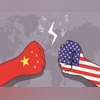 "US, China, US China trade war")
The White House report estimates the annual value of potentially illegal transshipment at between $40 billion and $303 billion.
Listen to This Article
India has been placed in Tier 1 of a new White House classification of countries at risk of being used to reroute Chinese goods and evade US tariffs, potentially increasing scrutiny of Indian-origin shipments as New Delhi and Washington work towards a trade agreement.
The 25-page report, titled “The Great Transshipment Scam”, identifies more than 40 countries as part of what the US calls a “shadow transhipment network”. India is classified as a Tier 1 “Diversified Scale Leader”, alongside Canada, the European Union, Israel, Japan, Mexico, South Korea and Taiwan.
The classification does not claim that the Indian government or all local exporters are deliberately executing tariff evasion, nor does it announce a new tariff against the country.
The report says Tier 1 economies have large and diverse manufacturing and trading bases, where transshipment risks can be difficult to separate from legitimate trade.
Why India is on the list
The US alleges that Chinese exporters have increasingly used third countries for limited processing, assembly, repackaging, relabelling, reinvoicing or changes in shipping routes to make goods appear to originate outside China.
Also Read

 "Manan Kumar Mishra, Chairman, Bar Council of India")
 "Donald Trump,Trump")
 "US citizenship")
 "small modular reactors, SMRs, India nuclear power, Nuclear Energy Mission")
 "Shipping containers at the Yangshan Deepwater Port in Shanghai")
The practice became more prominent after the US imposed Section 301 tariffs on Chinese goods in 2018, according to the report. Washington argues that routing goods through third countries can allow Chinese manufacturers to retain access to the US market while avoiding higher China-specific duties.
Transshipment itself is not illegal. Routing Chinese goods through another country is not, by itself, tariff evasion. The issue arises when goods do not undergo enough processing to qualify as originating in the third country but are nevertheless declared as originating there.
India, Mexico and Vietnam were identified as the top hubs for China-origin goods among the countries examined in 2025. The report estimates that about $67 billion of goods were transshipped through these three countries.
The report identifies the Pune-Gujarat-Chennai production belt, covering pumps and compressors under HS 8413-8414, as a representative corridor of potential transshipment exposure.
The report does not identify the Indian government or any individual Indian company as having carried out tariff evasion.
The report describes some such facilities as “screwdriver factories”, where imported components undergo minimal assembly largely to support a different country-of-origin claim.
US estimates billions in lost tariff revenue
The White House report estimates the annual value of potentially illegal transshipment at between $40 billion and $303 billion, depending on the methodology used.
Its central estimate puts annual illegal transshipment at $75 billion. Depending on the assumed tariff differential, the report estimates associated tariff revenue losses at $19 billion-$34 billion. It separately estimates $19 billion-$26 billion in foregone federal revenue arising from the broader economic impact.
The report acknowledges that a fall in direct Chinese exports to the US alongside rising exports from other countries does not, by itself, establish tariff evasion. Some of the shifts can reflect genuine changes in production, investment and sourcing.
Washington is now moving towards more intensive customs screening. US Customs and Border Protection is developing an AI-based system called “Detective Border” to identify suspicious shipments.
The system is expected to compare declared country of origin with shipping routes, component content, factory capacity, container markings and X-ray images to flag inconsistencies.
White House trade adviser Peter Navarro has warned that importers found to have falsely declared the origin of goods could face tariffs retrospectively, potentially covering shipments going back about a year.
Implications for India-US trade talks
The report comes as India and the US work towards an interim reciprocal trade agreement.
A framework announced in February included commitments to establish rules of origin so that the benefits of the agreement accrue primarily to India and the US. The final agreement has not yet been signed.
The latest US assessment could make those origin rules more demanding. Indian exporters using Chinese components may have to provide greater evidence of the extent of processing, manufacturing or value addition carried out in India before goods qualify as Indian-origin products, Moneycontrol reported.
For companies with complex China-linked supply chains, this could mean higher compliance costs, more documentation and greater customs risk when shipping to the US.
For now, however, the White House report does not impose an India-specific penalty or alter the existing tariff rate on Indian goods.
More From This Section
 "Kim Jong, kim, jong, North Korea leader")
 "Iran, Tehran, US-Iran, US, Iran, Iran war")
 "thermometer, heatwave, hottest year, 2026, temperature")
 "Harvard, university campus, us colleges")
 "US sanctions on Iran, Trump Economic Fury campaign, Iran oil exports China, US Iran economic pressure, Strait of Hormuz crisis")
Don't miss the most important news and views of the day. Get them on our Telegram channel
First Published: Aug 14 2026 | 11:39 AM IST