The auto component industry is seeking a "breather" in terms of introduction of new regulations and a long-term roadmap for rolling out new norms for the sector in order to prepare accordingly for the transition which entails heavy investments, industry body ACMA has said.
The industry, which accounts for around 2.3 per cent of the country's GDP, has been struggling of late due to a prolonged downturn in the auto industry as a whole and due to COVID-19 situation which has brought in supply chain issues and impacted productivity.
In an interview with PTI, Automotive Component Manufacturers Association of India (ACMA) President Deepak Jain said that challenging business environment has limited the capacity of the industry to invest further for any new regulations.
"During the shift from BS-IV to BS-VI the auto industry invested close to Rs 80,000 crore, 40-50 per cent of which was by the auto component industry.
Going forward such regulations will keep on coming so we have asked for a breather as an industry to recalibrate what are the most requisite regulations," Jain said.
The industry, which provides employment to around 50 lakh people, said it also seeks a long-term (10-15 years) roadmap for the rollout of regulations so that it can prepare accordingly for the transition, he added.
"Investment ability of auto component industry has reduced significantly because of the downturn in the market and then, of course, COVID situation," Jain said.
He added that with the current volatile situation, bringing stability to the sector remained one of the most critical aspects.
"I think fundamentally we need stability, there has been too much of disruption. We need to bring the industry to stabilise and post that we need to look at initiatives that are sustainable to make us stronger and stable for the future and this can only happen through very strong collaboration across all the stakeholders of the ecosystem," Jain said.
Jain noted that initiating steps to boost demand as well as ensuring supply chain across the country were critical steps to ensure long term sustainability of the automobile industry.
"Even today supply chains are struggling. We are not able to cater to even muted demand. The Government needs to clearly look at it holistically and balance both demand and supply looking at the importance of the auto sector in the country," he added.
If the Indian economy has to grow back, the auto sector will play an extremely vital role, Jain noted.
He added that various industry verticals like SIAM, ACMA, FADA among others and government would have to come together and collaborate in order to achieve future targets like becoming self-reliant in terms of various auto components.
Jain said as the industry has long-standing expectations from the government to bring demand boosters, ranging from tax realisation to priority lending status, even the government has expectations from the industry in terms of enhancing exports and ensuring localisation.
"There is a need to meet expectations of both sides and move together to ensure that bigger agenda of taking India forward is achieved," he noted.
Jain, who has been elected for a two-year term, completed his first year as ACMA President earlier this month. Successful transition to BS-VI regime and facing COVID-19 induced lockdown were some of the major challenges which the industry faced last year, he noted.
The government took various steps to ease business environment, Jain said.
"However, where the expectation was short was basically to give direct incentives to boost the demand," he added. Last fiscal, the auto component industry reported a turnover of Rs 3.49 lakh crore (USD 49.2 billion), registering a de-growth of 11.7 per cent over 2018-19.

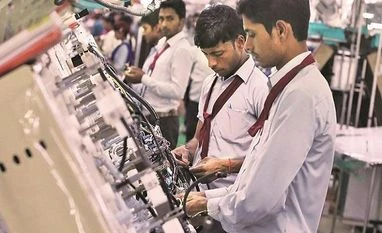 "Auto component industry seeks long term roadmap for regulatory changes")


 Connect with us on WhatsApp