How Kia turned out to be a 'sweet price band' for upper middle class

Hyundai's sister concern has established a respectable presence in India despite a pandemic-year launch
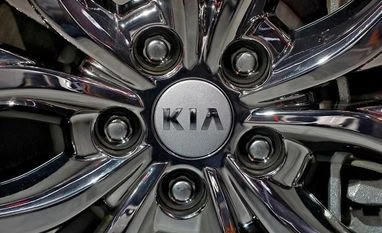
Kia Motors
Kia has managed to capture 7 per cent of the market, establishing itself as the fifth largest in volume terms
Shally Seth Mohile Mumbai
5 min read Last Updated : Oct 25 2022 | 1:48 AM IST
The 2020 Auto Expo saw many global auto brands make a debut in India’s competitive passenger vehicle (PV) market. Among these, the Kia Motors pavilion with its line-up of models that boasted fresh design- and feature-packed offerings, and premium imagery turned out to be quite a crowd puller. It had entered the Indian market only a few months ago, in August 2019, with its mid-size sports utility vehicle (SUV) Seltos.

At the biennial auto show, Hyundai Motors’ sister concern launched the Carnival — a premium multi-purpose vehicle for the Indian market. It also showcased a flurry of new SUVs, including the Sonnet that would shortly be launched in the Indian market.

Cut to the present, and a lot has changed in India’s car market since the 2020 edition — from the choice of body type and trim levels to the buying behaviour. Among other things, the competitive landscape of the PV market has also changed. Some of these changes — such as the strong preference for SUVs over cars — have become intrinsic to the market. In the first half of 2022-23, SUVs accounted for 52 per cent of PV sales, up from 35 per cent in 2019-20.

Kia, which completed three years in India in August this year, has played a leading role in this new trend, having been quick to gauge the shift and centre its product planning around it. This, even as the company’s India entry coincided with the pandemic.

It has managed to capture 7 per cent of the market, establishing itself as the fifth largest in volume terms behind Maruti Suzuki India, Hyundai Motor India, Tata Motors and Mahindra and Mahindra.

This performance must be gauged against a market where several blue-blooded multinationals remain on the fringes despite a long presence. In a short span of time, India has figured among the top three markets for Kia globally.

So, what has worked for Kia in India? Hardeep Brar, vice-president and head of marketing and sales, attributes it to a consistent pace of competitively priced models, strength of network and an attractive total cost of ownership. “The premium brand imagery has also helped us. Mid and top variants account for more than 60 per cent of our total sales,” he said.

Apart from launching its brands in the popular SUV segment, European styling and Korean price have helped, said Avik Chattopadhyay, co-founder at brand consulting firm Expereal.

“This was a unique combination. The styling was very distinctly European and not typically Korean, which is a bit over-the-top and busy; this was elegant with little touches of delight both outside and inside. The pricing on the other hand was aggressively Korean, making the brand terrific value for money,” he said.

Kia turned out to be a “sweet price band” for the upper middle class that was not getting anything exciting from Toyota or Honda and did not trust a Škoda or VW. The Seltos rivals the Volkswagen Taigun and Škoda Kushaq. The price of the base variant of Seltos starts from Rs 11.39 lakh, while a comparable model of Taigun starts at Rs 11.56 lakh.

The brand has always maintained the position of being at the edge of research and technology, be it electric or connectivity; this has certainly helped create a halo from the orient but stands apart, said Chattopadhyay.

In September 2022, the company reported its highest ever monthly volumes with sales of 25,587 units. It was able to surpass calendar year 2021 sales in just nine months of 2022. Kia currently has five models in the Indian market — Carens, Seltos, Sonet, EV6 (the electric vehicle offering) and Carnival.

Amid an increasing competition in the market and the emergence of electric mobility trend, the maker of Carens and Carnival is looking to cement its position.

In addition to launching new variants of the existing models in the traditional internal combustion engine (ICE) segment, EVs will be another big focus area for the company, said Brar. “We have received an extremely encouraging response for the EV6 and we are trying to get more units allotted for the Indian market.”

As with ICE cars, for which the company chose the top-down strategy — enter the market with an expensive, premium model and follow it with less expensive ones — with the Seltos and Carnival, EVs will follow a similar trajectory.

It launched its flagship EV in India in June. Originally planned for only 100 imported units for this year, Kia India received 350 bookings for the EV6 on the first day.
Globally, Kia plans to have a portfolio of 14 models by 2027 — for which it has invested $22 billion. Some of those models could come to India.

With an expansive range of EVs, Kia targets 6.6 per cent of the global EV market share. Also in the works is a mass market EV, developed from the group up, for India by 2025. “The EV6 is a precursor to what we have in store, and the strength of our technology,” said Brar.

To make sure that Kia remains successful in India, the brand needs to stick to being upper middle-class positioning, and not bother with the entry-level segments at all, suggested Chattopadhyay.

Entering the territory of a Maruti and Hyundai has its own pitfalls, he added. The local arms of other global carmakers, including Volkswagen, Toyota, Ford Motor and many others have learnt this the hard way.

“It has to fight the greed of volumes to remain ‘niche’ in a certain way to ensure its price points and margins,” he explained.

Kia, believes Chattopadhyay, is still basking in product euphoria and needs to move out into building its own brand story, beyond just cars; this is something most automakers have conveniently avoided, he stated.

One subscription. Two world-class reads.

Already subscribed? Log in

Subscribe to read the full story →
*Subscribe to Business Standard digital and get complimentary access to The New York Times

Smart Quarterly

₹900

3 Months

₹300/Month

SAVE 25%

Smart Essential

₹2,700

1 Year

₹225/Month

SAVE 46%
*Complimentary New York Times access for the 2nd year will be given after 12 months

Super Saver

₹3,900

2 Years

₹162/Month

Subscribe

Renews automatically, cancel anytime

Here’s what’s included in our digital subscription plans

Exclusive premium stories online

  • Over 30 premium stories daily, handpicked by our editors

Complimentary Access to The New York Times

  • News, Games, Cooking, Audio, Wirecutter & The Athletic

Business Standard Epaper

  • Digital replica of our daily newspaper — with options to read, save, and share

Curated Newsletters

  • Insights on markets, finance, politics, tech, and more delivered to your inbox

Market Analysis & Investment Insights

  • In-depth market analysis & insights with access to The Smart Investor

Archives

  • Repository of articles and publications dating back to 1997

Ad-free Reading

  • Uninterrupted reading experience with no advertisements

Seamless Access Across All Devices

  • Access Business Standard across devices — mobile, tablet, or PC, via web or app

Topics :KiaAutomobileKia Motors

Next Story



