It was a quote that made the headlines, as no doubt it was intended to. On a tour to publicise her latest book, Hillary Clinton was asked what was the gutsiest thing she had ever done. The former First Lady, former Senator and former Secretary of State of the United States, the first woman to be nominated as candidate for the American presidency, thought for a moment and then responded. The gutsiest thing she had ever done personally, she confessed, was to make the decision to stay in her marriage. The moment the words were out of her mouth, her daughter and co-author, Chelsea Clinton, clearly overwhelmed with emotion, reached out and held her mother’s hand. Of course, that answer put the focus back on the Clinton marriage, the soap opera that so many of us lived through in the 1990s with its serial infidelities that culminated in the Oval office affair with Monica Lewinsky, and led to Bill Clinton’s impeachment, rather than the book Hillary was talking up. But as the saying goes, all publicity is good publicity.
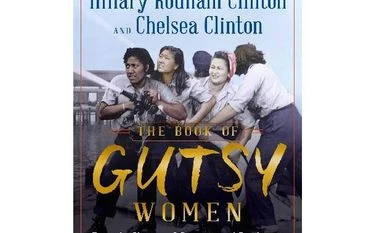
And certainly, The Book of Gutsy Women – Favourite Stories of Courage and Resilience, could do with some talking up. This is an enormous tome, running to 442 pages, which brings together the potted biographies of a series of remarkable women — some famous, others not so well known — whom the Clinton ladies believe qualify for the title of “gutsy women”. It is a very worthy effort but just a teeny bit boring, because of the earnest and sometimes dreary tone of the writing.
You can’t fault the Clinton ladies for organisation, though. The “gutsy women” of the title are divided into easy-to-sort categories. There are the Education Pioneers, the Earth Defenders, the Explorers and Inventors, the Advocates and Activists, the Storytellers, the Groundbreakers, the Women’s Rights Champions…well, you get the drift. Some of these women just get a quick look in, with their life stories compressed to a few paragraphs, while the stories of others get more detailed treatment.
There are chapters devoted to the usual suspects, the kind who keep turning up in books of this kind: Malala Yousufzai; Helen Keller; Greta Thunberg; Marie Curie; Florence Nightingale; Eleanor Roosevelt; Billie Jean King; Jane Goodall; and many others. And though the book provides no new information or even any particular insight into the lives of these particular women, you could argue that it would not have done to leave them out in a book of this kind even if it does make for dull reading.
In fact, the book only truly comes alive when the Clintons write about women that they know personally, whether it is Hillary’s schoolteacher, Mrs Elizabeth King, who pushed her to excel, Geraldine Ferraro, the first woman to run for vice-president of the United States, or Betty Ford, another Former First Lady who did so much to break the stigma around addiction and spoke openly about her breast cancer diagnosis at a time when such candour was rare.
The only other Indian woman who gets a look in (if you don’t count Indian-origin woman, Reshma Sanjani, who started the programme GirlsWho Code) is Ela Bhatt, who founded the Self Employed Women’s Association (SEWA) in 1971. Hillary has had a long association with SEWA and Bhatt and recounts her first visit where nearly one thousand women arrived to hear her speak. “Fanning themselves in their sapphire-, emerald-, and ruby-coloured saris, they looked like an undulating rainbow,” she recalls. After Hillary addressed them, all the ladies rose to their feet and began singing “We Shall Overcome” in Gujarati.
An overwhelmed Hillary writes, “In that moment, the thread connecting Gandhi’s principles of nonviolence to the American civil rights movement came full circle, back to India.”

 "A testament for women")












 Connect with us on WhatsApp