5 min read Last Updated : Aug 12 2019 | 12:04 AM IST
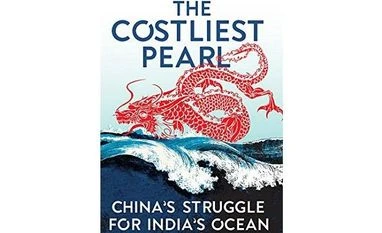
Bertil Lintner’s book The Costliest Pearl is perhaps the most comprehensive account of the contemporary geopolitics of the maritime Eastern Hemisphere. It covers the ground from Djibouti to Vanuatu and the water from the South China Sea to the Southern Indian Ocean. And although it covers the actions and reactions of the powers from within and without the region, it is China that lies at the heart of the plot.
In that sense, Mr Lintner’s book mirrors the biggest geopolitical — and perhaps historic — narrative of our time: China’s rise as a global power and its consequences for the countries of Asia, Africa and the Pacific. A number of books published in the last few years have sought to both chronicle international developments, assess and judge China’s policies and actions, and offer policy prescriptions on what other countries ought to do about them. Written from the American, Australian, Indian, Singaporean or other South East Asian national perspective, these accounts are subjective and presume that the reader is concerned about the national interests of the author’s country of origin.
Mr Lintner’s readout, on the other hand, is detached. Even if he were batting for Sweden, where he comes from — which he isn’t — that country has no dog in this fight. This makes his reading of the situation a little more objective than other books that you might read. As objective as the book is, Mr Lintner is not neutral. He does not see China as an innocent country trying to escape American attempts to keep it down. He is deeply suspicious of its political system, very sceptical about its geopolitical narrative and unambiguous in his conclusion: “the Indian Ocean is the pearl (President Xi Jinping) wishes to secure for his growing Chinese empire — irrespective of the cost.”
It’s 2019. It should be abundantly clear by now that Beijing has a plan for extending its hegemony with Chinese characteristics for a new era, and while that might involve throwing around a trillion dollars in infrastructure projects, the game is still the old one of global dominance. In chapter after chapter, Mr Lintner shows how China has attempted to convert projects into influence, often successfully. The Belt and Road Initiative (BRI), the banner under which every single Chinese project is now placed, has provided a well-marketed brand name for Beijing’s initiatives. Although it is suffering a nationalistic backlash in several countries — Pakistan, Sri Lanka, Maldives, Myanmar and Malaysia — it remains a welcome calling card in the capitals of many of the smaller countries of the Indian Ocean region.
Interestingly, although the Modi government famously and correctly kept India out of the imperial durbar that goes by the name of the BRI summit, Mr Lintner reminds us that “work on a US$ 1 billion Chinese industrial park in Sanand in Gujarat began in 2016” that the Global Times — the English-language mouthpiece of the Chinese regime — described as a “One Belt One Road” pilot project. Of course, every brick that China lays anywhere in the world is now hailed as part of the BRI, but it only shows the reach of Beijing’s charms and infrastructure projects.
How have countries of the Indian Ocean region responded to the Chinese push? They have either welcomed or been unable to resist Beijing. This is because while the first preference of small and medium powers is to have great powers balancing each other, their fallback plan is to bandwagon onto the side of the stronger ones. This means that a small island country in the region would prefer the United States, China, India and others create a stable balance where no one is able to push it around. If they cannot play one against the other for some reason, they will take the side of the strongest of the lot. In chapter after chapter, the book tells the stories of how this dynamic is unfolding.
Mr Lintner argues that in comparison to the countries of the South China Sea, those in the Indian Ocean have political and economic vulnerabilities that make them susceptible to manipulation by outside powers. The Western powers, for their part, “want to defend their possessions and interests without being sure who, exactly, their regional allies should be.” This, plus a “reluctance to identify China as the main adversary”, has made the Indian Ocean more volatile than other regions witnessing a tussle between great powers.
What the book misses out is the digital dimension: it may well be that the Digital Silk Road, where countries are enticed into adopting Chinese technology in their communications networks, is the most powerful card in the BRI deck. While countries and analysts are wondering what to make of overbuilt ports, forlorn railways and overgenerous lines of credit, the almost subliminal deployment of network equipment, broadband modems, smartphones and software platforms might be what ultimately strings the pearls.
The Costliest Pearl: China’s Struggle for India’s Ocean