The thesis of Bjorn Lomborg’s False Alarm is simple and simplistic: Activists have been sounding a false alarm about the dangers of climate change. If we listen to them, he says, we will waste trillions of dollars, achieve little and the poor will suffer the most. Science has provided a way to carefully balance costs and benefits, if we would only listen to its clarion call. And, of course, the villain in this “false alarm,” the boogeyman for all of society’s ills, is the hyperventilating media.
As with others in this camp, there’s the pretence in this book of balance and reference to careful studies. Yes, climate change is real. Yes, we should do something about it. But, goes his message, let’s be real, there are other problems, too. Resources are scarce. The more money we spend on climate change, the less we have to grow the economy; and as we all know (or do we?) everybody benefits from growth, especially the poor. And besides, there’s not much we can do about climate change.
He’s not completely fatalistic. He urges imposing a carbon tax and investing much more on innovation, both good ideas, although neither is a panacea, especially since the carbon price he suggests is far too low. Among the many contradictions within the book is that while he seems to say that innovation may be our saviour, we’ve done all we should. Evidently, we’re supposed to pray that nature be more forgiving as it bestows good fortune on our research efforts.
Somehow, missing in his list of good policy measures are easy things like good regulations — preventing coal-burning electric generators, for example. Mr Lomborg, a Danish statistician, exhibits a naïve belief that markets work well — ignoring a half-century of research into market failures that says otherwise — so well, in fact, that there is no reason for government to intervene other than by setting the right price of carbon.
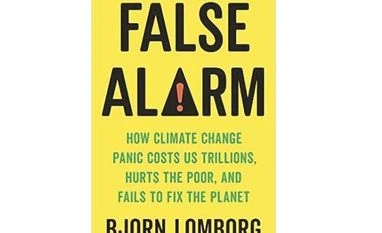
FALSE ALARM: How Climate Change Panic Costs Us Trillions, Hurts the Poor, and Fails to Fix the Planet
Assessing how best to address climate change requires integrating analyses of the economy and the environment. Mr Lomborg draws heavily on the work of William Nordhaus of Yale University, who came up with an estimate of the economic cost to limiting climate change to 1.5 to 2 degrees Celsius above preindustrial levels. While Mr Nordhaus seems to think it’s enormous, an international panel chaired by Lord Nicholas Stern and me (called the High-Level Commission on Carbon Prices), supported by the World Bank, concluded that those goals could be achieved at a moderate price, well within the range of what the global economic system absorbs with the variability of energy prices.
A second mistake is Messrs Nordhaus and Lomborg’s underestimation of the damage associated with climate change. In early discussions of climate change the focus was often on global warming. But climate change is much more than that. It includes increasing acidification and rising sea levels (another aspect of climate change that Mr Lomborg doesn’t mention is that Wall Street could be underwater by 2100 — a seeming benefit until one realises that almost surely the bankers would find a way to force all of us to pay for their move to higher ground).
Climate change also includes more extreme weather events — more intense hurricanes, more droughts, more floods, with all the devastation to life, livelihood and property that accompanies them. In 2017 alone, the United States lost some 1.5 per cent of GDP to such weather-related events.
A third critical mistake, compounding the second, is not taking due account of risk. As the atmospheric concentration of carbon increases, we are entering uncharted territory. Not since the dawn of humanity has there been anything like this. The models use the “best estimate” of impacts, but as we learn more about climate change these best estimates keep getting revised, and, typically, in only one direction — more damage and sooner than had been expected.
A fourth related concern is that those who don’t believe we should take forceful action today discount the value of the environmental impacts of climate change on future generations. The Trump administration, for instance, has been using a 7 per cent discount rate — which means that we shouldn’t spend more than 3 cents today to avoid a dollar of damage to our children in 50 years. This is ethically indefensible and economically nonsensical.
Anyone not familiar with the literature might think from his frequent quoting of the Intergovernmental Panel on Climate Change that the panel, representing the scientific consensus, is on board with his ideas. Nothing could be further from the truth. In 2019 the IPCC put out a report explaining how much worse a 2 degree Celsius rise in temperature would be than a 1.5 degree Celsius rise. (Full disclosure: I was a lead author of the IPCC’s Second Assessment.)
As a matter of policy, I decline to review books that deserve to be panned. You only make enemies. In the case of this book, though, I felt compelled to forgo this policy. Written with an aim to convert anyone worried about the dangers of climate change, Mr Lomborg’s work would be downright dangerous were it to succeed in persuading anyone that there was merit in its arguments.

 "Climate change & its discontents")












 Connect with us on WhatsApp