Every time Venkateswara Rao Vakalapudi thought of an insurance agent, the image that came to his mind was of a pesky person thrusting insurance policies under people’s noses. This was one profession he was certain that he never wanted to pursue. Yet, today he is Life Insurance Corporation of India’s (LIC) record-breaking star insurance agent.
Last year, he earned LIC Rs 51 crore worth of fresh business, an industry record. To put this in perspective, 60 per cent of insurance agents in India do business worth Rs 2 lakh to Rs 3 lakh a year.
Vakalapudi, 42, who grew up in a village in West Godavari in Andhra Pradesh, today drives a Range Rover Sport, has a sea-facing bungalow at Vizag, has high net-worth individuals (HNI), non-resident Indians (NRIs) and corporate houses as his clients and travels around the world for business and to give motivational talks.
This is the busiest time for him. Between January and March, when people rush to buy insurance policies, he works 18 hours a day. Catching him is not easy. It takes a series of interviews over days to get a sense of his life and work.
A farmer’s son, Vakalapudi wanted to become an engineer but flunked all subjects and had to drop out of the engineering college he went to in Hyderabad. His father, disappointed, wanted him back in the village to help in the fields. But Vakalapudi had other plans. He says he could not return to the village a defeated man. So, with the help of a cousin who worked with State Financial Corporation, he got a loan of Rs 50,000 under the unemployed youth scheme and started a notebook manufacturing business. He was 19 then.
By the time he was 23, the business bombed and Vakalapudi had accumulated a loss of Rs 15 lakh. Bankers, financiers and suppliers started hounding him. Now he started a parcel services agency that earned him a monthly commission of Rs 30,000 to Rs 40,000 — not enough to pay back the debt.
In 1997, his father died. Vakalapudi went into depression, moved back to the village and starting helping his brother with the farm. But he soon shifted to Vizag and started a poultry business. He would collect feed from companies like Hindustan Unilever and Godrej and sell it to farmers for a credit. The going was good. He repaid his debts. But three years later, the farming community found itself in stress. Business plunged.
Around his time, some of Vakalapudi’s friends from the engineering college in Hyderabad moved to Vizag. Besides helping them relocate, Vakalapudi introduced them to his insurance agent from whom he had bought a policy for himself and his mother. But the agent was erratic and his friends weren’t satisfied with him.
When he casually mentioned this to his “godfather” and uncle Krishna Babu, an MLA from Rajamundry, over breakfast, Babu turned to him and said: “Why don’t you become an insurance agent and help your friends?”
“I don’t want to be recognised as an insurance agent; people run away from them,” Vakalapudi recalls replying. Babu persisted and, three months later, Vakalapudi took the plunge.
In the first year, he sold 12 insurance policies, six to his friends and the rest to his customers in the poultry business.
The breakthrough came in 2001. LIC’s popular policy, Jeevan Shri, was to be discontinued. His development officer, K Raghu, told him to rush and sell the policy to his friends and family before it was scrapped. In 15 days, Vakalapudi did business worth of Rs 4 crore and earned Rs 4 lakh as commission. (Typically, an insurance agent’s commission ranges from 2 per cent to 30 per cent, depending on the value of the policy.) “He was very clever in how he tapped this opportunity and converted many of his business associates into his clients,” says Raghu, who has trained about 350 insurance agents in the last 25 years.
Vakalapudi was selected as member of Million Dollar Round Table (MDRT), a premier association of financial professionals in the world. The five-day MDRT meet he attended in Las Vegas changed his perception towards the profession. “I realised an insurance agent is like a doctor,” he says, “helping people manage their lives and needs.”
In the second year, he sold an insurance policy worth Rs 1 crore for which he got a commission of Rs 11 lakh. But this was to his uncle, Babu.
The real learning was yet to happen. It happened when he sold a Rs 10-lakh policy to an HNI customer. Two years later, he learnt that the same person had now bought another insurance policy — worth Rs 1 crore — from some other agent.
Instead of coming back to Vakalapudi, the man had gone to another agent. This called for introspection. He decided to rethink the way he engaged with and built his relationship with his clients.
“Vakalapudi’s approach is different from other agents,” says Raghu. “He first sells himself to the prospective customer before he sells the product.” He listens well, tries to closely follow the customer’s needs, inspires confidence in himself and then offers the policy, says the development officer. It is this unique attitude and approach that has made him successful, Raghu adds.
Vakalapudi now has two offices, at Hyderabad and Vizag, and a 15-member team. He has launched a financial consultancy called Anand Jeevan.
For an insurance agent to survive and thrive, networking is critical. Vakalapudi realises this, more so because 90 per cent of his business comes through referrals.
Initially, he tapped his friends and the Telugu diaspora living in the United States. He continues to reach out to them by sponsoring events, organising social activities and helping at temples.
“The logic is simple: I invest a certain percentage of whatever I earn in organising local functions. This helps me network and brings in more customers,” says Vakalapudi, who has around 200 NRI clients. In all, he services about 4,000 customers and aims to take that number up to 1 million by the end of 2020. He also wants to start tapping the retail sector.
As of now, the success rate is 30 per cent to 40 per cent — of every 100 people he approaches with an insurance policy, 30 to 40 translate into business.
“He is a trainer and motivator for many,” says Raghu. “But he also attends as many training sessions as possible to get better at what he does.”
The Rs 51-crore record has only added more steam to his momentum. This is, after all, a figure many LIC branch offices with a strength of 300 agents put together couldn’t achieve.

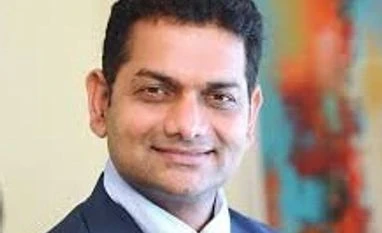 "Meet LIC's Agent Vakalapudi")


 Connect with us on WhatsApp