The internet of robots
You might want to start talking nicely to computers, as the robots are watching us already - on YouTube
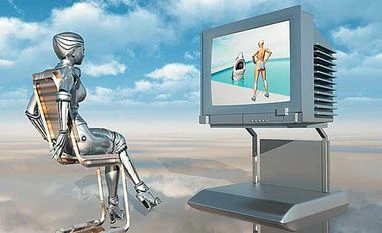
Ashish Sharma Scientists are developing robots that can plug themselves into the internet to learn new skills. These machines enjoy watching YouTube videos, where they gain knowledge of the world, and laugh at the world, realising its silliness. I have a feeling they will figure us out soon. You might want to start talking nicely to computers, as the robots are watching us already - on YouTube.
It doesn't end there. A robot can teach other robots what it learns from the internet, through the internet. This will supposedly help them perform everyday tasks. They have begun digesting the internet already. If a robot encounters a situation it hasn't before, it will ask other robots for help, or it will ask the internet. Experts call this the internet of robots. They see the internet as a mega robot in itself, connecting all robots and converting all sensors to think, act, and sense on its own.
With time, these internet robots will look progressively more human. Eventually, you might want to date one. However, recent research warns us that robots will eventually rise against humanity. The report points to evil robots with glowing red eyes, but critics say that these are mostly industrial robots - their evil red eyes are required by trade-union rules. This helps them glow in the dark, they say, especially during blackouts. Anyway, going close to a robot is not good: already rogue robots disguised as vacuum cleaners have sucked clean senior citizens.
Concerned, I reached out to a scientist, who told me that robots may harm a human, only if the human poses a direct threat to another human, and then the robot will explode, taking care not to kill or harm more humans. The pieces from the blast will go on exploding, until the onlookers get bored. I was convinced, as under law, all robots are required to have built-in ice cream machines, television tuners, and laser cannons, which blow up every now and then.
So, if the robots make war upon us, how do we brace for the end? By dancing at wedding parties. Here, you can spot them in slow, mechanical dance moves: you can even talk to them in binary code, the language of computers. For example, say 0010111 to mean "your disk drive looks handsome!" This way, you will have taken the first step to survival: knowing your enemy. The second step is to steal their fuel cans at the wedding. A real robot needs six packs of ethanol to burn up the dance floor with bhangra. Other fuels also apply, as long as their names end in "ol".
Another step is to watch out for signs of aggression, such as robots lunging at you with chainsaws - it's usually the best sign, but not a very helpful one. In such a situation, it might seem a good idea to shoot them - but it is not. Robots are made of metal: your only option is to melt them, but the machines already know where the smelters are - they surf the same internet as you do. Talking of movies, you can spot a robot in a cinema by its behaviour, as under law, a robot must indicate puzzlement at all jokes and displays of human affection - it can't say "yeah, very funny", "how cute". Also, if someone looks tinny and doesn't take a piss during interval, he is a robot. Make an excuse and get the hell out.
Uploading your mind to the internet as a virus is another way to escape and bug robots. Also, you could order a robot costume on e-commerce, to help you blend in with the machines; just make sure the made-in-China tag doesn't stick out.
I wouldn't recommend suicide, but it's the only way to ensure robots don't kill you. Collaboration is another option, if you don't mind the traitor tag.

 "The internet of robots")


 Connect with us on WhatsApp