The new Red star over China

Mr Xi has introduced major departures from this approach

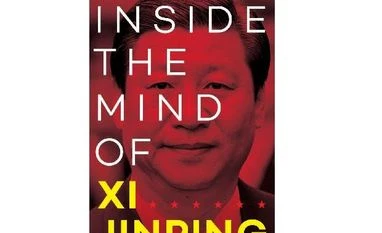
Inside the Mind of Xi Jinping
Shyam Saran
5 min read Last Updated : Nov 29 2019 | 10:34 AM IST
Inside the Mind of Xi Jinping

Francois Bougon

Context

232 pages; Rs 599

China’s paramount leader Xi Jinping is an enigmatic figure and a book that promises to unravel the inner workings of his mind and the major influences in shaping his personality should claim our attention. Francois Bougon is a correspondent with the French paper Le Monde and has considerable experience of China but his biography is based on no privileged access to his subject, nor to any special insights shared by those close to Mr Xi. 

The author has drawn a portrait of the Chinese leader from pronouncements by Mr Xi himself, from what is known of his life as a son of a first-generation Communist Party leader — a “princeling,” as members of the successor generation are commonly known — and his trajectory from a local and provincial cadre to the highest echelons of the Party leadership. This does not permit the readers to burrow into the inner recesses of Mr Xi mind but one does get a reasonably well-rounded picture of his personality and how he relates to the Party he heads and historical frame through which he shapes China’s contemporary ambitions.

Mr Bougon refers to the “tranquil assurance of heirs” that Mr Xi exudes and this is clearly linked to his being a “princeling”, with a sense of entitlement when it comes to leading the Party and the country. The Party is like a family inheritance, which must be preserved and renewed. The circumstances may change but the centrality of the Party’s leadership must remain intact. The book brings out an important difference between Deng Xiaoping, who initiated China’s market-based reforms, and Mr Xi’s approach. Deng had not only introduced a market economy with a role for private sector, but distanced the Party from State administration and transformed the armed forces into a professional and well-trained organisation. Rising economic prosperity was accompanied by a significant expansion in individual choice, a relative tolerance of critical media and some limited room for intellectual dissent. 

Mr Xi has introduced major departures from this approach by bringing Party leadership and involvement front and centre into governance by the State, economic and enterprise management and leadership of the armed forces. This centrality of Party leadership is linked to the indispensable role of the singular leader and in that sense, Deng’s emphasis on collective leadership and institutionalised succession does not correspond to the classic Leninist state that Mr Xi believes is right for China. There has been a severe crackdown on any form of dissent. New digital technologies are being harnessed to establish a truly pervasive and efficient surveillance state. Party Committees are now mandatory not only in State Owned Enterprises (SOE) but also in private companies. The diminishing role of the SOEs has been reversed as they are now expected to be the champions in establishing China’s lead in new domains such as artificial intelligence, quantum computing, aerospace and electronic vehicles. 

This appears to put Mr Xi in the same mould as Mao Zedong but this is only partially true. Though Mao was familiar with ancient Chinese classics and history, he saw the Communist revolution as a clear break from the past, which had to be wiped clean so that on the empty sheet of paper a new destiny for China could be written. But Mr Xi has openly embraced China’s imperial and feudal history and sought to reconcile China’s philosophical traditions with its current Marxist credentials. This appeal to history is a clever way of seeking political legitimacy in an ideologically apathetic populace. Mr Bougon has done well to bring this out clearly in his analysis.

Mr Xi projects himself consciously as a new-age philosopher king. He conveys his love of reading and thirst for knowledge and peppers his speeches with references to Chinese and foreign classics that he claims to have read. Even the Vedas are mentioned among the classics with which he is familiar. Perhaps this subject should figure in Prime Minister Narendra Modi’s next summit with Mr Xi!

In foreign policy, too, Mr Xi has initiated a major departure from the approach laid down by Deng, that of maintaining a low profile and not seeking leadership. From his speeches and writings, it is clear that he sees the current historical juncture as one of great opportunity for China to trade its undeniably spectacular economic success into global influence and stature. There is an assertiveness in China’s foreign policy behaviour that is unprecedented. Mr Xi has also brought an explicit ideological dimension to this quest for superpower status. China’s economic success is a validation of its political model, of “Socialism with Chinese characteristics”, and this contrasts with the political and economic failure of the Western capitalist model. Mr Bougon has quoted extensively from Mr Xi to underline the latter’s open contempt and rejection of the liberal democracy/capitalist market economy represented by the West, which is seen as steadily disintegrating. 

What is the future of China under Mr Xi’s extended and as yet uncontested leadership? Mr Bougon suggests that he has unleashed forces that may trigger the unravelling of China’s upward trajectory. The stalling of  new and indispensable economic reforms, the reintroduction of the dead hand of ideological conformity and, currently, the headwinds unleashed by an unpredictable and aggressive United States, all these point to a more uncertain future. Perhaps. But China has proved unexpectedly adaptable so far and may do so again.
The reviewer is a former foreign secretary and is currently senior fellow, CPR

One subscription. Two world-class reads.

Already subscribed? Log in

Subscribe to read the full story →
*Subscribe to Business Standard digital and get complimentary access to The New York Times

Smart Quarterly

₹900

3 Months

₹300/Month

SAVE 25%

Smart Essential

₹2,700

1 Year

₹225/Month

SAVE 46%
*Complimentary New York Times access for the 2nd year will be given after 12 months

Super Saver

₹3,900

2 Years

₹162/Month

Subscribe

Renews automatically, cancel anytime

Here’s what’s included in our digital subscription plans

Exclusive premium stories online

  • Over 30 premium stories daily, handpicked by our editors

Complimentary Access to The New York Times

  • News, Games, Cooking, Audio, Wirecutter & The Athletic

Business Standard Epaper

  • Digital replica of our daily newspaper — with options to read, save, and share

Curated Newsletters

  • Insights on markets, finance, politics, tech, and more delivered to your inbox

Market Analysis & Investment Insights

  • In-depth market analysis & insights with access to The Smart Investor

Archives

  • Repository of articles and publications dating back to 1997

Ad-free Reading

  • Uninterrupted reading experience with no advertisements

Seamless Access Across All Devices

  • Access Business Standard across devices — mobile, tablet, or PC, via web or app

Topics :Xi Jinping

Next Story