Sometimes in a journalist’s life come stories that haunt them for a long time. The life of Rohit Shekhar Tiwari, who died this week aged 40 (the police suspect he was murdered), is one such story. I had met him with his mother at their house in South Delhi in 2014, a day after Narayan Dutt Tiwari, a four-time chief minister and former Andhra Pradesh governor, finally publicly acknowledged him as his biological son. For six years, Rohit Shekhar had been fighting a paternity suit against the powerful politician.
That late afternoon I had expected to meet a triumphant, or perhaps relieved, man. But the person who appeared in the living room in a dishevelled kurta-pyjama looked agonised, angry even. As he sat down, his mother tried to tidy his kurta and gently asked him to go and fix himself up. But he brushed her aside. “Let people accept me the way I am,” he said.
This wasn’t going to be an easy interview. I wasn’t sure he would speak to me or answer my questions, which would, given the nature of the case, be intrusive. But he did. And over the next two hours or so, I found myself looking into the life of a child whose world was thrown into turmoil when a relative told him that the man whose name was on his birth certificate and school report cards was not his father. That his father was the “uncle” who would religiously attend his birthdays (but not his elder brother’s), who would bring presents for him (but not for his brother) — and who would one day sever all ties with the family.
As he grew older, the boy became aware of, and increasingly sensitive to, how unforgiving Indian society is towards women and children. Rohit Shekhar belonged to a privileged family. His mother taught at a college in Delhi and his maternal grandfather had been minister of state for defence. He lived in a posh area of the national capital. But none of this could cushion him from the harsh patriarchal system that measures a woman’s status through a husband, and a child’s legitimacy through a father. “We were viewed as a joke in the extended family,” he said.
The never-ending trauma took a toll on his heath and at 28, Rohit Shekhar suffered a simultaneous stroke and heart attack. But he survived, and fought on — relentlessly. He finally won the prolonged paternity battle against Tiwari, who then legally accepted him as his son and, a few months later, married his mother.
Rohit Shekhar’s legal fight established the right of a child — at any age — to know his paternity
Rohit Shekhar’s successful legal fight established the right of a child — at any age — to know his paternity.
But it did not end there. A law graduate, he talked about filing a PIL to get words such as “bastard”, “unchaste”, “keep” and “concubine” removed from the legal lexicon. “These are derogatory towards the woman and the child,” he said. “The child is innocent, it’s the father who is illegitimate.”
The language in our legal system is such that it sometimes puts women and children at a disadvantage. So, while expressions such as “child as a bastard” or “mother as an unchaste woman” are not uncommon, no such pejorative term is used to describe men.

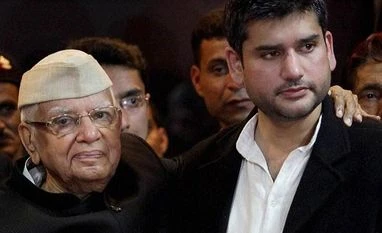 "The right of a wronged child")












 Connect with us on WhatsApp