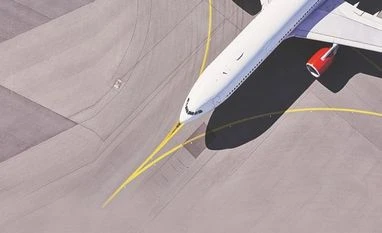
Airlines face difficulty in operating at full capacity amid low demand

The travel sentiment was impacted by several waves of the Covid-19 pandemic, people postponed travel plans to protect their savings. In this, high travel fares impacted the demand negatively

flights
BS Web Team New Delhi
2 min read Last Updated : Oct 06 2022 | 10:12 AM IST
Even as the government lifted the cap on capacity deployment, most airlines are finding it difficult to operate at full capacity due to less demand, according to a report in Mint. 

The aviation sector in India has faced several hurdles since 2020. First, the pandemic-induced lockdowns forced planes to be grounded for two months. Then, the slump in demand for travel surfaced. Cap on capacity deployment and high aviation turbine fuel prices following the Russia-Ukraine war followed.  

From May 2020 to October 2021, Centre placed a cap on capacity deployment by airlines. This was in the range of 33 per cent to 85 per cent. With the excess capacity that could not be deployed, the airlines found it increasingly difficult to generate enough revenue.

IndiGo, the largest airline in India, reported losses for 9 out of the last 10 quarters, the Mint report added. 

In October 2021, the cap was removed and airlines were allowed to operate at full capacity. It brought forth a new problem, less demand. The travel sentiment was impacted by several waves of the Covid-19 pandemic. People postponed travel plans to protect their savings. In this, high travel fares impacted the demand negatively.

"Since last year, there has been an unprecedented rise in jet fuel prices, which was further aggravated by the Russia-Ukraine war, which in turn has also pushed fares, impacting leisure travel demand to an extent. Hence, the combination of these factors has impacted the capacity deployment levels for the sector," Suprio Banerjee, vice-president and sector head, corporate ratings, Icra was quoted in the Mint report as saying. 

Now, even when they are allowed to run at 100 per cent capacity, airlines are not flying all of their aircraft. IndiGo is operating at 88 per cent capacity. 

AirAsia is operating at 63 per cent capacity. SpiceJet is operating at 37 per cent capacity as against the allowed 50 per cent. 

The passenger traffic is expected to reach the pre-pandemic level only by FY24.

One subscription. Two world-class reads.

Already subscribed? Log in

Subscribe to read the full story →
*Subscribe to Business Standard digital and get complimentary access to The New York Times

Smart Quarterly

₹900

3 Months

₹300/Month

SAVE 25%

Smart Essential

₹2,700

1 Year

₹225/Month

SAVE 46%
*Complimentary New York Times access for the 2nd year will be given after 12 months

Super Saver

₹3,900

2 Years

₹162/Month

Subscribe

Renews automatically, cancel anytime

Here’s what’s included in our digital subscription plans

Exclusive premium stories online

  • Over 30 premium stories daily, handpicked by our editors

Complimentary Access to The New York Times

  • News, Games, Cooking, Audio, Wirecutter & The Athletic

Business Standard Epaper

  • Digital replica of our daily newspaper — with options to read, save, and share

Curated Newsletters

  • Insights on markets, finance, politics, tech, and more delivered to your inbox

Market Analysis & Investment Insights

  • In-depth market analysis & insights with access to The Smart Investor

Archives

  • Repository of articles and publications dating back to 1997

Ad-free Reading

  • Uninterrupted reading experience with no advertisements

Seamless Access Across All Devices

  • Access Business Standard across devices — mobile, tablet, or PC, via web or app

Topics :CoronavirusIndian airlinesAviationRussia Ukraine ConflictBS Web Reportsairlines

Next Story