Airtel, Voda Idea wean off double SIM users by upping least recharge tariff

By hiking minimum monthly recharge, the hope is these subscribers will move out, improving operators' average revenue per user
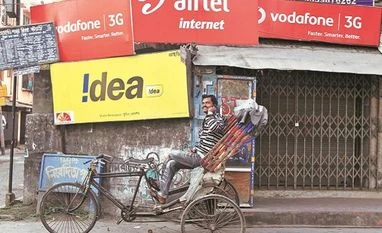
Mobile users, Airtel
The telecom sector that was beset with slow growth and heavy costs in the 1980s is a good learning ground Photo: Reuters
Surajeet Das Gupta New Delhi
Last Updated : Nov 26 2018 | 5:31 AM IST
Incumbent telecom (telco) operators are targeting that 50 per cent of double subscriber identity module (SIM) users in the country will move out of their networks as a result of the steep increase in the minimum recharge tariff to Rs 35 a month by Airtel and Vodafone Idea.

Some 350 million subscribers are currently on double SIMs — that’s half the total subscriber base of 750 million. Owing to the number of double SIM users, the total number of mobile connections in the country stands at 1.1 billion. But if the telcos have their way, the number of connections will again go down to below 1 billion, to around 925 million.

The new strategy, said a senior Airtel executive, is to concentrate on 40 per cent of the subscribers at the top who constitute 80 per cent of the revenues. This is because the focus of the operators is now on revenue share rather than subscriber share. 

The double SIM subscribers, who use their number as a secondary connection, provide only minimal revenue, use the phone mainly for incoming calls which choke the network (leading to call drops), and adversely impact the overall average revenue per user (ARPU).

Airtel, for instance, has over 100 million customers who only recharge their number for Rs 10 every month. They represent about 28 per cent of Bharti’s subscriber base of 346 million.

Airtel has an ARPU of Rs 100 and that of Vodafone Idea is Rs 88. Compare this with their key rival Reliance Jio’s ARPU of Rs 132. The increase in the minimum recharge tariff will help incumbents in bridging the ARPU gap as their minimum recharge tariff is already much higher at Rs 49 per month.

A senior executive of a leading telco pointed out that the loss in subscriber base will not have any financial impact. “Even if we lose revenues, half of the 350 million double SIM users as projected, we will make more revenues as the remaining 175 million will give us three and a half times more every month. So it will generate incremental revenues.”

The new plan by Airtel and Vodafone Idea to concentrate on revenue share is in clear contrast to their earlier emphasis on increasing their subscriber market share. One reason for the latter, before the spectrum auction, was the linkage of the number of subscribers to additional spectrum allotment. Later on, it was all about increasing penetration in an emerging market. But with overall penetration currently standing at over 89 per cent, the focus lately was on revenues and improving ARPUs which were getting hammered with the entry of Jio.

The incumbents are targeting two categories of double SIM users. Of the total of 350 million double SIM subscribers, 250 million of them recharge their number every month with Rs 10 and use it as a secondary number. The aim is to move them to a single SIM phone which will consolidate their ARPUs to one operator. With a higher tariff, the hope is that the subscriber will have to give up one of the SIM connections.

The telcos are also targeting the remaining 100 million-odd double SIM subscribers who currently take advantage of the Telecom Regulatory Authority of India rules that no phone can be disconnected if a single call (incoming or outgoing) or an SMS is made within 90 days. 

These subscribers pay the minimum recharge tariff once in a quarter, making them highly unviable for operators. The expectation here is that, with a higher minimum tariff, they will get out of their networks.

But one possible drawback of this strategy is that it could slow down wireless rural penetration which has been growing very slowly; it stood at 58 per cent in August, compared to 56.25 per cent in January.  An increase in minimum tariffs could impede the process further. 

“Only some marginal customers may be affected, but at Rs 35, we do not believe this is unaffordable. Further, with increasing roll-out of WiFi, even in rural areas, we believe these marginal customers will still have an alternative. We need to keep in mind that with interconnect costs now at 6 paise for voice and zero costs for data, there has to be some means of recouping costs for operators in a calling party pays regime,” said Rajan S Mathews, director-general of Cellular Operators Association of India.

Operators say that with wireless density at a staggering 156 per cent in urban India, the majority of double SIM owners are in these markets, not in rural India.

One subscription. Two world-class reads.

Already subscribed? Log in

Subscribe to read the full story →
*Subscribe to Business Standard digital and get complimentary access to The New York Times

Smart Quarterly

₹900

3 Months

₹300/Month

SAVE 25%

Smart Essential

₹2,700

1 Year

₹225/Month

SAVE 46%
*Complimentary New York Times access for the 2nd year will be given after 12 months

Super Saver

₹3,900

2 Years

₹162/Month

Subscribe

Renews automatically, cancel anytime

Here’s what’s included in our digital subscription plans

Exclusive premium stories online

  • Over 30 premium stories daily, handpicked by our editors

Complimentary Access to The New York Times

  • News, Games, Cooking, Audio, Wirecutter & The Athletic

Business Standard Epaper

  • Digital replica of our daily newspaper — with options to read, save, and share

Curated Newsletters

  • Insights on markets, finance, politics, tech, and more delivered to your inbox

Market Analysis & Investment Insights

  • In-depth market analysis & insights with access to The Smart Investor

Archives

  • Repository of articles and publications dating back to 1997

Ad-free Reading

  • Uninterrupted reading experience with no advertisements

Seamless Access Across All Devices

  • Access Business Standard across devices — mobile, tablet, or PC, via web or app

Next Story



