Content sharing platform Manch bets on non-English internet users in India

As India's English internet user base is fast reaching stagnation, everyone including start-ups, is looking to cash in on the next set of customers - the ones who do not speak English

chart
Abhishek Kumar New Delhi
Last Updated : Jan 13 2019 | 11:06 PM IST
The internet is a storehouse of knowledge, it’s said. But for Himanshu Sinha, until recently, it was just another means of entertainment. “I did try to bring the internet to good use by using it for my studies, but soon realised that it had limited use for ones who don’t know English,” says the 19-year-old student. 

But things are fast changing in the English-dominated world of the internet as the focus has shifted towards the ‘next 500 million internet users’, and entrepreneurs are coming up with products that are aimed at non-English speakers of the country. 

One such start-up, Manch, recently raised Rs5 crore in its seed round led by Stellaris Venture Partners. Launched in 2018 by Pritam Roy and Hari Sunkani, Manch is an Indian language content sharing platform that has features similar to that of Quora and Twitter. It allows users to ask and answer questions, express their opinions on topics, including politics, personal relationships, and career advice. 


Manch directly competes with Vokal. Founded by TaxiForSure co-founder Aprameya R, and backed by Kalaari Capital, Shunwei Capital, Accel Partners, and Blume Ventures, the Vokal had raised $5 million in Series A funding in July last year. 

Manch, which is now available in Hindi and Telugu, claims to have over 30,000 monthly active users. “The idea is to build a platform that hooks millions of Indic language speakers for a longer period... by habit forming and re-imagining the mode of expression of millions of Indians,” says Roy. 


Why the traction 

As India’s English internet user base is fast reaching stagnation, everyone, be it a multinational or a budding start-up, is looking to cash in on the next set of customers — the ones who are fast getting onto the internet bandwagon but do not speak English. 

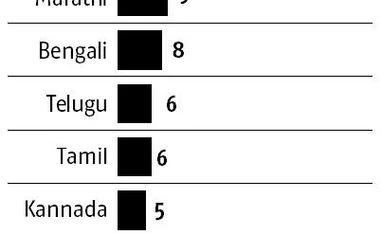
India, with one of the fastest growing online population, is expected to have 201 million native Hindi-speaking users online by 2021. A 2017 report by KPMG and Google, noted 9 of 10 new internet users between 2016 and 2021 will use local languages. 

The scenario augers well for vernacular discussion platforms, believes Rahul Chowdhri, partner, Stellaris Venture Partners. “India has close to 230 million Indian-language speaking internet users today who lack a platform to express themselves... We believe this is a huge opportunity,” he says. 

Apart from Manch and Vokal, DailyHunt, ShareChat and Newsdog are other similar start-ups that have raised funding in the last one year. Sharechat bagged the highest sum at $100 million in September 2018. 


Monetisation a challenge 

Though the prospective user base is huge, experts say translating traffic to revenue will not be an easy task. The reasons being abysmal online advertisement rates and users’ tendency to not to pay for content. 

Pritam Roy and Harsh Shukani , Founders of Manch
Manch’s Pritam Roy, however, has a different take. Citing the examples of Facebook and Twitter, Roy says the direct ad business is a proven revenue model. “This is one of the already proven business models to replicate but I totally believe there will (soon) be two-three new-age business models that will have the potential to trump the above-mentioned ad models in terms of revenue,” says Roy. 

There are other challenges as well. 

“Indians have proven that they are consumers of online content. Whether they will express their opinion online is yet to be proven. In addition, any  company has to find ways to reach consumers in an organic manner,” says Chowdhri. 

Apart from similar platforms, these start-ups would have to compete with popular platforms like WhatsApp and Facebook for users’ facetime. And it may prove to be a tough task. 

Furthermore, creating a singular platform that can address the needs of a diverse audience is a daunting task. It will require a deep understanding of user needs and creation of technology for the same, added Roy.

One subscription. Two world-class reads.

Already subscribed? Log in

Subscribe to read the full story →
*Subscribe to Business Standard digital and get complimentary access to The New York Times

Smart Quarterly

₹900

3 Months

₹300/Month

SAVE 25%

Smart Essential

₹2,700

1 Year

₹225/Month

SAVE 46%
*Complimentary New York Times access for the 2nd year will be given after 12 months

Super Saver

₹3,900

2 Years

₹162/Month

Subscribe

Renews automatically, cancel anytime

Here’s what’s included in our digital subscription plans

Exclusive premium stories online

  • Over 30 premium stories daily, handpicked by our editors

Complimentary Access to The New York Times

  • News, Games, Cooking, Audio, Wirecutter & The Athletic

Business Standard Epaper

  • Digital replica of our daily newspaper — with options to read, save, and share

Curated Newsletters

  • Insights on markets, finance, politics, tech, and more delivered to your inbox

Market Analysis & Investment Insights

  • In-depth market analysis & insights with access to The Smart Investor

Archives

  • Repository of articles and publications dating back to 1997

Ad-free Reading

  • Uninterrupted reading experience with no advertisements

Seamless Access Across All Devices

  • Access Business Standard across devices — mobile, tablet, or PC, via web or app

Next Story




