DoT may choose lower retirement age over voluntary retirement scheme

Employees of BSNL may be asked to end their service at 58 years
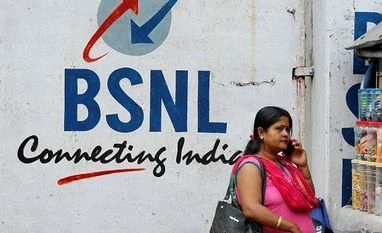
BSNL
Megha Manchanda New Delhi
3 min read Last Updated : Jun 19 2019 | 9:43 PM IST
The relief package for debt-laden Bharat Sanchar Nigam (BSNL) might be delayed as the department of telecom (DoT) considers lowering the retirement age of the employees of the government-owned telecom major to 58 years, instead of offering a one-time voluntary retirement scheme (VRS).

The outgo for proposed VRS package would be Rs 6,365 crore. The Ministry of Finance had raised concerns over this.

Once the DoT finalises what it wants to do, the proposal would go straight to the Union Cabinet — instead of the Digital Communications Commission (DCC) — to avoid delays.

The DoT might also offer VRS to employees older than 50 years as well as lower the retirement age, said sources.

If the DoT decided to go with the option of a lower retirement age, the Centre will not have to release funds immediately and financial liability is deferred. In the VRS option, employees not only get the one-time payment but also their pension starts immediately.

About half of the 176,000 employees at BSNL are estimated to retire in the next five-six years. If only about 50 per cent of eligible employees (those about 50 years) opt for VRS that would be 40,000 people.

The VRS payout for each employee would be calculated on 35 days of salary for each year of service and 25 days for the remaining years.


The plan to lower the retirement age is, however, likely to be opposed by employees of BSNL and other public sector units.

Other factors are also being considered to revive BSNL, such as monetisation of assets and allotment of 4G spectrum. “The company has sought the permission of the government for this,” said an official who did not want to be named.

The relief package for both BSNL and Mahanagar Telephone Nigam might skip the DCC and go straight to the Prime Minister’s Office (PMO). The PMO has asked the DoT to come up with a revival package for both the companies by May 31, but the ministry sought more time.

The proposed package for BSNL includes a VRS package of Rs 6,365 crore and equity infusion of Rs 6,767 crore for allotment of 4G spectrum. 


For MTNL, the VRS package could have a revenue impact of Rs 2,120 crore. The company has 22,000 employees of whom 16,000 employees with retire in the next five-six years.

The VRS is expected to be funded through issue of 10-year bonds, which would be paid back by lease revenue earned through land asset monetisation.

Earlier this year, both BSNL and MTNL submitted their respective revival plans to the governmen. These included conversion of debt into sovereign guarantee, pay revision and subsequent voluntary retirement.

BSNL may get the 4G spectrum it sought in the revival package and it may be allotted the liberalised spectrum in the 2100 megahertz band at the market prize. BSNL’s debt stands at Rs 13,500 crore, while that of the telecom sector is Rs 6.1 trillion.

One subscription. Two world-class reads.

Already subscribed? Log in

Subscribe to read the full story →
*Subscribe to Business Standard digital and get complimentary access to The New York Times

Smart Quarterly

₹900

3 Months

₹300/Month

SAVE 25%

Smart Essential

₹2,700

1 Year

₹225/Month

SAVE 46%
*Complimentary New York Times access for the 2nd year will be given after 12 months

Super Saver

₹3,900

2 Years

₹162/Month

Subscribe

Renews automatically, cancel anytime

Here’s what’s included in our digital subscription plans

Exclusive premium stories online

  • Over 30 premium stories daily, handpicked by our editors

Complimentary Access to The New York Times

  • News, Games, Cooking, Audio, Wirecutter & The Athletic

Business Standard Epaper

  • Digital replica of our daily newspaper — with options to read, save, and share

Curated Newsletters

  • Insights on markets, finance, politics, tech, and more delivered to your inbox

Market Analysis & Investment Insights

  • In-depth market analysis & insights with access to The Smart Investor

Archives

  • Repository of articles and publications dating back to 1997

Ad-free Reading

  • Uninterrupted reading experience with no advertisements

Seamless Access Across All Devices

  • Access Business Standard across devices — mobile, tablet, or PC, via web or app

Next Story



