Drug firms rationalise portfolio, expect pricing pressure to ease in US

Drug makers are consolidating manufacturing facilities and rationalising their product portfolio in the US as they battle price erosion and weak profits
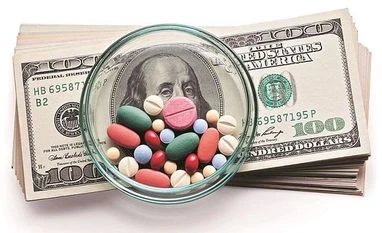
US, medicine, drug
Sohini DasAneesh Phadnis Mumbai
Last Updated : Dec 03 2018 | 12:59 AM IST
Pricing pressure in the US, the world's largest single country drug market, is showing signs of easing. Analysts expect the pricing pressure to normalise in a year or so reverting to earlier levels of low to mid-single digit. This is primarily because the companies have off late focussed on rationalising product portfolios as well manufacturing facilities and have exited products with thin margins. 

The US market has seen price erosion levels of 5-6 per cent. However, with faster drug approvals and higher rate of launches coupled with consolidation in the wholesale and distribution network, the price erosion got worse in the last few years, rising to high single digit to low teens. 

Several Indian pharma majors have already indicated in their earnings calls that they expect pricing pressure to stabilise over the coming months. The largest generic drug manufacturer in the US, Teva Pharmaceuticals, plans to exit 80 per cent of their generic portfolio in response to pricing pressure and has closed more than 10 manufacturing facilities so far. 

In a recent note, ICRA said over the last 12-15 months, companies had been exiting several products where pricing was untenable. For example, Dr Reddy's Laboratories has sold two of its manufacturing facilities - one in India and another in the US - to streamline its manufacturing operations and optimise the cost structure. It basically tried to get out of the commoditised antibiotic portfolio. 

These initiatives are likely to reduce competitive pressures enabling normalisation of prices, felt Gaurav Jain, vice-president and co-head corporate ratings, ICRA. 

Companies, however, are being cautiously optimistic. A Cipla spokesperson said: "It's difficult to say at this point whether the pricing environment in the US has completely stabilised, and how this will play out in the second half of the quarter, but there is certainly more optimism now." 
He said with no products getting added, Cipla's business-to-business (B2B) was experiencing a natural decline by design. A relatively late entrant in the US market, Cipla is focussing on complex generics in that market. "Our effort to improve our product mix with more emphasis on limited competition assets has already started to deliver significant margin improvement and revenue growth," the spokesperson said.

Lupin Chief Executive Officer Vinita Gupta had indicated in the Q2 earnings call: "The US market is gone through a lot of pressure over the last couple of years, but we are starting to see some level of stabilization and moderation in price erosion setting in."

She added: "In the last year or so, we have seen companies such as Mylan and Teva get out of multiple products in their portfolio presumably because they had reached a threshold below which it was not feasible for them to continue to manufacture the product. So, we are seeing this supply disruption more and more which is a very healthy sign for the industry. We benefited from some of that in Q2 and we expect to continue to see this trend in the next couple of quarters."

Meanwhile, drug makers are consolidating manufacturing facilities and rationalising their product portfolio in the US as they battle price erosion and weak profits.

Sun Pharma, country's largest drug maker by sales, is closing down its manufacturing site at Cranbury in New Jersey, and consolidating operations at its Ohm facility in the same state. It has more than 40 manufacturing plants globally, including five in the US.

“Sun Pharma is consolidating its manufacturing operations at New Brunswick and Cranbury into one location, New Brunswick. The restructuring is aimed at optimising our manufacturing operations and improving cost efficiencies in the increasingly competitive US market," the company said in an emailed response.

"Going forward we could see more brand and plant divestments and investments in automation and technology to reduce costs and improve efficiencies," said Sujay Shetty, (lead - health industry practice), PwC.
Heightened competitive intensity has also led the pharmaceutical companies to prune their portfolios and focus on selective high margin and complex products. 

"Between October to September in FY18, companies have withdrawn 606 approved abbreviated new drug applications, as compared to 214 and 248 withdrawals in FY17 and FY16, respectively," ICRA said in a note.

One subscription. Two world-class reads.

Already subscribed? Log in

Subscribe to read the full story →
*Subscribe to Business Standard digital and get complimentary access to The New York Times

Smart Quarterly

₹900

3 Months

₹300/Month

SAVE 25%

Smart Essential

₹2,700

1 Year

₹225/Month

SAVE 46%
*Complimentary New York Times access for the 2nd year will be given after 12 months

Super Saver

₹3,900

2 Years

₹162/Month

Subscribe

Renews automatically, cancel anytime

Here’s what’s included in our digital subscription plans

Exclusive premium stories online

  • Over 30 premium stories daily, handpicked by our editors

Complimentary Access to The New York Times

  • News, Games, Cooking, Audio, Wirecutter & The Athletic

Business Standard Epaper

  • Digital replica of our daily newspaper — with options to read, save, and share

Curated Newsletters

  • Insights on markets, finance, politics, tech, and more delivered to your inbox

Market Analysis & Investment Insights

  • In-depth market analysis & insights with access to The Smart Investor

Archives

  • Repository of articles and publications dating back to 1997

Ad-free Reading

  • Uninterrupted reading experience with no advertisements

Seamless Access Across All Devices

  • Access Business Standard across devices — mobile, tablet, or PC, via web or app

Next Story



