Food tech whets its appetite for growth amid flurry of investment activity

The flurry of investment activity is reminiscent of the build-up in the sector in 2015 before it went bust. But this time, there is no sign of trouble
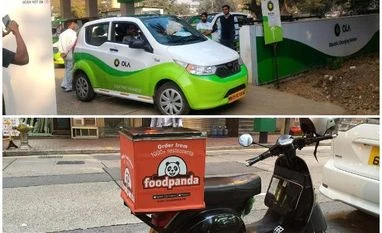
Ola, Foodpanda
Ola is planning to invest $200 million. Photo: Twitter (Olacabs)
Patanjali Pahwa Mumbai
Last Updated : Sep 17 2018 | 8:46 PM IST
Swiggy seems to be on the brink of raising $500 million from various investors including Tencent. It is also reportedly rejecting a $250 million cheque from Google. Reports indicate that Zomato is talking to Ant Financial for another round of funding. Paytm, sources say, has been talking to Domino’s and McDonald’s and coaxing them on its app. The plan, say sector experts, is to get the two companies on as tiles on the app. Ola is pumping money into Foodpanda and the Bhavish Aggarwal founded company plans to move people within the organisation so Foodpanda has more on-the-ground support. Uber Eats is throwing around discounts to snag customers. Meanwhile, Bengaluru-based cloud kitchen company Freshmenu is reportedly on the brink of closing another round of funding. There is a lot of action happening in the sector. It is almost breathless.

Now, let’s take a quick look at the funding rounds. In 2018, according to data gathering company Tracxn, the sector raised over $483 million. Compare that to 2016 and 2017, when the ecosystem managed to raise just about $131 million and $133 million respectively. Take another step back. In 2015, considered the heydays of foodtech, the entire sector managed to raise $270 million. 

2018, and it isn’t done yet, is on track to raise cash that is more than what was raised in 2015, 2016 and 2017 put together. That’s a lot of capital. The last time food tech raised astounding cash was 2015 and what followed was shutdowns and no-cash acquisitions. Food tech went into the consolidation mode. Before capital dried up, customer acquisition cost (CAC) was high, discount was the only way to convince a customer to get on board and there was no mention of a business model. In effect, it was a land grab. The bubble popped; the conversation turned to profitability. But that seems to be changing again. 

Foodpanda is offering desserts for single digits, Uber Eats unloads discounts and offers ever so often. Zomato and Swiggy are both burning through cash to compete with each other when it comes to the number of deliveries and are offering cash incentives to the delivery personnel to stay loyal. The conversation about profitability seems to have died down, CAC is high again. 

The question is: Is there another bubble forming? Are there changes from what happened in 2015? Have people learnt? 

Yes. And not really. 

Is there a bubble forming? Business Standard put this question to food tech entrepreneurs and investors. They all said things may be getting hot, but there is no bubble. So, let’s look at the data once again. 

According to Tracxn, there have been just 13 transactions until year-to-date. Transactions here refer to a company raising money from an investor. Some companies may have raised multiple rounds. Compare this to 2015, which saw 66 transactions. 

This is a time to pause. Why? What has changed? According to Revant Bhate, partner, KStart, a lot. “Companies, which have a proven business model, which can function at scale have raised money,” he says. There is a distinct difference from the last time around when cash was easily available but there was very little focus on the business model. There were companies that raised cash, he explains, with little to no addition to the business model. The moats were weak or non-existent. “Now, companies are being built on need,” he adds. Be it Swiggy or Zomato, the two big boys of the food tech ecosystem, both have managed to solidify one part of the food experience. Swiggy did it through its logistics network and Zomato through restaurant aggregation (and now also through logistics). And Swiggy is evolving. It is trying to be much more than just food delivery. Zomato, too, has evolved. The ones raising cash are also cloud kitchens like Faasos and Freshmenu. Both rely on their own logistics services. “There is also a change in the type of investor. Back in 2015, the capital was not as patient as it is now,” Bhate adds. 

The metrics within companies have changed too. It isn’t just about customer acquisition anymore; it is about retention. “In 2015, the discounts were to entice the customers online. Now, it is to make them use it over and over again,” says Saurabh Kochhar, once a founder of Foodpanda. And there is a granular difference between these two behaviours. One is the simple act of ordering, the other is habit formation. “If our super user orders twice a week, we are very happy,” says Rashmi Daga, founder, FreshMenu. And there are much more of them.

“It is good to look at 2018 food tech as e-commerce from 2015,” adds Kochhar. The big companies have settled on the business models and now it is up to them to prove it can work for a prolonged period of time on massive scale. 

But just like 2015, e-commerce repeat users were driven just by discounts. These discounts did nothing but bleed the company. When the discounts were removed, the customers went away. The companies struggled and many faded into irrelevance. But the argument is that food tech will do better. According to people at Swiggy and Zomato, the number of orders a month is primarily generated by existing users. These companies are adding new customers every day but those who stick on order much more often. And if the discounts were removed one day, they would be so used to not cooking, they would keep ordering. Food, they say, is much more habit forming than buying a phone.

One subscription. Two world-class reads.

Already subscribed? Log in

Subscribe to read the full story →
*Subscribe to Business Standard digital and get complimentary access to The New York Times

Smart Quarterly

₹900

3 Months

₹300/Month

SAVE 25%

Smart Essential

₹2,700

1 Year

₹225/Month

SAVE 46%
*Complimentary New York Times access for the 2nd year will be given after 12 months

Super Saver

₹3,900

2 Years

₹162/Month

Subscribe

Renews automatically, cancel anytime

Here’s what’s included in our digital subscription plans

Exclusive premium stories online

  • Over 30 premium stories daily, handpicked by our editors

Complimentary Access to The New York Times

  • News, Games, Cooking, Audio, Wirecutter & The Athletic

Business Standard Epaper

  • Digital replica of our daily newspaper — with options to read, save, and share

Curated Newsletters

  • Insights on markets, finance, politics, tech, and more delivered to your inbox

Market Analysis & Investment Insights

  • In-depth market analysis & insights with access to The Smart Investor

Archives

  • Repository of articles and publications dating back to 1997

Ad-free Reading

  • Uninterrupted reading experience with no advertisements

Seamless Access Across All Devices

  • Access Business Standard across devices — mobile, tablet, or PC, via web or app

Next Story


