Foxconn's iPhone manufacturing unit in Tamil Nadu is in silent mode

After protest over food poisoning, employees want the company to improve facilities before they resume work
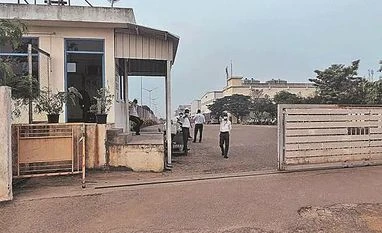
Foxconn
After protest over food poisoning, employees want the company to improve facilities before they resume work
Shine Jacob Sriperumbudur | Kanchipuram
6 min read Last Updated : Jan 04 2022 | 6:10 AM IST
Nearly a fortnight after a food poisoning incident halted operations at the Foxconn iPhone manufacturing unit at Sipcot Industrial Park in Sriperumbudur, an uneasy calm prevails outside the plant. The security staff at the gate greet this correspondent cordially enough until they realise he is from the media. 

“Please mail. Only mail. We don’t know when the operations will start,” one guard says curtly, beginning to close the gates.

On December 15, almost 260 workers became ill with food poisoning at the Foxconn plant’s hostel in Tiruvallur and around 159 had to be hospitalised. Soon, there were rumours that eight workers had died at the hospital. This led to angry protests by 2,000 Foxconn employees who blocked the Chennai-Bengaluru highway on the night of December 17.  

Of the 18,000 workers at the Sriperumbudur Foxconn plant, more than 11,000 are women. One of the women’s hostels is a stone’s throw from the main gate of the factory. 

“The hostels here are almost like a jail with no quality food and toilet facilities," says a bystander. "When rumours began about the death of women employees, some of them broke the doors and came out. Around 2,000 of them sat in protest at four locations (Chennai-Bengaluru highway, Tiruvallur-Tirupathi road, Kanchipuram-Chengalpattu road and near the Kanchipuram collectorate),” he says.

Foxconn has been under fire for allegedly keeping 25-30 workers in hostel rooms meant for around 10 people.  

When the protests began, the local police were taken by surprise. “They had no unions. Hence, this was a spontaneous outburst, with no proper leadership, due to the rumoured deaths,” says an officer at the police station nearby. 

There was no media report or internal communication to the workers regarding the sick workers till December 17, indicating a communication gap between the management and the workers.

The blockade of the national highway by the agitated women workers started at 8 pm on December 17 and continued even after the Kancheepuram collector, M Aarthi, arrived at the spot 12 hours later. To pacify the protesters, she did a “video call” with those who were rumoured to have died, and broadcast the conversation through a loudspeaker. 

Later, two key officials of Foxconn India, additional director Chao Heng Chou and operations director Kalidasan ASR, came out with a public apology to calm the agitated women. 

Some workers told the media that the lack of clarity about the state of those who had fallen ill and their miserable living conditions had led to the protests. Authorities are also not ruling out the presence of external influences, since two persons who were arrested were not Foxconn employees.

The company did not respond to questions from <Business Standard>. 

“We had closed down the kitchen on the first day itself and took necessary actions, including setting up a committee,” says Alby John, the district collector of Tiruvallur, in whose jurisdiction the incident occurred.

This is not the first time that Foxconn, a subsidiary of Hon Hai, which ranks first globally in the field of electronic manufacturing services, has faced worker-related health controversy. In July 2010, over 200 workers at the Sriperumbudur unit were hospitalised due to nausea, breathlessness and vomiting, reportedly because of some pesticide or air conditioner issues. 

“At that time, there were unions to protest against the anti-employee measures inside the campus. This time, it was a group of unorganised and disgruntled women workers who protested,” says E Muthukumar, former Foxconn India Employees' Union president and district general secretary of the Centre of Indian Trade Unions (CITU). Muthukumar was one of those arrested when the protests and strikes broke out. 

By the middle of the last decade, Foxconn had stopped production at Sriperumbudur. “When it restarted in 2019, with three units in the same area, unions were not allowed. The results are evident now, with human rights being denied,” Muthukumar says. “Women are working there with minimal wages and for over 10 hours instead of eight. They are not allowed to have mobile phones inside the unit, and the food is terrible. Even gloves and masks are not given to the employees,” he alleges.

The average salary of the workers at the unit is around Rs 11,800 a month, which, Muthukumar alleges, is less than industry standards.

Soon after the incident, Apple Inc conducted a third-party audit, which found that the dormitory and dining facilities at Foxconn’s Sriperumbudur unit did not meet its international standards. This led to Apple putting the unit on probation. Foxconn, too, has announced that it is restructuring its local leadership.

But Muthukumar is sceptical about the steps being taken to improve the conditions at the unit. “This is just an image-building exercise,” he scoffs. “Why did an international player like Apple not conduct a detailed audit in the last three years?” he asks.

Asked when the operations would resume, a top executive of Foxconn said they are working on it. However, unless they meet Apple’s production standards, the units are unlikely to be back in action. 

A report by the industrial safety and health department of the Tamil Nadu government said that the canteen at the factory had space to accommodate only around 30 per cent of the staff working in one shift, which stretches its infrastructure to breaking point. 

“The report also raised concerns about the supervising mechanism. The compulsory health check-ups of the canteen staff were not done and there were no permanent safety officers,” says an industry source.

The role of the state government is also being questioned. According to sources, Kanchipuram district, which houses over 1,800 factories, has only a handful of officials to oversee labour safety norms. 

“We are very sorry for the issues our employees experienced and are taking immediate steps to enhance the facilities and services we provide at the remote dormitory accommodations. All employees will continue to be paid while we make the necessary improvements before restarting our operations,” Foxconn has stated.  

The workers, anxious about their jobs, are hoping that Foxconn will match its words with some action on the ground.

One subscription. Two world-class reads.

Already subscribed? Log in

Subscribe to read the full story →
*Subscribe to Business Standard digital and get complimentary access to The New York Times

Smart Quarterly

₹900

3 Months

₹300/Month

SAVE 25%

Smart Essential

₹2,700

1 Year

₹225/Month

SAVE 46%
*Complimentary New York Times access for the 2nd year will be given after 12 months

Super Saver

₹3,900

2 Years

₹162/Month

Subscribe

Renews automatically, cancel anytime

Here’s what’s included in our digital subscription plans

Exclusive premium stories online

  • Over 30 premium stories daily, handpicked by our editors

Complimentary Access to The New York Times

  • News, Games, Cooking, Audio, Wirecutter & The Athletic

Business Standard Epaper

  • Digital replica of our daily newspaper — with options to read, save, and share

Curated Newsletters

  • Insights on markets, finance, politics, tech, and more delivered to your inbox

Market Analysis & Investment Insights

  • In-depth market analysis & insights with access to The Smart Investor

Archives

  • Repository of articles and publications dating back to 1997

Ad-free Reading

  • Uninterrupted reading experience with no advertisements

Seamless Access Across All Devices

  • Access Business Standard across devices — mobile, tablet, or PC, via web or app

Topics :iphone manufacturing in IndiaTamil NaduFoxconnNational Highway

Next Story



