Future Group's Kishore Biyani bets big on small stores

These would help sell goods worth Rs 1 lakh annually to 10 mn households by FY21
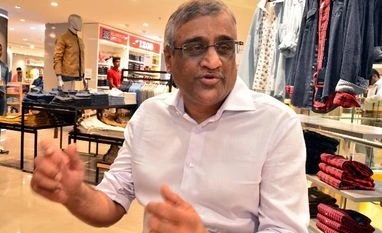
Kishore Biyani
Abhineet KumarRaghavendra Kamath Mumbai
Last Updated : Apr 14 2017 | 12:53 AM IST
Future Group founder Kishore Biyani recently cycled from Jodhpur to Jaisalmer, in Rajasthan — a distance of 280 km. It was part of his itinerary to visit a dozen small towns last month.

These were not pleasure trips but a sort of business recce, as Biyani gets his group ready to meet an ambitious target of selling goods worth Rs 1 lakh crore annually by 2020-21. He plans to do so by selling groceries, apparel and electronics worth Rs 1 lakh every year to at least 10 million households. 

These trips are helping him meet and understand the needs of potential customers. And, he is betting on kirana or small stores.

“I went to a lot of small towns and realised there was no extreme poverty in this country. I am shocked to learn this,” said Biyani, who depends on his team of social scientists, anthropologists and mythologists, instead of economists to chalk out his strategy. 

Biyani has maintained the target of increasing revenue by five times to Rs 1 lakh crore from Rs 22,000 crore, set in June 2015. 

The only change to this plan is that Biyani has now targeted 10,000 neighbourhood stores, from 4,000 two years ago. This is expected to bring in Rs 40,000-crore revenue in FY21. 

 “I think we can even cross our Rs 1-lakh-crore sales target now, with more small stores,” said Biyani. 

The Future Group operates through its retail arm, Future Retail; fashion retail business, Future Lifestyle Fashions; and the fast-moving consumer goods (FMCG) business, Future Consumer Enterprises, which also operates small stores under the Nilgiri’s brand. 

Future Retail, which has both large- and small-format stores, is led by Big Bazaar, Fashion at Big Bazaar, and Food Bazaar. 

Currently, the group has 300 such stores but it does not expect to cross 400-450  in the next four years. “That does not serve all our customers. That’s where our small stores come in. These will serve under-served customers,” Biyani said.

After acquiring Easy Day small stores from Bharti Retail in May 2015, Future Retail has more than doubled the number of stores from 186 to 420 last month. The company is also in the process of completing the acquisition of the retail business of Hyderabad-based Heritage Foods, which has 124 small stores. Electronics store eZone is also part of Future Retail. 

Future Consumer also has 153 small stores under the Nilgiri’s brand, which it acquired in November 2014. It is these small stores that Biyani wants to expand to a network of 10,000 stores.

The small-store growth strategy includes a loyalty plan to get 1,500 members at each store for a fee. In return, Biyani is promising an additional 10 per cent discount on bills, apart from the ongoing offers.

The group also has Future Enterprises, which provides back-end support of the supply chain and logistics. 

The strength of the ecosystem, from sourcing, production, supply chain, logistics and deeply penetrated retail outlets, Biyani says gives him the confidence to offer products at a price that cannot be matched by rivals. 

Besides implementing big data to acquire and retain customers, the Future Group is targeting Rs 20,000 crore of annual revenue by manufacturing fast-moving consumer goods (FMCG), which would be sold both in its own stores as well as at other retailers. 

Biyani has also set up a food park in Karnataka and entered joint ventures to produce biscuits and wheat flour. 

“The group has made a course correction in the past five to seven years, moving away from reckless to profitable growth,” said Arvind Singhal, chairman and managing director at management consultancy firm Technopak. 

A pioneer of modern retail in India, Biyani’s growth ambitions had led to unmanageable debt on the books of his flagship Pantaloon Retail, as it continued funding loss-making stores, which resulted in the company having to sell its fashion retail business to Aditya Birla Nuvo in May 2012 to reduce debt.  

Biyani has changed his approach and is aiming to make the group companies debt-free, barring short-term working capital loans, and is strongly focused on profitable growth.

“Biyani’s ambition looks audacious. But, with a clear strategy, if he reaches the target even a couple of years later, it will be fine,” said Singhal.


One subscription. Two world-class reads.

Already subscribed? Log in

Subscribe to read the full story →
*Subscribe to Business Standard digital and get complimentary access to The New York Times

Smart Quarterly

₹900

3 Months

₹300/Month

SAVE 25%

Smart Essential

₹2,700

1 Year

₹225/Month

SAVE 46%
*Complimentary New York Times access for the 2nd year will be given after 12 months

Super Saver

₹3,900

2 Years

₹162/Month

Subscribe

Renews automatically, cancel anytime

Here’s what’s included in our digital subscription plans

Exclusive premium stories online

  • Over 30 premium stories daily, handpicked by our editors

Complimentary Access to The New York Times

  • News, Games, Cooking, Audio, Wirecutter & The Athletic

Business Standard Epaper

  • Digital replica of our daily newspaper — with options to read, save, and share

Curated Newsletters

  • Insights on markets, finance, politics, tech, and more delivered to your inbox

Market Analysis & Investment Insights

  • In-depth market analysis & insights with access to The Smart Investor

Archives

  • Repository of articles and publications dating back to 1997

Ad-free Reading

  • Uninterrupted reading experience with no advertisements

Seamless Access Across All Devices

  • Access Business Standard across devices — mobile, tablet, or PC, via web or app

Next Story



