'Growth in 3 phases': Bhavish Aggarwal on Ola's plan to go public in India

"Our India business is in a strong position, we are doing the same in other countries also. The next logical step is for us to list in the public markets"
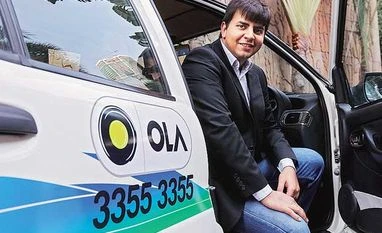
Bhavish Aggarwal, Co-founder and CEO, Ola Cabs
Peerzada Abrar Bengaluru
4 min read Last Updated : Mar 03 2020 | 9:30 PM IST
SoftBank-backed ride-hailing firm Ola is planning to go public in the next few years and it is aiming to do it in the India market, confirmed Ola co-founder and CEO Bhavish Aggarwal. He said the focus of the firm has always been on building sustainable, self-sufficient, profitable and long-term institutions. 

“Our India business is in a strong position, we are doing the same in other countries also. The next logical step is for us to list in the public markets; we are an Indian domicile, unlike some of our peers, so we list in India,” said Aggarwal during the MEA-PIC Geo-Economic Conference that was held in Pune over the weekend. “It is very important for us to be an Indian company and list in the Indian markets and build… maybe looking at us more, Indian internet companies can start going public (rather) than relying on private markets,” said Aggarwal.

The Bengaluru-based firm competes with US rival Uber whose lukewarm IPO last year has contributed to the lag in valuation trend among the unicorns across the Indian start-up ecosystem, according to the analysts. Also, the fiasco at SoftBank-backed co-working start-up WeWork pushed the firm’s initial public offering (IPO) plans in the US, as investors questioned the $47-billion valuation. The WeWork debacle has put pressure on SoftBank portfolio companies to show profitability, according to the analysts. Ola which has raised a total of $3.8 billion in funding and is valued at around $5.8 billion.

Referring to the startup phase in the country, Aggarwal said that one of the objections people have is young ventures are spending too much money and they are not prudent from a financial perspective. “Our focus has been to build a business which is, not building for vanity, but for building strong fundamental propositions for the consumer and in a profitable business model. So, we’ve been doing that,” he said.

Aggarwal said he sees Ola’s growth in three phases—the first was the struggle phase which was  “2011 to 2014, or 2013-14” where the firm was figuring out its business model, customer, users, and who will give it the money to build the company. The second phase was between 2014-2017 roughly, where this industry just exploded and like most disruptions in any industry it wasn’t a linear curve, it was an S curve. “Disruptions happen in an S curve. Once the core economics of a certain service is better in the previous incumbent service or product, the adoption in the consumer is just exponential. That’s what happened with our industry also,” said Aggarwal. “Because it (Ola) was such a relevant product offered at such a compelling price point for everybody that it just scaled very rapidly. And in that phase, as the management team and the founding team, it felt like we were just riding a tiger. And after that we got into a phase of consolidation, making sure operations are running more efficiently.”

About two years ago, Ola decided that after having built the mobility services business for the country, there are enough reasons for us to take the same technology and business capability outside India. It started with Australia, then expanded to New Zealand and then to the UK.

“We chose these countries especially because there are enough cultural links between them and there are enough similarities in the ways of doing business,” said Aggarwal. “And obviously, these countries are very relevant in the global context for the mobility industry.”

One of the big things in a global city like London is pollution and congestion. Ola is focusing a lot of its business around having a much larger share of electric vehicles. “We are actually making sure that the industry in London becomes electric in the next few years vs ten years as per their plans,” said Aggarwal. 

Like in India, the company has also introduced many safety innovations there such as OTP technology, so that the customers know that they are getting into the right car.  “We’ve used AI (artificial intelligence) facial recognition to make sure the right driver is driving you—the same driver who signed up with us. This is something we already have in India,” said Aggarwal.

He said the more the company expands outside India, the more it feels excited about the Indian industry and the startups to take a globally leading mindset.

“I think there are two models in the world: the American model and the Chinese model. There is a need for an Indian model also, which will be accepted much more beyond,” said Aggarwal.

One subscription. Two world-class reads.

Already subscribed? Log in

Subscribe to read the full story →
*Subscribe to Business Standard digital and get complimentary access to The New York Times

Smart Quarterly

₹900

3 Months

₹300/Month

SAVE 25%

Smart Essential

₹2,700

1 Year

₹225/Month

SAVE 46%
*Complimentary New York Times access for the 2nd year will be given after 12 months

Super Saver

₹3,900

2 Years

₹162/Month

Subscribe

Renews automatically, cancel anytime

Here’s what’s included in our digital subscription plans

Exclusive premium stories online

  • Over 30 premium stories daily, handpicked by our editors

Complimentary Access to The New York Times

  • News, Games, Cooking, Audio, Wirecutter & The Athletic

Business Standard Epaper

  • Digital replica of our daily newspaper — with options to read, save, and share

Curated Newsletters

  • Insights on markets, finance, politics, tech, and more delivered to your inbox

Market Analysis & Investment Insights

  • In-depth market analysis & insights with access to The Smart Investor

Archives

  • Repository of articles and publications dating back to 1997

Ad-free Reading

  • Uninterrupted reading experience with no advertisements

Seamless Access Across All Devices

  • Access Business Standard across devices — mobile, tablet, or PC, via web or app

Topics :Ola

Next Story


