Here's why 'Jio pressure' on Airtel, other telcos could partly ease soon
Airtel last week posted over 39 per cent fall in consolidated net profit to about Rs 3.06 billion for the third quarter ended December 31, 2017
Press Trust of India New Delhi India's largest telecom operator Bharti Airtel's weak earnings may have marked a low point for Indian telcos but some bit of pressure could lift this year as Jio-triggered market competition starts to ease, according to Fitch Ratings.
The statement comes after Airtel last week posted over 39 per cent fall in consolidated net profit to about Rs 3.06 billion for the third quarter ended December 31, 2017.
Fitch termed the current low industry tariffs as "unsustainable" and said it expects them to rise in 2018, as Jio switches gear from gaining customers to making reasonable returns on its investments in the sector.
"Bharti Airtel's rating headroom will narrow due to lower cash generation and high capex requirements in the financial year ending March 2018 (FY18)," Fitch Ratings said in a statement.
That said, Fitch pointed out that pressure on Bharti and other incumbent Indian telcos "should begin to fade this year" as the competition triggered by Reliance Jio's 2016 market entry begins to ease.
It noted that Bharti is committed to maintaining an investment-grade rating and intends to sell a larger stake in its tower arm, Bharti Infratel, in FY19. In the last one year, it has sold 18.5 per cent in Infratel for about $1.9 billion.
"We forecast annual negative free cash flow $600 million-800 million during FY18-19, as Bharti's cash flow from operations will be insufficient to fund large capex requirements," Fitch said.
Stating that the company has raised its capex guidance to bolster its 4G network, Fitch said that the proposal to allow telcos more time to pay for the spectrum they bought in auctions would "only partially ease cash flow pressures".
Fitch predicts that Bharti's revenue and Earnings before interest, tax, depreciation and amortisation (EBITDA) will "rebound" in FY19 driven by a likely improvement in the blended average revenue per user (ARPU) in the Indian mobile sector as data usage and tariffs rise.
Fitch said that the outlook for the Indian telco sector is "improving" and that the results in just-concluded quarter could have been the a low point for Bharti and other established players.
"We revised the sector outlook to stable in 2018 from negative in 2017, as we expect competition to ease now that industry consolidation is all but completed," it said.
The industry revenue growth is likely to be in the mid- single-digits, after a decline in 2017.

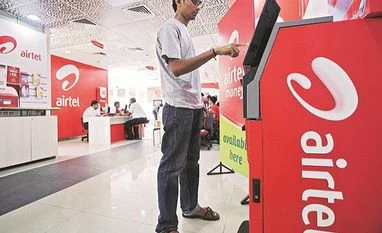 "Here's why 'Jio pressure' on Airtel, other telcos could partly ease soon")


 Connect with us on WhatsApp