How IIFCL manages to stay afloat despite stress in infrastructure sector

Hybrid-annuity model, lending restrictions have helped the lender manage its books better
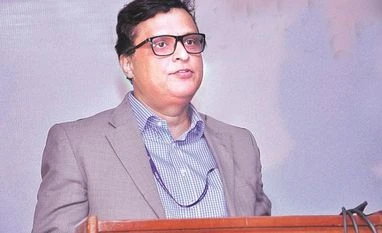
Very few infrastructure projects going around for lenders: IIFCL chairman
IIFCL chairman Sanjeev Kaushik
Jyoti Mukul New Delhi
Last Updated : Nov 24 2018 | 9:09 PM IST
The government-owned India Infrastructure Finance Company (IIFCL) wrote off 16 accounts from its balance sheet last year. This was also the year when it reported its first loss, since inception in 2006, at Rs 11.56 billion. Though this might be a reflection of the financial stress in the infrastructure sector, the firm’s balance sheet is more an outcome of provisioning requirements than a distress.

The company has been able to shield itself from the lending slowdown by turning its focus to hybrid-annuity model (HAM) projects in the road sector from 2015. This was also the point when it started to do its own appraisals, instead of relying on lead banker’s appraisal, said a senior IIFCL official on conditions of anonymity.

IIFCL was created in 2006 to provide funds for long-gestation infrastructure projects more in conjunction with bank lending than as a pure play lender. Ironically, this helped the company stay afloat when banks and other government-owned financial institutions such as Power Finance Corporation and Rural Electricity Corporation are facing the heat due to high levels of non-performing assets. Others, such as IL&FS, have seen their business strategy of being financier and project executor fail.

According to the official, adherence to its covenant Scheme for Financing Viable Infrastructure Projects (SIFTI) helped the company, though one of its larger accounts - Jaiprakash Industries - has been its biggest concern. Under SIFTI, IIFCL’s total lending cannot exceed 20 per cent of the total project cost.

In case of takeout financing, direct lending should not exceed 10 per cent of the cost, and total lending, including take out financing, should not be more than 30 per cent of the total project cost. In addition, loan disbursements have to be in proportion to disbursements from banks and financial institutions. “SIFTI has been a huge blessing, and has prevented risky behaviour,” he said.

Explaining the loss during the last financial year, he said it was because of provisioning made for bad accounts. “We created buffers for future.”

Besides the write-offs, where it had advanced over Rs 10 billion in debt, IIFCL also adopted accelerated provisioning in 15 cases. This included Jaypee Infratech’s Yamuna Expressway, where it funded Rs 9 billion in June 2015. This was under its takeout finance scheme on request from an IDBI Bank-led consortium. 

Though the project closure was achieved in 2012, IIFCL faced flak from the Comptroller and Auditor General for extending the loan despite a National Green Tribunal order that curtailed construction in the area due to its proximity to the Okhla Bird Sanctuary.

IIFCL, however, is not too worried about the Jaypee account, since it has good assets like land and toll on the highway. It had also made provision of 40 per cent amounting to Rs 3.6 billion as of March 31, 2018. But after the February 12 circular of the Reserve Bank of India, it increased the provisioning up to 50 per cent in NCLT cases. So, it further made a provision of 10 per cent in loan account of Jaypee Infratech of Rs 900 million. The other accounts where provisioning was increased included Dighi Port, developed by Balaji Infra Projects, Tirupathi Tiruthani Chennai Tollways Private Limited and Lanco Teesta Hydro Power.

With the focus now turning to HAM projects, the ticket size of loans has reduced. But, the share of IIFCL’s debt in total projects has increased. “IIFCL is the go-to place for HAM projects,” added the official.

The government grant in HAM is up to 40 per cent, and another 12 per cent comes as promoter equity. Since IIFCL funds up to 20 per cent of the project cost, it can take up nearly half of the debt which is 48 per cent of the project cost, he explained. 

“Though public private partnership projects have tried up, we now have smaller bets distributed across a larger number of players and, therefore, the risk is lower.”

As on March 31, 2018, IIFCL’s debt to 27 HAM projects is more than Rs 40 billion. Its overall sanctions stood at Rs 810 billion, of which the cumulative disbursements are Rs 601 billion, including refinance of Rs 72.31 billion and takeout finance of Rs 154 billion.

One subscription. Two world-class reads.

Already subscribed? Log in

Subscribe to read the full story →
*Subscribe to Business Standard digital and get complimentary access to The New York Times

Smart Quarterly

₹900

3 Months

₹300/Month

SAVE 25%

Smart Essential

₹2,700

1 Year

₹225/Month

SAVE 46%
*Complimentary New York Times access for the 2nd year will be given after 12 months

Super Saver

₹3,900

2 Years

₹162/Month

Subscribe

Renews automatically, cancel anytime

Here’s what’s included in our digital subscription plans

Exclusive premium stories online

  • Over 30 premium stories daily, handpicked by our editors

Complimentary Access to The New York Times

  • News, Games, Cooking, Audio, Wirecutter & The Athletic

Business Standard Epaper

  • Digital replica of our daily newspaper — with options to read, save, and share

Curated Newsletters

  • Insights on markets, finance, politics, tech, and more delivered to your inbox

Market Analysis & Investment Insights

  • In-depth market analysis & insights with access to The Smart Investor

Archives

  • Repository of articles and publications dating back to 1997

Ad-free Reading

  • Uninterrupted reading experience with no advertisements

Seamless Access Across All Devices

  • Access Business Standard across devices — mobile, tablet, or PC, via web or app

Next Story



