4 min read Last Updated : Aug 09 2021 | 11:20 AM IST
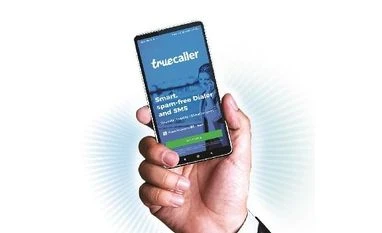
The Swedish company that started as a caller identification app has come a long way, as it has kept adding features to control spam and scam calls. Indeed, now it is taking these features further, for identifying spam calls and SMSs and blocking them.
This is of significance for India, which holds the ninth position across the world in receiving spam and scam calls. The Covid-19 pandemic has seen this now getting pushed to the SMS segment. According to the Truecaller Insights Report for 2020, Truecaller was able to block and identify 31.3 billion spam calls and 12.8 billion spam messages globally in the year gone by.
India constitutes Truecaller’s largest market. Some 70-75 per cent of Truecaller’s user base is in India. This growing user base in India has also helped the company expand its revenues. The Truecaller app has been downloaded over 500 million times globally. Of this number, 270 million are monthly active users globally, and over 200 million are from India.
With cyber criminals getting busy as the pandemic hit, and with people having shifted to work-from-home, the number of spam and scam calls also went up. Over the past year and a half, during which Covid-19 wreaked havoc globally, Truecaller has used its reach in India to keep users of the app safe from scammers.
“Like several corporations, we too wanted to do something,” says Kari Krishnamurthy, the company’s chief commercial officer. So, at first the company tied up with MapMyIndia and FactChecker and created a Covid Relief section as part of the app and built a Covid health care directory. This is an authentic list of vaccination centres, hospitals and medical service providers. It brings together 60,000 Covid-related points of interest.
But it was the second wave of the pandemic that provided the inflection point for Truecaller. Social media was flooded with people who would say they had access to medicines and oxygen cylinders, and they would give out phone numbers. People would get taken in because they were desperate, and would call.
“So, along with the cybercrime department and the ministry of home affairs, we started to mark numbers as scams or spam. These were numbers that were provided to us by the cybercrime department. These numbers had FIRs (first information reports) registered against them. This is the first time that Truecaller at its end was marking numbers as spam,” adds Krishnamurthy.
This is of significance, because at Truecaller, the spam list is driven by community efforts. “We do not mark any number as spam. When you receive a call and it is not correctly identified, you can tell us. We then use machine learning and algorithms, which our engineers have worked on, to get these numbers, and as more and more people start marking a number as spam, then that number gets a red banner spam ID. In a way, it’s the community which shares their feedback and the system then creates this spam list,” explains Krishnamurthy.
This is not all. The company is also making sure that users can stop spam and scams coming via SMS. Roughly 8.5 billion spam SMSs were identified and blocked in 2019 alone, and 29.7 billion spam calls were blocked in 2019 alone in India.
Krishnamurthy points out that more than 80 per cent of SMSs received are from businesses. Truecaller’s Smart SMS, he says, uses the same algorithms used to identify spam callers in SMSs as well. The SMS intelligence is built into the app itself and it can work offline too — nothing leaves the user’s device, including one-time passwords, bank SMSs and financial information. “Smart SMS is a powerful evolution to the SMS engine that has become even better at filtering out spam, categorising useful information, reminding you of payments and in general making your SMS inbox a more organised place,” he says.
This feature is currently available only in select markets like India, South Africa, Kenya, and Nigeria. It will now be taken to other markets.
Even as players like Apple and Google have improved on their caller ID features, Truecaller has added more features to stay a step ahead — such as call reason (why a person is calling), SMS scheduling and message translation.