HUL eyes bigger market with VWash, seeks larger presence in pharmacies

On Monday, the company announced it was buying VWash, an intimate hygiene brand from Glenmark Pharmaceuticals
Hindustan Unilever
Hindustan Unilever
Viveat Susan Pinto Mumbai
4 min read Last Updated : Mar 25 2020 | 11:13 PM IST
The Covid-19 outbreak has brought healthcare into the centre of people's lives, forcing them to rethink consumption and hygiene habits. For purveyors of fast moving consumer goods (FMCG), this opens up innumerable opportunities. In terms of consumer engagement some have churned the digital channels with communication that ranges from public awareness to information and purpose-led promotions. New products and variants are being planned as well as a concerted effort is being made to ease entry into newer trade channels.
 
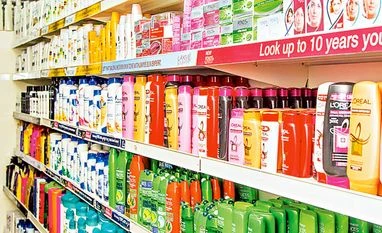
The pharmacy network is one such channel that is increasingly acquiring importance for FMCGs. Market leader Hindustan Unilever (HUL) is now readying a blueprint that it will see it enhance its presence within pharmacies through a combination of acquired, distributed and in-house brands.
 
On Monday, the company announced it was buying VWash, an intimate hygiene brand from Glenmark Pharmaceuticals. While the market size of intimate hygiene is just Rs 50 crore, say experts, owing to the niche and urban presence of the category, VWash gives HUL a crucial gateway into the pharmacy channel.

Along with brands Horlicks, Boost and Lifebuoy as well as GlaxoSmithKline's (GSK’s) Sensodyne and Crocin, whose distribution HUL will now undertake, the company gets a sizeable portfolio, said analysts, to negotiate with pharmacies. This gains importance in light of the heightened push by rivals RB Health (Dettol), ITC (Savlon), Godrej Consumer (Godrej Protekt/Cinthol), Dabur, Emami and Wipro Consumer (Santoor) into pharmacies in recent months.

“We are already big in general trade. The pharmacy trade channel is a key segment where we would like to grow our presence,” Srinivas Phatak, chief financial officer, HUL said on Monday. VWash also fills “white spaces” within HUL’s beauty and personal care portfolio, the company’s chairman and managing director Sanjiv Mehta said, as it taps emerging categories in healthcare.

According to industry estimates, the pharmacy channel constitutes around 15-20 per cent of India’s total retail universe of 15 million outlets. The channel is of relevance to FMCGs for the diversity of products it stocks – from medicines to personal hygiene, food, beverages, cosmetics and home care products – items that require individual attention and display. Plus pharmacies are changing rapidly, they are no longer just corner chemist shops but mini supermarkets with well-lit aisles and an array of brands.


“Shelf space in kiranas is very limited. You have everything from staples to discretionary products stocked there. Pharmacies in that sense give you better display, the ambience is better, companies can push premium products and the pharmacist can also recommend specific items if required,” says Nitin Gupta, analyst, SBICAP Securities.

While modern trade over the years has played an important role in driving premium products for FMCGs, pharmacies are slowly but steadily emerging as go-to channels for companies where upscale and high-priced items can be pushed.
Companies, say experts, are also forming dedicated teams to service general trade and pharmacies, given the unique requirements of the two channels. Dabur and Emami, for instance, have separate field force in place for the two channels and different products that are pushed into the two networks. HUL is also working on similar lines and is likely to push some of its premium offerings across its categories even more aggressively into pharmacies in the future, experts said.

Some experts say that HUL’s push into pharmacies is also linked in part to its need to pave a smooth road ahead for its health food drinks Horlicks and Boost acquired from GSK Consumer. The acquisition will see HUL compete head-on with Nestle, which has rival Milo in its portfolio. Nestle currently has been pushing Milo’s regular packs in markets such as the south where Horlicks is a key competitor. Milo Tetra Pak, on the other hand, is available across the country, distribution of which will be amplified even further in the coming months. HUL, on the other hand, may relaunch Horlicks and Boost as it refurbishes the brands.

One subscription. Two world-class reads.

Already subscribed? Log in

Subscribe to read the full story →
*Subscribe to Business Standard digital and get complimentary access to The New York Times

Smart Quarterly

₹900

3 Months

₹300/Month

SAVE 25%

Smart Essential

₹2,700

1 Year

₹225/Month

SAVE 46%
*Complimentary New York Times access for the 2nd year will be given after 12 months

Super Saver

₹3,900

2 Years

₹162/Month

Subscribe

Renews automatically, cancel anytime

Here’s what’s included in our digital subscription plans

Exclusive premium stories online

  • Over 30 premium stories daily, handpicked by our editors

Complimentary Access to The New York Times

  • News, Games, Cooking, Audio, Wirecutter & The Athletic

Business Standard Epaper

  • Digital replica of our daily newspaper — with options to read, save, and share

Curated Newsletters

  • Insights on markets, finance, politics, tech, and more delivered to your inbox

Market Analysis & Investment Insights

  • In-depth market analysis & insights with access to The Smart Investor

Archives

  • Repository of articles and publications dating back to 1997

Ad-free Reading

  • Uninterrupted reading experience with no advertisements

Seamless Access Across All Devices

  • Access Business Standard across devices — mobile, tablet, or PC, via web or app

Topics :CoronavirusHindustan Unilever HULpharmacyFMCGsfemale hygiene

Next Story



