Increasing focus of Unilever on profitability and plans to combine the food and beverages businesses may have some impact on its Indian subsidiary — Hindustan Unilever (HUL) — as well.
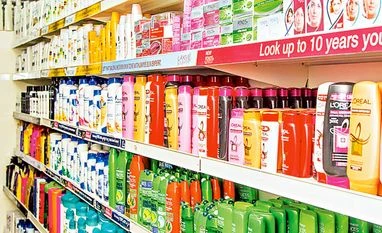
The food and beverages segment is growing at a healthy clip for HUL, but it contributes only 10 per cent to its revenues. The FMCG giant derives about half of its revenue from the soaps and detergents business, with personal products forming another 20 per cent.
As the parent announced its strategy to drive profitable growth, the buzz is HUL might also toe the parent’s line on this front. However, analysts believe this may not be the case.
Abneesh Roy, FMCG analyst at Edelweiss Securities, said, “Unilever might adopt different mechanisms for different markets. In India, HUL has a very India-specific, R&D developed products portfolio and most of the parent’s foods portfolio is not present in India. While there is a possibility that they might realign, but I would not rule out the continuation of existing schemes because HUL realigned its business segments just a year back.”
He believes it will take another month for more clarity on HUL’s plan of action. HUL had realigned its business segments in June 2016.
The parent’s drive to rationalise costs though will only ring in higher margins for HUL, according to
analysts’ estimates.
HUL has maintained its emphasis on driving operational efficiencies over the past few years and margin focus is not new for the company.
This is also reflected in the company’s operating margin, which has expanded from 14.9 per cent in FY12 to 18.4 per cent in FY16 and is pegged at 18.8 per cent in FY17.
This strategy of focusing on margins, at least in the current scenario, appears prudent given that volumes have been under pressure, not just from rising competitive intensity, but also from slowing rural demand.
These pressures limit the company’s ability to push revenue growth via price hikes. Though it has selectively taken price hikes to pass on higher input costs in recent months, firming input prices are likely to cap scope for price hikes from here on, said analysts.
Interestingly, analysts see further margin gains for HUL on account of cost efficiencies.
“We expect margins of HUL also to expand over next two-three years because of this cost-cutting exercise and GST. GST will aid cost savings in terms of lesser number of warehouses and other benefits. We expect HUL to further rationalise ad spends and evaluate performance of small/new businesses like water purifier, retail stores, packaged foods, exports,” Roy said.
He has built in 150 basis points operating margin expansion for HUL by FY19 over FY17 margins.
Recovery in volumes though is likely to be more gradual. Sachin Bobade, FMCG analyst at Dolat Capital, said, “For March 2017 quarter, we expect HUL’s volumes growth at 0 to -3 per cent as rural markets continue to be soft. Once rural recovers HUL will start performing.
A high base of March 2016 quarter will also belittle growth numbers in the March 2017 quarter.”
While rural recovery is crucial for improvement in HUL’s performance, its focus on profitability will be a key positive. Current valuations of about 42 times FY18 estimated earnings, though appear full.
The way forward
The food and beverages segment is growing at a healthy clip for HUL, but it contributes only 10 per cent to its revenues
The FMCG giant derives about half of its revenue from the soaps and detergents business, with personal products forming another 20 per cent
The parent’s drive to rationalise costs though will only ring in higher margins for HUL, according to analysts’ estimates
HUL’s emphasis on driving operational efficiencies is reflected in its operating margin, which has expanded from 14.9% in FY12 to 18.4% in FY16 and is pegged at 18.8% in FY17