Hyundai to export cars in completely-knocked-down format to select markets

To gain tax advantage and to create additional capacity for the domestic market
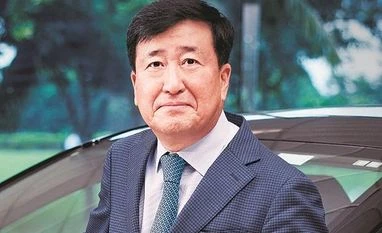
Y K KOO, Hyundai Motor India MD and CEO
T E Narasimhan Chennai
Last Updated : Oct 09 2018 | 11:53 PM IST
Hyundai Motor India Ltd (HMI), the Indian subsidiary of Korean automobile major Hyundai Motor, has decided to send vehicles in the Completely Knocked Down Units (CKD) format to select export markets.

This comes at a time of growing demand for Made-in-India cars, and a high tax rate on CBUs (Completely Built Units) in the destination markets.

Completely Built Units (CBU) refers to vehicles which are sold as ready-to-drive, whereas Completely Knocked Down Units (CKD units) are vehicles whose parts are officially imported from foreign countries and are assembled in the country were the car is sold.

Speaking to reporters after showcasing 'The All New Santro', a mid-compact segment car, Y K Koo, managing director and CEO of Hyundai Motor India Ltd (HMIL) said that 20,000 CKD units have been dispatched in 2018 as yet and the target for 2019 is 50,000 units.

The higher target is against the backdrop of more countries wanting companies to manufacture or assemble locally.

According to company officials, tax rates for CBUs is around 70 per cent in Vietnam, but if it is CKD, then tax rates comes down to 10-12 per cent.

They added that besides Vietnam and Philippines, a few more countries, including some in Asia and South America are planning to hike tax rates for CBUs. So, it makes business sense for the company to export vehicles as CKD units.

Exporting in the CKD format would also help the company to manufacture additional volumes at its Sriperumbdur facility to cater to the domestic market. The current capacity of the plant is seven hundred thousand units and Koo says, with the CKD format gaining currency, another 50,000 units can be produced in the facility. 

HMIL last year exported around 1,60,000 CBUs to 83 countries. The carmaker plans to end the year with 550,000 units for the domestic market.

The company plans to increase its manufacturing capacity to 7,50,000 units in 2019 from 7,13,000 units, said Koo, who is targeting a production growth of 8-10 per cent.

In the first half of the current calendar year, Hyundai's sales rose 8.6 percent year-on-year.

One subscription. Two world-class reads.

Already subscribed? Log in

Subscribe to read the full story →
*Subscribe to Business Standard digital and get complimentary access to The New York Times

Smart Quarterly

₹900

3 Months

₹300/Month

SAVE 25%

Smart Essential

₹2,700

1 Year

₹225/Month

SAVE 46%
*Complimentary New York Times access for the 2nd year will be given after 12 months

Super Saver

₹3,900

2 Years

₹162/Month

Subscribe

Renews automatically, cancel anytime

Here’s what’s included in our digital subscription plans

Exclusive premium stories online

  • Over 30 premium stories daily, handpicked by our editors

Complimentary Access to The New York Times

  • News, Games, Cooking, Audio, Wirecutter & The Athletic

Business Standard Epaper

  • Digital replica of our daily newspaper — with options to read, save, and share

Curated Newsletters

  • Insights on markets, finance, politics, tech, and more delivered to your inbox

Market Analysis & Investment Insights

  • In-depth market analysis & insights with access to The Smart Investor

Archives

  • Repository of articles and publications dating back to 1997

Ad-free Reading

  • Uninterrupted reading experience with no advertisements

Seamless Access Across All Devices

  • Access Business Standard across devices — mobile, tablet, or PC, via web or app

Next Story



