India's green energy exports to touch $500 bn in 20 years: Mukesh Ambani

The statement comes at a time when RIL has started aggressive expansion into the green energy sector with solar equipment manufacturing, green hydrogen production and energy storage

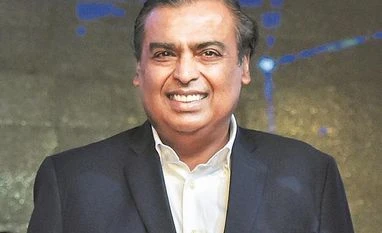
Mukesh Ambani, Chairman & MD, RIL
Shreya Jai New Delhi
3 min read Last Updated : Feb 24 2022 | 1:20 AM IST
Mukesh Ambani, chairman and managing director of oil-to-telecom conglomerate Reliance Industries Limited (RIL) said on Wednesday that India’s green energy exports would cross $500 billion in the coming two decades. The statement comes at a time when RIL has started aggressive expansion into the green energy sector with solar equipment manufacturing, green hydrogen production and energy storage.

Speaking at the Asia Economic Dialogue, Ambani said India’s green energy exports will follow the growth trajectory of the country’s technology and digital exports. “India’s technology and digital exports have risen to $150 billion from less than $10 billion 20 years ago. By 2030, I believe they will exceed half a trillion dollars. Similarly, India’s Clean and Green Energy exports in the next 20 years at the end of 20 years also has the potential of half a trillion dollars of export.”

In June last year, RIL announced its foray into green energy with a Rs 75,000-crore investment in the coming three years. It has plans to invest in solar power generation and manufacturing, hydrogen production, e-fuels, and energy storage under its “New Energy and New Materials” division.

RIL’s newly formed arm Reliance New Energy Solar Ltd (RNESL) was one of the companies which won the first solar manufacturing tender offered under the PLI scheme. India is currently a net importer in solar cells and modules with close to 75 per cent capacity built on Chinese imported content.

RNESL is on an acquisition spree with Norwegian solar equipment maker REC Solar Holdings, battery start-up Faradion. It also has picked up a 40 per cent stake in Sterling & Wilson, a solar EPC company. RNESL has announced investing in German solar wafer firm NexWafe and signed a cooperation agreement with Denmark-based Stiesdal A/S for technology development, and manufacturing of HydroGen Electrolyzers in India.

“If the last 20 years, we were known for India’s emergence as an IT superpower; the next 20 years, I believe, along with technology, will mark our emergence as a superpower in energy and life sciences,” Ambani said.

Claiming that transition to new energy will lead to a new earth-friendly industrial revolution, Ambani said, “I foresee at least 20-30 new Indian companies in the energy and tech space which will grow as big as Reliance, if not bigger, in the next 10-20 years.”

He said India will lead this transition from fossil fuels to green and clean energy and also become a major resource of Solar and Hydrogen Energy in the coming decades.

The union government last week announced the first Green Hydrogen/Ammonia policy wherein the government is offering sops to manufacture green fuels.

RIL last year had announced setting up a ‘Dhirubhai Ambani Green Energy Giga Complex’, in Jamnagar, Gujarat. The company will set up four Giga Factories for integrated solar photovoltaic modules, advanced energy storage, an electrolyser factory for green hydrogen, and a fuel cell factory for converting hydrogen into motive and stationary power. The company plans to delply close to 3 Gw of solar power to produce 400,000 tonne of green hydrogen at one of these giga factories.

Ambani however said there are though three key challenges which need to be addressed in order to boost the economic growth. “India must increase energy output, and we have to do it at an affordable basis for the use of technology. Second, India must increase the share of green and clean energy in this enhanced output. And third, India must achieve the goal of ‘self-reliance or Atmanirbhar Bharat’ in pursuing the above two challenges,” he said.

One subscription. Two world-class reads.

Already subscribed? Log in

Subscribe to read the full story →
*Subscribe to Business Standard digital and get complimentary access to The New York Times

Smart Quarterly

₹900

3 Months

₹300/Month

SAVE 25%

Smart Essential

₹2,700

1 Year

₹225/Month

SAVE 46%
*Complimentary New York Times access for the 2nd year will be given after 12 months

Super Saver

₹3,900

2 Years

₹162/Month

Subscribe

Renews automatically, cancel anytime

Here’s what’s included in our digital subscription plans

Exclusive premium stories online

  • Over 30 premium stories daily, handpicked by our editors

Complimentary Access to The New York Times

  • News, Games, Cooking, Audio, Wirecutter & The Athletic

Business Standard Epaper

  • Digital replica of our daily newspaper — with options to read, save, and share

Curated Newsletters

  • Insights on markets, finance, politics, tech, and more delivered to your inbox

Market Analysis & Investment Insights

  • In-depth market analysis & insights with access to The Smart Investor

Archives

  • Repository of articles and publications dating back to 1997

Ad-free Reading

  • Uninterrupted reading experience with no advertisements

Seamless Access Across All Devices

  • Access Business Standard across devices — mobile, tablet, or PC, via web or app

Topics :Green energyRIL

Next Story