Making Miko: Sneh Vaswani's journey to co-create a robotic revolution

The co-founder of Emotix, a leading B2C robotics company, highlights the need for a systematic strategy to work towards building a great start-up
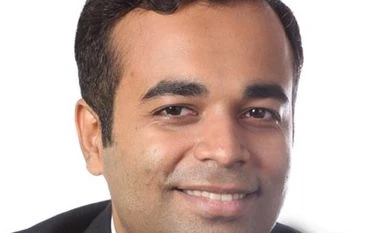
Sneh Vaswani
Sneh Vaswani, Co-founder, Emotix
Romita Majumdar Mumbai
4 min read Last Updated : Sep 03 2019 | 12:42 PM IST
How does a young entrepreneur manage product innovation, go-to market strategies and production, investor expectations and emotional stability all at the same time while running one of India's leading robotics start-ups?

Sneh Vaswani, co-founder of Emotix, a leading B2C robotics firm, and an avid karate enthusiast, has been regularly training since 1994 (when he was barely in school) and turns to the activity as an stress buster. He also credits his karate instructor as much as his family for his emotional health. 

"I think the entrepreneurial ecosystem doesn't give enough credit to supportive family and spouses as one of the key drivers of success. We couldn't have managed so much work without the emotional support from our families," says Vaswani, who never mentions his work without crediting his co-founders.

Vaswani, together with Prashant V Iyengar and Chintan S Raikar, built the Emotix global team consisting of leading mathematicians, designers, engineers and neuropsychologists for Miko, their flagship product in
2015. Miko and its updated version Miko 2 are smart robotic companions targeted towards children. 

Emotix raised $7.5 million Series A funding from the likes of Chiratae Ventures, YourNest Ventures
and a group of technology evangelists among others in August. Last year, the company had raised a pre-series of $2 million. 

Speaking to Vaswani also makes one realise that the company did not just come into existence simply because three young IITians wanted to launch a start-up after graduation. Rather, they put years of careful planning right from their first year of graduation. 

"We knew each other since the first year of college and we knew that we had to start a company together. We worked towards it right from selecting the best internships to jobs in order to have the best learning in product design and delivery," says Vaswani. For him it was his job as a Research Engineer at Siemens
Technology India. 

Vaswani completed his post-graduation in Metallurgical Process Engineering from IIT Bombay. The institute's  director recommended his name to the government to sketch the Technical Vision of India for 2035. He was also awarded with Institute Technical Color (5 of 7,000) for outstanding performance in Robotics, Institute Special Mention for contribution in technical activities and Institute Technical Roll of Honor where he was the 2nd awardee in the history of IIT Bombay.

With such deep engineering experience, why wouldn't these young engineers continue working with leading
robotic manufacturers?

"Working in a B2B set-up puts your destiny in the client's control whereas in a B2C, you are completely in control of innovation. The day we felt we were ready to work on our own company, we called each other up and quit our jobs," says Vaswani. He adds that that working on large-scale project delivery in a B2B model helped the team create a culture in which they can now roll out prototypes within a matter of days instead of spending months on a new product.

Another thing the founders have been focused about is to reach out to investors who understand the hardware product lifecycle. In fact Keshav Murugesh, Chairman of Nasscom and group CEO of WNS, was one of the early investors in the company.

Their first product line, the Miko series of robots targets a seldom-addressed need of millenial parents who seek a positive and trusted gateway of technology that caters to the learning and development needs of children.

"The idea hit us when we saw a friend's sister struggling to wean her child off a smartphone because there were no better options for kids to play with," said Vaswani. With an extremely positive response from the
India market, Miko aspires to bring their platform solutions to every household globally with a 2023 vision of reaching 20 million homes across verticals like childcare, elderly care and more.

"No, we will not always build robots," says Vaswani. "We will, however, continue to focus on products and solutions that are emotionally intelligent." 

One subscription. Two world-class reads.

Already subscribed? Log in

Subscribe to read the full story →
*Subscribe to Business Standard digital and get complimentary access to The New York Times

Smart Quarterly

₹900

3 Months

₹300/Month

SAVE 25%

Smart Essential

₹2,700

1 Year

₹225/Month

SAVE 46%
*Complimentary New York Times access for the 2nd year will be given after 12 months

Super Saver

₹3,900

2 Years

₹162/Month

Subscribe

Renews automatically, cancel anytime

Here’s what’s included in our digital subscription plans

Exclusive premium stories online

  • Over 30 premium stories daily, handpicked by our editors

Complimentary Access to The New York Times

  • News, Games, Cooking, Audio, Wirecutter & The Athletic

Business Standard Epaper

  • Digital replica of our daily newspaper — with options to read, save, and share

Curated Newsletters

  • Insights on markets, finance, politics, tech, and more delivered to your inbox

Market Analysis & Investment Insights

  • In-depth market analysis & insights with access to The Smart Investor

Archives

  • Repository of articles and publications dating back to 1997

Ad-free Reading

  • Uninterrupted reading experience with no advertisements

Seamless Access Across All Devices

  • Access Business Standard across devices — mobile, tablet, or PC, via web or app

Topics :Robotics

Next Story



